A well-liked denture that keeps dropping
Tell us when it loosens and what relines have been done. That helps us see whether refitting, attaching it to implants, a new appliance or another step would solve the actual problem.


You like your denture’s look; you just wish it stayed in. People from Georgetown often ask whether implants can be added to the appliance they already own. We examine its condition and fit, explain when adapting it is realistic, and compare that with a new denture or fixed teeth.
Plenty of people are attached to the teeth they wear, quite literally. The shade suits them, friends are used to the smile, and only the looseness is a nuisance. Implants placed in the jaw can add retention or support for a denture, and in some cases an existing appliance can be modified to connect with them.
Whether that works depends on the denture’s age, material, fit and design, and on where implants could go. Modified appliances are generally removable overdentures that click onto attachments while still resting on the gums. Fixed restorations, carried more fully by implants and removed only in the clinic, normally mean a new appliance.
So for anyone coming from Georgetown, the first visit looks closely at what you already have. We ask what you would like to change, check the denture itself, then review bone, gums and health to see whether converting it, starting fresh or improving it without implants makes most sense.
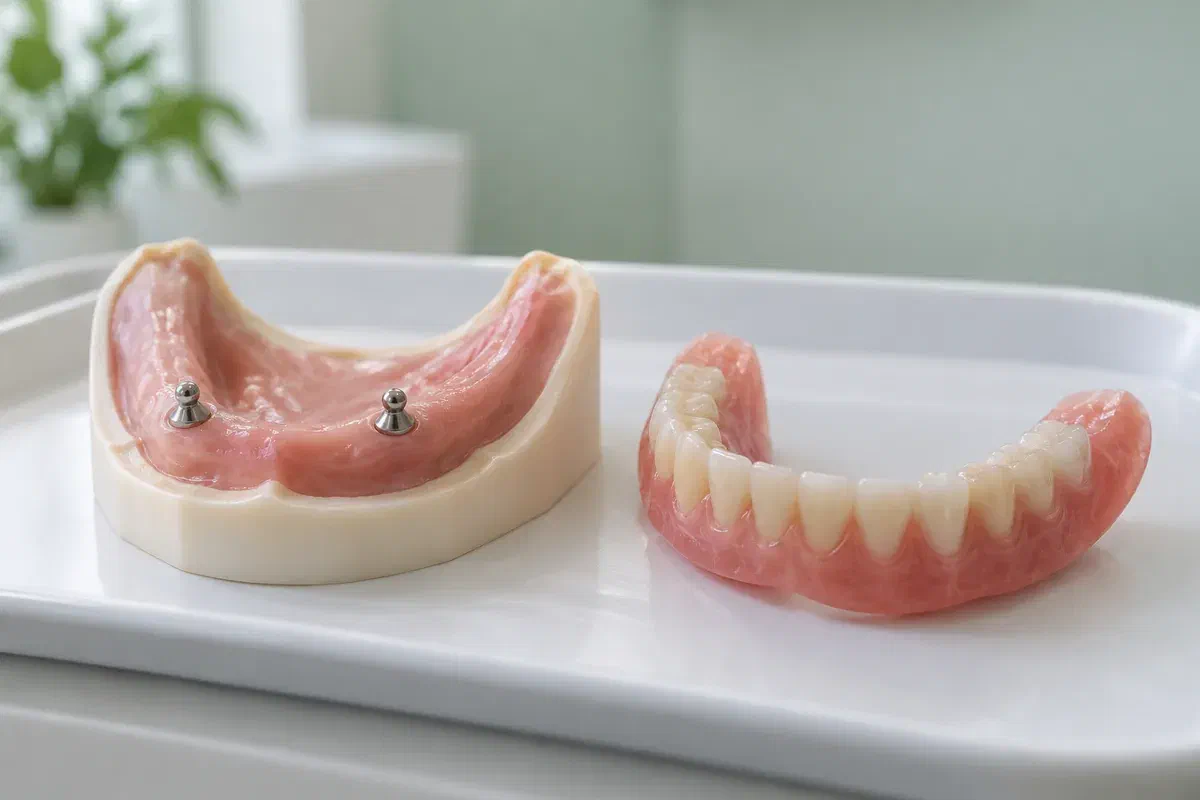
Implants address some denture troubles and not others, and both the appliance and the supporting mouth need an honest look. Pinpointing why it moves or rubs stops you from adapting a denture that would be better replaced, or the reverse.
Tell us when it loosens and what relines have been done. That helps us see whether refitting, attaching it to implants, a new appliance or another step would solve the actual problem.
Moving to a fixed design usually means a new appliance and a different routine. Compare removal, cleaning underneath, dexterity, feel and the professional upkeep each design asks for.
If those teeth may be lost, ask about their outlook and any way of keeping them. A plan should explain how your current partial fits in, any interim teeth and the stages after the first fit.
Implants cannot be placed for every person or in every part of the jaw. Your exam should make your own limitations clear and compare the options that suit your health.
For a suitable mouth, attaching a denture to implants may give better retention or stability than gum support alone, whether the appliance is adapted or new. Ask us to describe the likely change plainly: how it should sit, what getting used to it involves and which complaints it may help.
A firmer hold still needs looking after and does not mean you can eat absolutely anything. Implant surgery, healing, servicing and occasional repairs remain part of the arrangement. Weigh those against the benefits so the decision suits your mouth and your way of life.
Patient information: Cleveland Clinic — removable and fixed implant-supported dentures
A modified overdenture and a purpose-built appliance can behave differently over time. Find out why one is suggested and what a new denture or fixed design would change.
Tooth position, the material that replaces lost tissue and lip support affect how you look and sound. If a new denture is advised, ask which features of your current one can guide the design.
Think about what you can manage now and the help you may need later. Cleaning access, attachment replacement and regular reviews should be clear before treatment begins.
Expect several visits, and possibly a surgeon or specialist as part of the team. Ask for a written outline covering any preparation, whether your denture will be worn during healing, reviews, the final connection and long-term care.
The dentist examines your remaining teeth, gums, health history and the appliance itself. Records and imaging help judge suitability, and your concerns about eating, speech, handling and cost steer the talk.
Where appropriate, we compare modifying your denture, making a new overdenture or a fixed design, plus the implant arrangement and other options. Risks, added treatment and possible estimate changes are explained.
The treating team carries out the agreed sequence and checks healing before connecting anything. Your denture may be adjusted to wear during this period, and timing depends on your clinical situation.
When attachments are added or a new appliance is fitted, the team checks it and shows you how it works. You practise removal and insertion, learn cleaning and book reviews and maintenance.
Instructions for the healing period differ from those for the connected appliance. Keep the guidance you are given and ask about wear, cleaning, eating and who to call as each stage ends.
An overdenture comes out on the schedule you are given, so the appliance, attachments and gums can all be cleaned. Fixed teeth stay in and are cleaned around and under; never try to remove them.
Ask which brushes, soaks and storage suit the denture and attachment parts. Some products used on an ordinary denture, along with very hot water, may not suit implant components.
Report sore spots, renewed looseness, difficulty removing it or a different bite. Attachment inserts and denture materials wear, so servicing may be needed even when implants are sound.
Ask anything about design and stages, especially if you have worn your denture for a long time. Implants bring decisions about treatment, handling and care after the connection is made.
Schedule a visit at our Bronte Street practice and bring the denture you wear. We will check whether it could be adapted, compare it with new removable or fixed designs and explain the care involved.
Bring your current denture, even if it is damaged, and any records of previous implants or dental work.
