A denture that needs relining more and more often
Tell us how often it has been adjusted and when it moves. That helps us judge whether a new conventional denture, implant attachments or another approach would better address the underlying change.


Attachments wear, dentures need relining, and fixed bridges come out for professional cleaning. For households in Puslinch, our Milton team explains what years of living with an implant denture look like, so upkeep is understood and planned for before treatment ever begins.
Nothing in the mouth stays exactly the same. Gum tissue changes, denture teeth wear, and the small retentive parts that grip an appliance lose some hold with use. An implant denture, which uses implants in the jaw to retain or support a replacement for many teeth, works best when that slow change is expected and looked after.
Upkeep differs by design. A removable overdenture rests partly on the gums and clips to attachments; inserts may need replacing and the base may need relining. A fixed restoration depends more fully on implants, stays in day to day and is periodically taken off by a clinician for cleaning, checks or repair.
Puslinch is a rural township, and many households prefer to plan visits well ahead. We start with what you want to improve, then look at bone, gums and health, and talk openly about what maintenance each realistic option is likely to need over the coming years.
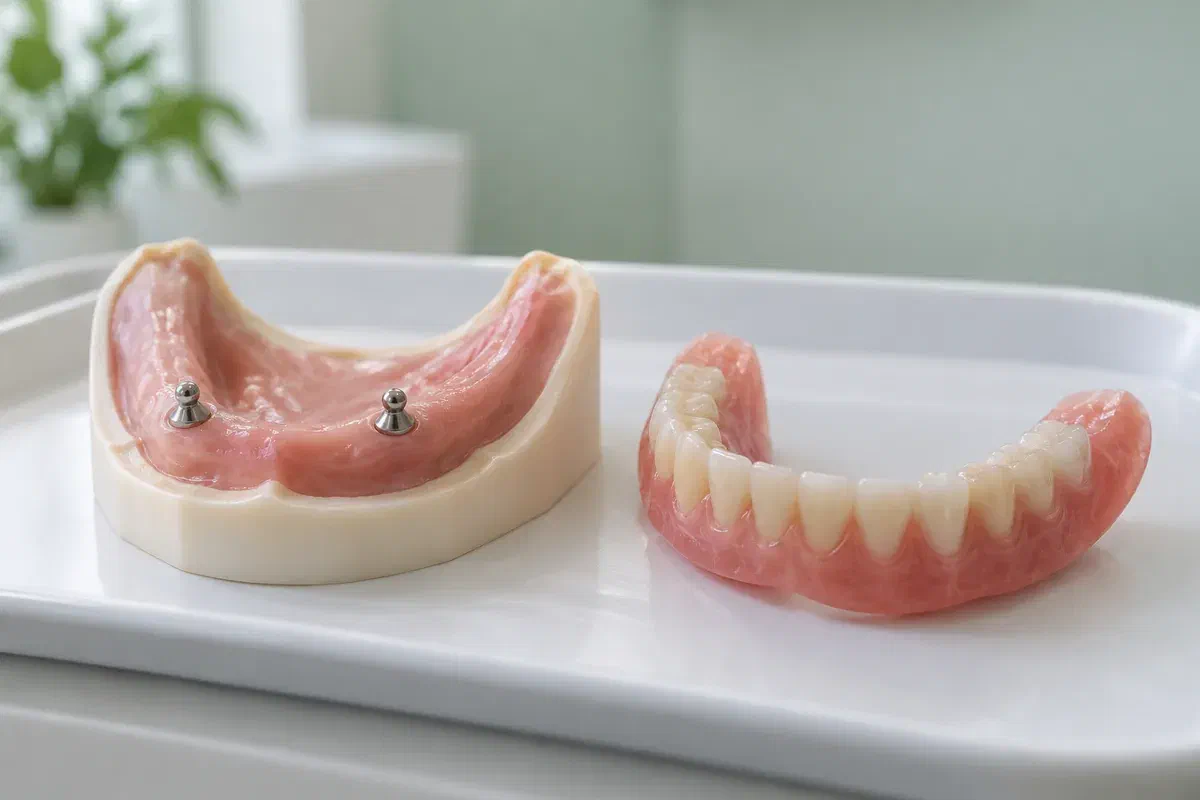
Implants help with selected denture problems, and the present appliance and supporting tissues still need examining first. Understanding why a denture is unstable or uncomfortable now helps you choose something that will hold up later.
Tell us how often it has been adjusted and when it moves. That helps us judge whether a new conventional denture, implant attachments or another approach would better address the underlying change.
Neither is maintenance-free. Removable designs need attachment and fit servicing; fixed ones need careful home cleaning and professional removal at times. Compare feel, dexterity and upkeep side by side.
Ask how long they are expected to last and whether they can be kept. A replacement plan should set out the transition, interim teeth and what follows the first fitting, including routine maintenance.
Implants are not an option for all people or all sites. The assessment should explain what limits apply to you and compare the choices that are realistic for your health and circumstances.
For a suitable patient, linking a denture to implants may improve retention or stability over tissue support alone. Ask how the benefit is expected to feel and how it could change over time: how firmly the appliance should sit, how adaptation goes and which concerns it may ease.
Keeping that benefit takes ongoing care, and implants do not guarantee unrestricted function. Surgery, healing, regular maintenance and occasional repairs are part of owning one. Seeing those commitments clearly helps you choose a plan you are prepared to look after.
Patient information: Cleveland Clinic — removable and fixed implant-supported dentures
A removable attachment system and a fixed restoration have different parts that need attention. Ask which components are expected to need servicing and what the other design would involve instead.
Tooth position, replacement material and lip support shape your smile, and denture teeth can wear over the years. Ask what is reviewed at try-in and how appearance is maintained over time.
Consider what you can manage now and the help you may need in later years. Cleaning access, component replacement and review visits should be part of the plan from the beginning.
Treatment usually spans several appointments, sometimes with a surgeon or specialist involved. Ask for the full sequence, including preparation, interim teeth, healing checks, final fitting and a realistic maintenance schedule afterwards.
We look over any natural teeth, the gum tissue, your health background and the denture you rely on now. Imaging and records help confirm suitability, and your priorities for chewing, speech, handling and cost guide the discussion.
Removable and fixed options are weighed where both suit, along with the implant layout and alternatives. Surgical risks, extra procedures, temporary teeth and estimate items that may change are covered.
The treating team follows the plan and confirms healing before advancing. Impressions, lab fabrication and try-ins build the appliance around its support, with timing guided by your clinical needs.
At fitting, the appliance is checked and explained. You practise any removal and insertion, learn to clean it and agree on early follow-up and a long-term review pattern.
Healing instructions are different from routine care of the finished denture. Keep written guidance on hand, and ask about wear, cleaning, food and how to contact us as you move from one stage to the next.
Lift out an overdenture as directed, both to clean it and to give the gums a rest. A fixed design is cleaned around and beneath while in place; it should only ever be removed by the clinic.
Find out which brushes, cleansers and storage containers are safe for your appliance and attachments. Very hot water, bleach and makeshift tools can shorten the life of denture parts.
Let us know if the denture feels looser, pressure spots appear, removal becomes difficult or your bite changes. Inserts and denture materials wear, and servicing may be due even with stable implants.
Ask about design and long-term care, whatever your experience with dentures. Implants add decisions about treatment, handling and the support you will need over the years.
Book time with us on Bronte Street to talk about your present denture or replacing multiple teeth. We will explain suitable designs, the treatment sequence and what maintenance each one will need over the years.
Bring your dentures and any records from previous implant or restorative work, including past relines.
