Looseness when you touch it
Tell us whether this is the first time it has moved or a recurring feeling. Avoid tugging or turning it to judge how loose it is; the dentist needs to assess how it sits on the tooth.


Once you notice a crown moving, your tongue keeps going back to it. The days before your appointment matter, and small habits can protect the tooth. From Erin, call our team for advice on managing until the visit, then have the crown and tooth assessed and repaired.
It is almost automatic. Once a crown feels slightly loose, you find yourself pushing at it during the drive to work, at dinner, or while reading. That constant nudging is understandable, but it can work a crown looser. The time between noticing the problem and being seen is worth managing carefully.
Understanding why a crown moves helps explain the caution. A crown grips a shaped tooth through careful fit plus a layer of bonding cement. Weakened cement, a damaged crown, or a change in the tooth or its build-up can each let it shift, and decay or a fracture may be hiding under a crown that looks intact. Even so, a moving crown is not a sign that the tooth is doomed, nor that replacement is a foregone conclusion.
Call to arrange the assessment and ask what to do until then. Tell the team when you first noticed the movement, whether it happens when you chew, clean, or press with your tongue, and whether there is pain or swelling. Mention recent treatment, too. With that, they can advise on timing and on looking after the tooth meanwhile.
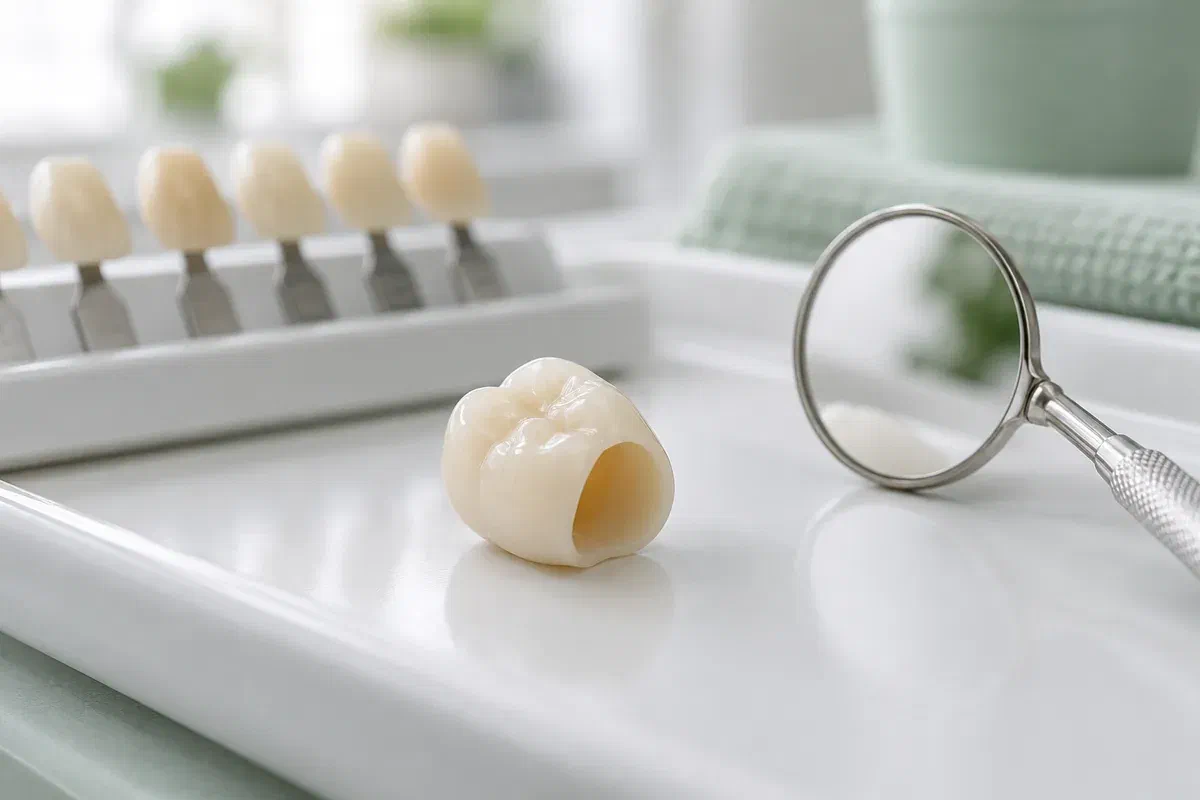
There’s no need to hold off until it falls out. Note what you feel and pass it on. Repeatedly checking the crown can make the problem harder to fix, so try to break the habit.
Tell us whether this is the first time it has moved or a recurring feeling. Avoid tugging or turning it to judge how loose it is; the dentist needs to assess how it sits on the tooth.
If the crown hits first or shifts as you eat, mention it. You don’t need to keep biting down on it to confirm the sensation.
A twinge with hot or cold, food catching at the crown edge, or an odd taste can all help the dentist. These signs have various possible causes and are interpreted alongside the crown’s fit and the tooth’s health.
Please call soon. If you have significant pain, swelling, a knock to the mouth, or a piece that looks ready to come away, mention it, and the team can tell you how quickly to be seen.
A crown that stays undamaged, still fits, and has good tooth support may be resecured once the dentist has examined and prepared the tooth. Protecting it from extra strain in the meantime helps keep that option open. Recementing is not automatic, though.
If the tooth or crown turns out to have another problem, identifying it first avoids a repair that leaves the cause behind. Don’t hesitate to ask about the findings, which pieces are reusable, and what makes the proposed plan the sturdier choice.
Patient information: Cleveland Clinic — dental crown care and signs to report
Crown and tooth get their own checks. Which one is moving explains why recementing makes sense for some people and not for others.
The exam may reveal that the core or remaining tooth needs work before a crown can be secured. Ask how much healthy structure is left and how that affects your options.
A first appointment may provide an assessment or a temporary measure while further treatment is arranged. Check whether you are leaving with the finished repair, and what precautions apply until the next step.
We start by hearing what you have noticed and how you have managed since. The findings set the scope of treatment, and more involved work on the tooth or crown can mean returning for another visit.
First, a quick recap: how old the crown is, what was done before, and how things have gone since you called. The crown, tooth, gums, and bite are checked, and X-rays are taken when they would clarify something specific.
If taking the crown off is necessary to see the tooth, the dentist will tell you why and what the risks are first. This shows whether the crown and the tooth beneath can support the proposed repair.
You will go through the findings, other options, and an estimated fee before anything begins. A crown in good condition may be recemented; decay, damage, or limited support may lead to a different plan.
Once treatment is complete, the dentist checks the fit and your bite. Ask about eating, cleaning, any short-term restrictions, and who to call if movement or discomfort returns.
Ask the clinic what suits your crown. Whether it is temporary or permanent, and how much of the tooth remains, can change the advice.
Consciously leave the crown alone, and keep fingers away from it too. Chew on the other side and avoid hard or sticky foods there until you have spoken to us.
Keep a small clean container handy. If the crown comes off, put it in and bring it along. Don’t glue it, leave it in your mouth, or force it back on.
Ask when you can eat normally and how to clean the area. If your bite feels high, symptoms continue, or the crown moves again, call rather than assuming that is to be expected.
These answers apply to crowns on natural teeth. If an implant holds your crown, tell us when you book, since the parts and repair differ.
Speak with our Bronte Street clinic about a loose crown and how to manage until it is seen. At the visit, the dentist checks the crown and tooth, tells you what is worth keeping, and suggests a repair that fits.
For pain, swelling, or a crown that feels like it is about to come off, please call us.
