Lifting or tipping at the edge
Mention whether it has happened before. Pulling or rocking the crown to check it can make matters worse, so leave the hands-on testing to the dentist.


Sometimes the first clue is not a wobble but a bite that suddenly feels wrong: one tooth landing early, or a crown that seems to slide as you chew. From Georgetown, book an assessment so the dentist can check the crown, its tooth, and your bite before choosing a repair.
You close your teeth together the way you always do, and one spot meets before the rest. Or chewing a sandwich, you feel the crown shift a fraction under pressure. A change in how your teeth come together is one of the more common ways people realise a crown is no longer sitting where it should.
That sensation narrows things down less than you might expect. A crown that has lifted slightly on weakened cement can feel high. So can one that is cracked, or one whose supporting tooth or core has changed shape. Problems such as decay may sit underneath an outwardly tidy crown. None of these automatically rules out keeping the tooth, and a new crown is not a given.
It helps to note when the bite changed and whether it is constant or only noticeable with certain foods. Tell the team about any recent dental work, clenching or grinding you are aware of, and any ache or swelling. Those observations point the assessment in the right direction.
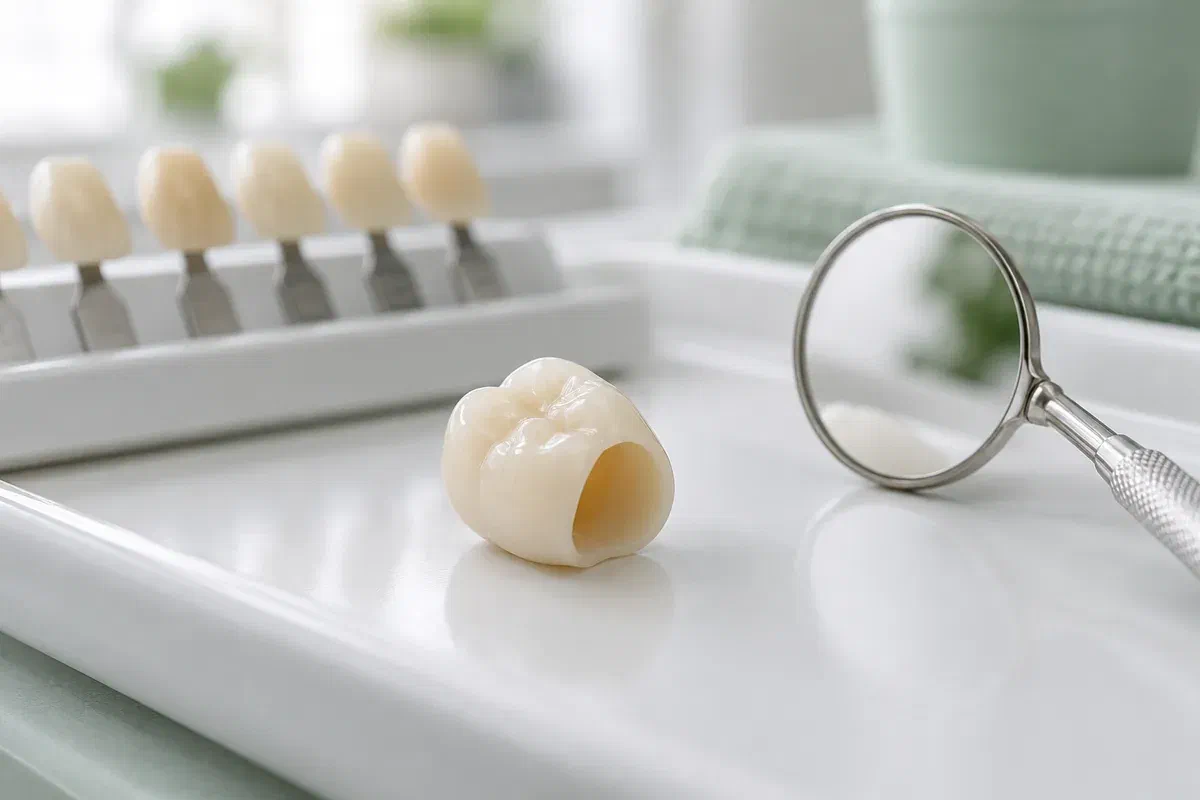
A bite change is reason enough to call; the crown doesn’t have to come out first. Describe what you notice and avoid repeatedly clenching or pressing on the tooth, which can make the problem harder to deal with.
Mention whether it has happened before. Pulling or rocking the crown to check it can make matters worse, so leave the hands-on testing to the dentist.
A high spot or a crown that slips sideways during chewing is worth describing in detail. Biting down hard repeatedly to reproduce it won’t add much and may strain the tooth.
A tooth that feels sore to bite on, food wedging nearby, or a metallic or sour taste can each add useful information. They have several possible causes and are read alongside what the examination finds about fit and tooth health.
Please get in touch soon. Mention sharp pain on biting, swelling, a recent blow to the jaw, or a crown edge that seems ready to break away, and the team will advise how quickly to come in.
Where the crown is undamaged, still fits, and the tooth offers good support, resecuring it and fine-tuning the bite may be appropriate. That conclusion comes after examination and preparation. Re-cementing every crown that feels high would skip the step that matters.
If the bite change is a symptom of something else, such as a crack or a weakened core, dealing with that first prevents a repair that soon fails. Ask what the dentist has found, which parts can stay, and why the plan should feel and last better.
Patient information: Cleveland Clinic — dental crown care and signs to report
Either can change your bite. The dentist checks them separately, which explains why recementation is the answer for one person and not for another.
Assessment may show the foundation needs treatment before a crown can sit properly again. Ask how much sound tooth remains and how it affects the choices.
A first visit might involve diagnosis or an interim step while further treatment is planned. Ask whether the result is final, and what to avoid or when to return if it is not.
We begin with what you have felt. The treatment that follows depends on the findings, and additional appointments may be needed when the crown or tooth requires more work.
The dentist asks about the crown’s history and when your bite began to feel different. Your bite is checked, along with the crown, tooth, and gums, and an X-ray may be taken when it would help answer a specific question.
If removal or a closer inspection is needed, you will be told why and what risks are involved. The goal is to learn whether the crown and its support can take the repair being considered.
The findings, the alternatives, and an estimated cost are discussed before anything is done. A crown in good order may be resecured; decay, damage, or weak support may mean another restorative approach.
Once the work is done, the dentist checks that your teeth meet evenly and the crown seats properly. Ask about chewing, cleaning, any temporary precautions, and when to call if the bite feels off again.
Call us for advice that suits your crown. A temporary, a permanent crown, and a tooth with less of its own structure left may each need slightly different care.
Hard or sticky foods on that side can make a loose crown worse, so avoid them until you have spoken with the team. Try not to keep testing the bite or pushing the crown with your tongue.
Store it safely in something clean with a lid and bring it with you. No glue, no keeping it loose in your mouth, and no forcing it back over the tooth.
Ask when you can return to normal meals and how best to brush and floss beside it. If the bite feels high, soreness continues, or movement comes back, call rather than waiting for it to settle on its own.
These answers concern crowns cemented to natural teeth. Implant-supported crowns have their own parts and repair process, so please mention an implant when you book.
Call our Bronte Street clinic when a crown starts to feel high, unsteady, or different under chewing. We will check the crown, the tooth, and how your teeth meet, then explain what can be kept and how to repair it.
Pain on biting, swelling, or a crown close to dropping out? Please phone and describe it.
