The crown shifts or feels lifted
Note whether this has happened before and whether the crown is temporary. Avoid pulling or turning it to see how loose it is; the way it sits on the tooth needs to be checked by the dentist.


Temporary or permanent, a crown that starts to move between visits leaves a prepared tooth less protected. For people travelling in from Mississauga, our dentist checks the crown and the tooth, then explains whether to resecure it, repair it, or move to the next stage.
Temporary crowns are designed to come off when the final crown is fitted, so they are held more lightly than a permanent one. That makes a loose temporary fairly common, but it still matters. The tooth underneath has been shaped and needs cover until the definitive crown is placed.
Permanent crowns can loosen too, and for a wider range of reasons. The cement may have given way, the crown could be damaged, or the tooth and its core may have changed. A crown can look fine while decay or a crack sits beneath it. Equally, movement does not mean the tooth is beyond help or that a completely new crown is the only path.
When you call, say whether the crown is temporary or permanent and, if it is temporary, when your final appointment is booked. Describe whether it moves when you chew, brush, or touch it with your tongue, and mention any pain or swelling. The team can then advise how to protect the tooth and when to come in.
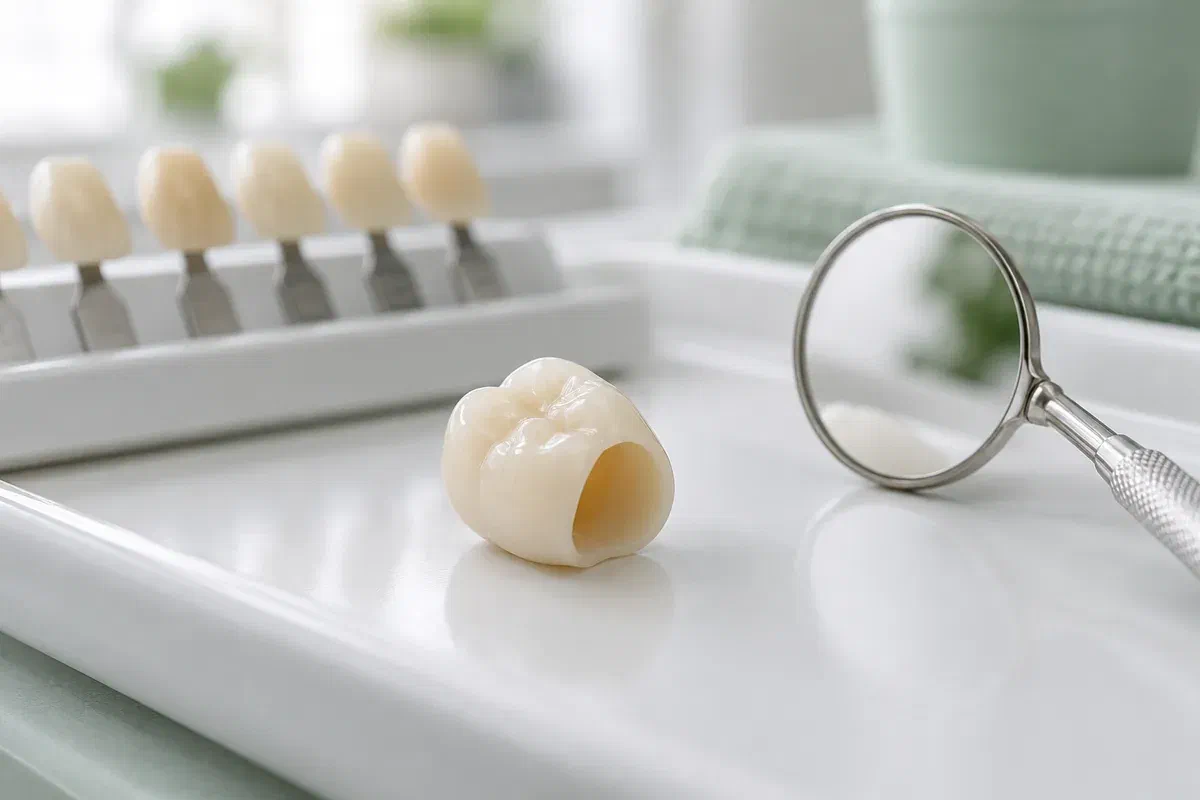
It is better to call early than to wait for the crown to come off. Explain what you feel, and resist checking the crown repeatedly, since that can loosen it further and complicate the next step.
Note whether this has happened before and whether the crown is temporary. Avoid pulling or turning it to see how loose it is; the way it sits on the tooth needs to be checked by the dentist.
A crown that touches first, feels high, or rocks during chewing is worth describing. There is no need to keep biting hard on it to confirm the feeling.
A prepared tooth that suddenly reacts to cold, food sneaking under the margin, or an odd taste can all guide the exam. These signs have various causes and are weighed with the crown’s fit and the tooth’s health.
Please call soon about a loose crown of either kind. Tell us about strong pain, swelling, a recent injury, or a crown that looks set to come away, so the team can recommend how quickly to be seen.
For a permanent crown that is undamaged, fits well, and has good tooth support, resecuring may be possible after examination and preparation. For a temporary, the dentist may recement it or make a new one. In neither case is a quick dab of cement the whole answer.
Where the tooth or crown has a separate problem, finding it first keeps you from a repair that fails again. Feel free to ask about the findings, which parts are worth keeping, and why the plan should lead to a more dependable result.
Patient information: Cleveland Clinic — dental crown care and signs to report
The crown and the tooth beneath it are looked at individually. Knowing which one has moved explains why recementing is appropriate in one situation and not in another.
The exam may show that the foundation needs work before the tooth can be covered again. Ask how much healthy structure remains and what that means for your choices.
Sometimes the visit is an assessment or an interim fix while the final crown is completed. Ask whether today’s work is temporary, what to avoid, and when you return.
Your description of the problem comes first. The treatment depends on the findings, and if the tooth or crown needs more extensive care, extra appointments may be required.
The dentist asks whether the crown is temporary or permanent, what treatment came before, and when the change began. Next comes a look at the gums, the way you bite, the crown, and the tooth itself, plus X-rays or other tests if they would clarify something.
When a crown needs to come off for a closer look, the dentist explains the reason and the risks. The goal is to decide whether the crown and its foundation can support the planned repair.
You will review the findings, the alternatives, and an expected fee before treatment. A sound crown may be resecured, while decay, damage, or inadequate support may lead to a different restorative plan.
Afterward, the bite and fit are checked where appropriate. Ask about eating, cleaning, any restrictions while a temporary is in place, and who to call if the crown loosens again before your next visit.
Ask the clinic for advice suited to your crown. What works for a temporary may not suit a permanent crown, and a tooth with less of its own structure left can need extra caution.
Gum, toffee, and hard snacks can pull a loose crown free, so keep them away from the area until you hear from us. Try not to work the crown with your tongue or fingers.
Store it in a clean, closed container and bring it to the appointment. Do not use glue, leave it loose in your mouth, or force it back over the tooth.
Ask when you can chew normally and how to clean around the edges. Let us know if the bite feels high, symptoms persist, or movement returns, rather than accepting repeated loosening as normal.
The answers here relate to crowns cemented over your own teeth. An implant crown is held by different components and repaired differently, so mention it when booking.
Speak with our Bronte Street clinic about a temporary or permanent crown that feels unsteady. We will check the crown and the tooth beneath it, talk about what can be kept, and set out the next step.
Experiencing pain, swelling, or a crown that is about to come away? Please call and let us know.
