Rocking at the gumline
Mention whether the rocking is new or has come and gone. Avoid twisting or lifting the crown to see how much it moves; how it relates to the tooth underneath is something the dentist should assess in person.


Is the crown loose, or is the tooth itself moving? That question shapes everything that follows. For anyone coming from Oakville, our dentist examines both parts, identifies the cause, and explains whether resecuring, repair, or a new crown fits the findings.
From the inside of your mouth, a crown that slips on its tooth and a tooth that moves in the gum can feel almost identical. They are different problems. The crown relies on a snug fit and a secure bond to the prepared tooth, while the tooth relies on the bone and gum around its root.
That is why the first job is to separate the two. A loosening bond, a crack in the crown, or a change in the core underneath can let a crown move on a perfectly steady tooth. Gum or bone problems, or a fracture, can affect the tooth itself. Sometimes the crown looks flawless while decay or damage sits below it, and sometimes a wobbly crown turns out to be quite simple to manage.
When you call, describe what moves and when. Does it shift as you chew, when you brush, or only when your tongue pushes it? Has the tooth had recent treatment, and is there any pain or swelling? Clear answers help the team book the right kind of appointment and give the dentist a starting point.
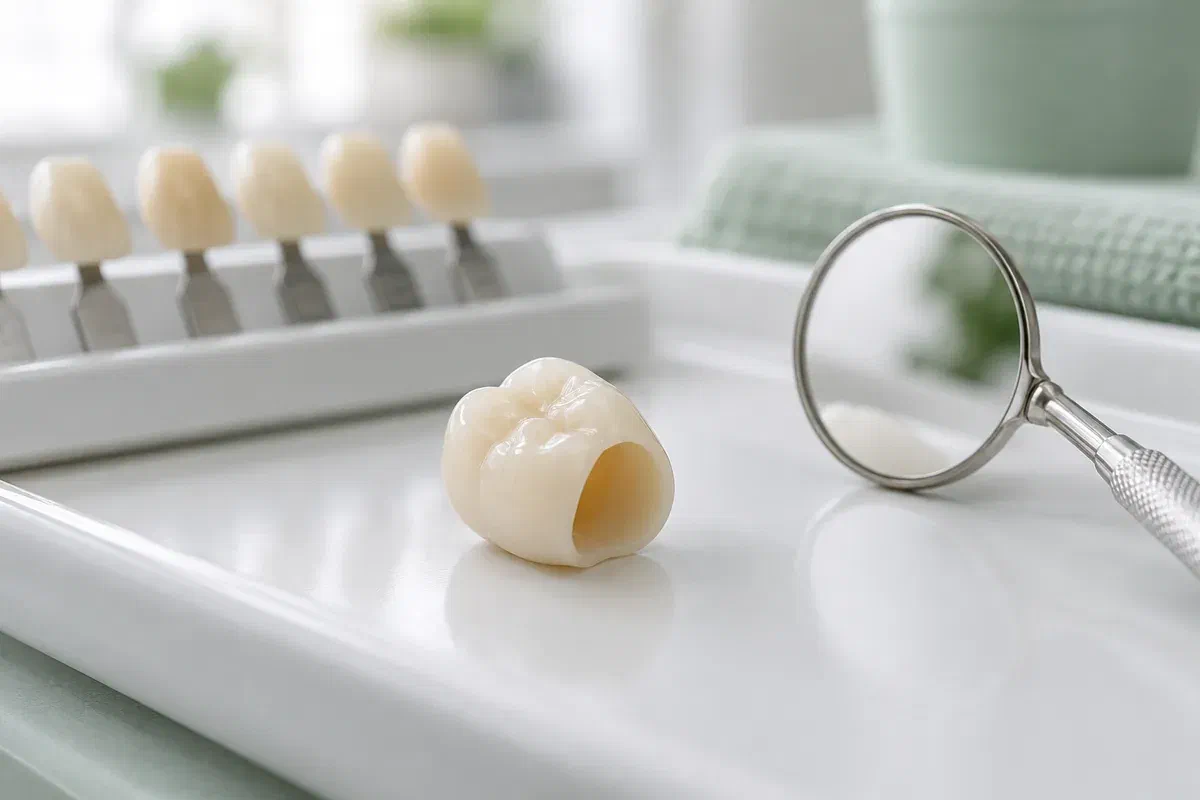
You can call before anything falls out. Describe the feeling as best you can, and try not to keep pushing at the crown, because repeated testing may make the situation more difficult to manage.
Mention whether the rocking is new or has come and gone. Avoid twisting or lifting the crown to see how much it moves; how it relates to the tooth underneath is something the dentist should assess in person.
If the crowned tooth seems to touch first when you close, or feels like it shifts under chewing pressure, note it for the team. Please do not keep biting hard to recreate the feeling.
Food packing between teeth, a new sensitivity to cold or heat, or a bad taste can all add useful detail. They have more than one possible cause, so the dentist considers them together with the crown’s fit and the state of the tooth.
Please phone soon about any crown movement. Mention severe pain, swelling, a recent injury, or a part that looks likely to separate, and the team will advise how soon you should come in.
Provided the crown is undamaged, fits correctly, and sits on a well-supported tooth, it may simply be resecured. The dentist decides that after examining and preparing the tooth. Pressing new cement under any loose crown is not the method.
If the tooth or the crown has a separate problem, naming it first prevents a repair that ignores the cause. You can ask what the dentist found, what can be saved, and why the suggested treatment is likely to be more reliable.
Patient information: Cleveland Clinic — dental crown care and signs to report
The crown and its tooth are checked one at a time. Knowing which is moving explains why recementing is reasonable for one person and the wrong choice for another.
The exam might show that the core or remaining tooth needs attention before a crown can be fitted again. Ask how much healthy structure remains and how it affects your options.
Your first visit could be diagnostic or involve a temporary measure while more treatment is arranged. Confirm whether the work is the lasting repair, and what limits or return visit apply otherwise.
Your description of the problem is the starting point. The treatment that follows depends on the findings, and more than one appointment may be needed if the crown or tooth needs further work.
Expect questions about the crown, past dental work, and when the change began. The dentist checks the tooth, gums, bite, and crown, using X-rays or other tests where they help settle a specific question.
If the crown has to be taken off or looked at more closely, you will hear why and what risks are involved. The point is to see whether the crown and its foundation can still support the repair being considered.
Findings, alternatives, and an estimated fee are discussed before any treatment starts. Where the crown checks out, it can often go back on; decay, a break, or too little support points toward another restorative approach.
Afterwards, the dentist checks the fit and how your teeth come together. Raise questions about meals, brushing and flossing, short-term limits, and what to do if you notice movement or discomfort again before the next planned visit.
Call for advice about your own crown. A temporary crown, a finished permanent one, and a tooth missing part of its support may each need slightly different instructions.
Avoid hard or chewy foods on that side until the clinic has given you advice. Try not to keep nudging the crown with your tongue or finger to check whether it has firmed up.
Keep it in a clean, lidded container that comes with you to the visit. Do not use glue, do not leave it loose in your mouth, and do not press it hard back onto the tooth.
Find out when regular eating can resume and the best way to keep the crown’s edges clean. Report a high bite, lasting symptoms, or new movement rather than accepting that crowns simply come loose again.
Everything below assumes the crown sits on your own tooth. If yours is on a dental implant, please say so when you book, because the supporting parts and the repair approach are different.
Reach out to our Bronte Street team when a crown or tooth no longer feels steady. We will examine both, explain what can be kept, and recommend a repair that matches what we find.
Pain, swelling, or a crown on the verge of coming off? Phone us and describe what you are noticing.
