Food gets under it more often
Explain which foods slip beneath the base and whether the denture tips when you bite. The dentist can then judge whether this is the expected effect of healing, a bite problem or something about the appliance itself.


Teeth came out, a denture went in, and a few weeks later it already feels slack. That pattern is common during healing. For people coming from Brampton, our Milton team reviews how your mouth is changing and whether an interim lining, an adjustment, a later reline or a new appliance makes sense.
Right after extractions, an immediate denture is shaped to a mouth that is about to change. As the sockets heal and swelling goes down, the gums shrink away from the acrylic, and the appliance that fitted snugly on day one may start to slide by week four. It is frustrating, though rarely a sign anything has gone wrong.
Healing is only one reason a denture loosens. Long-term ridge changes, worn artificial teeth, a crack, movement of natural teeth still present, or a worn implant connector can all play a part. Sorting out which applies to you, and at what stage, shapes whether the next step is temporary or meant to last.
When you book from Brampton, mention the date of your extractions and who placed the denture. Bring the appliance and any instructions you were given, plus details of relines or repairs. We will look at how far healing has progressed, explain what can reasonably be done now and what is better left until your mouth has settled further.
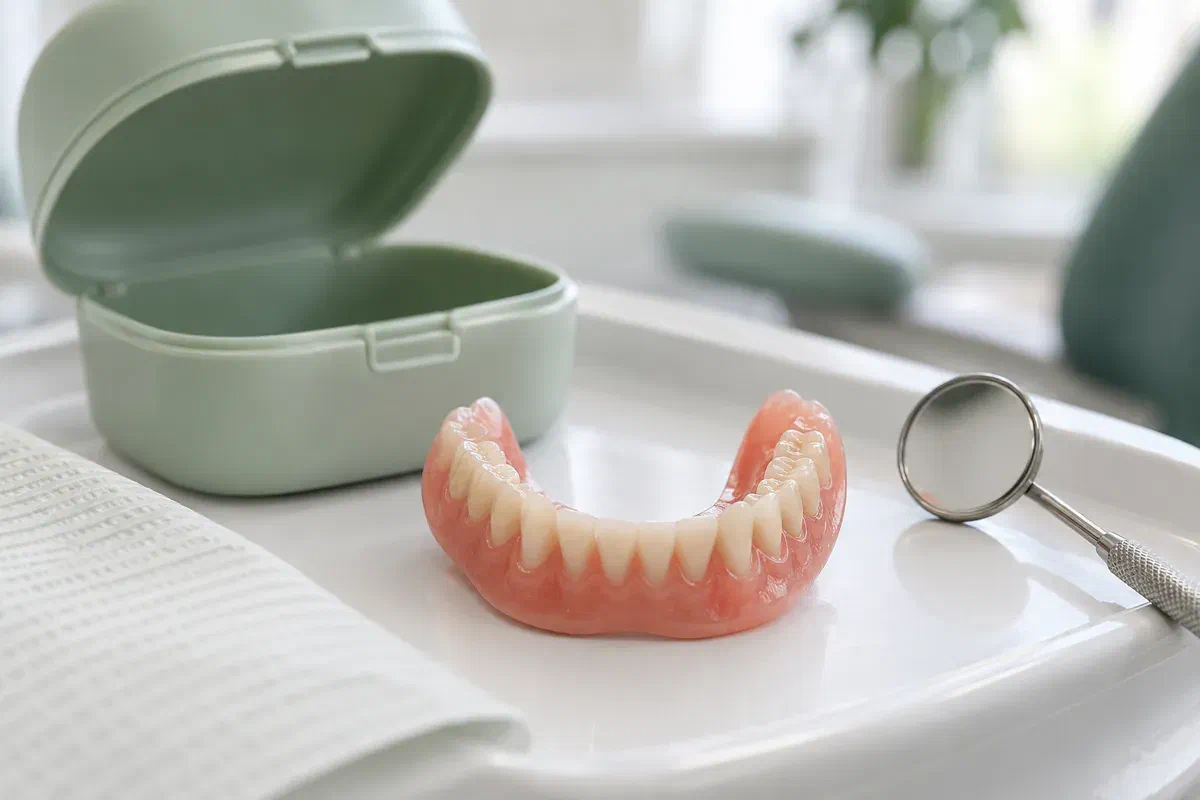
A healing mouth changes quickly, and the denture can feel different from one week to the next. Note what you experience between visits, since those changes are hard to see during a single appointment.
Explain which foods slip beneath the base and whether the denture tips when you bite. The dentist can then judge whether this is the expected effect of healing, a bite problem or something about the appliance itself.
Some people are advised to use a little adhesive during healing, and correct use can help. If you need much more than you were told, mention it and bring the product so the changing support can be checked.
Point out where the denture presses and how long it has hurt. A sore that is not improving, or tissue that looks unusual, deserves its own examination rather than being assumed to be part of normal healing.
If the denture breaks, develops a sharp edge or becomes too painful to wear during healing, call for advice. Keep every piece, and do not use household glue or try to file it.
In the first months, the aim is often to keep the denture usable while the mouth remodels. A soft interim lining or a small adjustment may help for now, with a more permanent reline or a new appliance discussed once things have stabilized. An established denture with worn teeth or damage raises different questions.
Fit is only one piece. You also want to eat, speak, keep healing tissues healthy and handle the denture without struggle. Ask what each suggested step should achieve right now and what will probably need revisiting later.
Patient information: American College of Prosthodontists — evaluating dentures for replacement
Even a new denture can have a bite or tooth arrangement that needs attention. Ask whether any findings beyond fit change the plan or the value of relining later.
Work done while healing is often designed to be temporary. Find out what the next stage might be, roughly when it would happen and what signs would prompt an earlier review.
Some linings are done in the chair; others need a laboratory. Ask whether the denture will need to stay with the clinic, how long that might take and how to handle meals, work and family commitments.
This visit looks at why the appliance is unstable and whether modifying it now is wise. Share your extraction and treatment dates, and mention tender areas before the fit is tested.
Expect questions about when teeth were removed, when the denture was placed and how the fit has changed since. Describe adhesive use, any instructions from the treating team and what has become difficult.
The dentist examines the extraction areas, your gums and any natural teeth, then the denture itself, including its fitting surface and bite. Areas that need a separate look are noted.
You will hear what an interim lining, an adjustment, a later reline or a new denture would involve, the expected benefit, the limits and an estimate. Timing is part of the discussion.
After any change, the fit is reviewed and care is explained. Because the mouth may keep changing, ask when you should be seen again and whom to call if movement or soreness returns.
During healing, the denture may need more than one round of attention. Ask about wearing time, eating, cleaning and when to return before going back to your everyday routine.
Write down where pressure appears and what brings it on. Please do not trim the acrylic or bend any part yourself; a home change can complicate the next professional adjustment.
Interim linings can be softer and may need particular cleaning products. Confirm the routine and whether adhesive is appropriate rather than following the advice for a standard denture.
Your gums and any remaining teeth will keep changing for a while. Attend the reviews you are given and report renewed looseness instead of waiting for it to settle on its own.
Tell us what you were told when the denture was placed, what has changed since and which practical limits matter, so the next step fits both your mouth and your daily life.
Our Bronte Street clinic can review a denture that has loosened during healing or no longer feels secure. We will look at how your mouth is changing, explain interim and longer-term choices and plan the next stage with you.
Please bring the denture, any instructions from your extraction appointment and notes on relines or repairs.
