

Illustrative patient discussing the fit of a removable denture with a dentist
Restorative Dentistry

Loose Denture Treatment in Burlington

A click mid-sentence, a lisp that was not there last year, a hand raised to steady your upper plate during a phone call. For Burlington denture wearers, our Milton team examines what is making the appliance move and explains whether adjusting, relining, repairing or replacing it is worth considering.

Burlington · speaking with confidence

When your denture joins the conversation

Talking puts a denture through constant small movements of the lips, cheeks and tongue. A well-adapted appliance stays put through all of it. A loose one may click on certain sounds, drop slightly when you laugh, or make you speak more carefully than you would like, even though it seems steady while you are sitting quietly.

Several things can loosen the seal a denture relies on. The ridges beneath gradually remodel while the base holds its original shape; the artificial teeth wear; a crack develops; natural teeth that remain shift; or an implant attachment loses retention. Each one calls for a different response, so we look at the whole mouth rather than just the plate.

Coming to us from Burlington, it helps to note the words, situations or times of day when the movement is worst. Bring the denture with any history of extractions, relines or repairs, and mention anything you have already tried. We will explain the likely cause, a practical next step and its limits, without starting from the idea that a new appliance is inevitable.

Book a speech and fit assessment
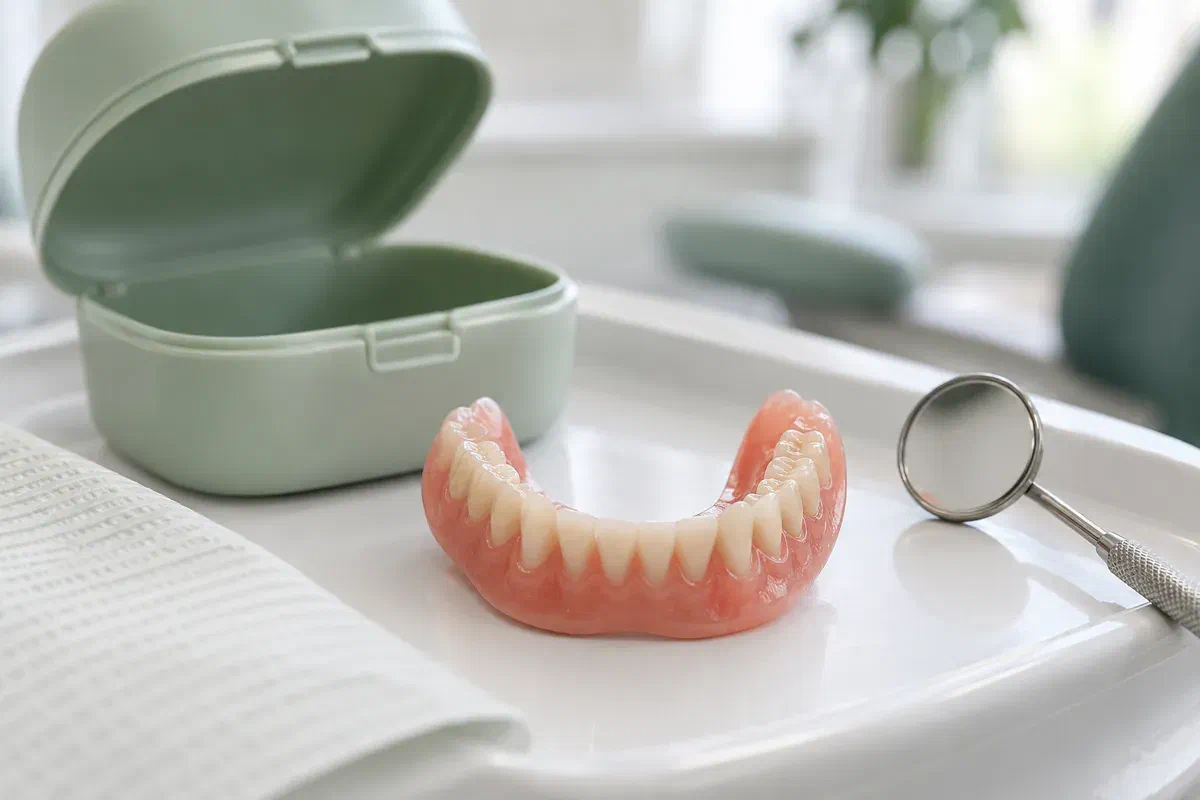
Lower removable denture beside an open storage case and dental mirror
What you might notice

Clicks, lisps and lifting

Movement during speech is almost impossible to recreate on demand, so your description carries real weight. Say what you hear, what you feel and when it happens, and the dentist can focus on the right part of the fit.

Eating has become awkward too

Speech trouble often travels with chewing trouble. Mention foods that tip the denture and whether one side rises first. That helps the dentist check the base, bite and condition instead of treating every symptom as an adhesive problem.

Adhesive is your speech insurance

Many people add paste before a meeting or social event. Occasional, correct use can be fine, but growing reliance may point to a fit issue. Tell the team what you use and when, so the support beneath can be checked.

Talking leaves you sore

If long conversations leave a tender area, show where it is and how long it has been there. A persistent ulcer or changed-looking tissue needs its own examination; rubbing is not the only possible explanation.

A denture that breaks, has a rough edge or simply cannot be worn comfortably is a reason to phone for advice. Keep all the fragments, and please avoid household glue or filing at home.

Why an assessment helps

Steadier speech starts with knowing the cause

Some looseness comes from one spot that can be adjusted; some comes from a base that no longer matches the gums anywhere. A suitable denture may benefit from relining, while worn teeth, damage or a design that does not suit your mouth may make a replacement more reasonable to discuss.

Making the plate grip harder is not the whole aim. You want to chew comfortably, speak naturally, keep your tissues healthy and manage the denture easily. Ask what any proposed work should improve and which issues might remain, even after a well-executed change.

Patient information: American College of Prosthodontists — evaluating dentures for replacement

Check the teeth as well as the base

Worn artificial teeth can change how the bite meets and how the denture behaves during speech. If wear or damage is present alongside a loose fit, ask how that affects whether a reline is good value.

Know where you are in healing

Recent extractions mean the mouth is still changing. A denture fitted during that period may need a different plan from an established one, so ask whether work is interim or intended to last.

Arrange around lab time

Relines and repairs sometimes leave the clinic for a laboratory. Ask how long that might take and plan for meals, work calls and social commitments while the denture is out of your hands.

Step by step

Listen, look, then recommend

Your appointment should explain the instability and whether modifying this denture is still sensible. Share past repairs, and tell the team about any discomfort before they check how it sits.

  1. Describe where it lets you down

    The dentist asks about the age of the denture, when movement began and how your mouth has changed. Explain which words or situations are hardest, along with adhesive habits and any recent dental treatment.

  2. Watch the denture at work

    Beyond checking the base, teeth and any clasps or attachments at rest, the dentist considers how the appliance behaves as you move your mouth, and examines gums, remaining teeth and any tender area.

  3. Set out the choices clearly

    Each realistic option comes with an explanation of what it involves, what it should help, where it falls short and an estimate. Depending on findings, that may be an adjustment, a reline, a repair or a new denture.

  4. Test the new fit and plan a review

    Once work is complete, the fit is reassessed and care is explained. Ask when your next check will be and who to call if speech, comfort or movement problems continue.

Adjusting to the change

Give your voice a little time

After a fit change, sounds and sensations may feel unfamiliar for a short while. Instructions vary with the work done, so ask about wearing, eating, cleaning and follow-up before slipping back into your usual routine.

Note what still bothers you

Keep track of words that remain tricky and any place that becomes sore. Resist the urge to trim acrylic or adjust clasps yourself, as small changes can upset the fit elsewhere.

Learn the care for the new surface

A fresh lining may call for different cleaning products or adhesive advice. Ask what suits the material instead of continuing every habit from before.

Return for scheduled checks

Gums and any natural teeth keep needing care beneath even a comfortable denture. Attend recommended reviews, and mention it early if clicking or lifting creeps back.

Possible ways forward

Three paths, one starting point: the exam

The approach that suits you depends on your mouth, the appliance and the reason it moves. Ask how each option addresses your speech or comfort concern and whether it also deals with wear, damage or changed support.

When one spot or part is at fault

A precise adjustment or repair

An over-extended edge, a pressure point or a damaged component may be corrected without a new appliance. The dentist should explain exactly what will change and what will not.

When the base no longer follows your gums

Reline for a closer seal

A new fitting surface can improve adaptation for a suitable denture. It cannot by itself correct worn teeth, bite problems, cosmetic concerns or an overall design that does not suit you.

When the current denture cannot be improved enough

Start again or add support

A replacement may be discussed if problems are widespread. Some people may also be candidates for an implant assessment, which brings its own suitability, treatment and maintenance considerations.

Burlington questions answered

Talking, eating and everything between

Your experience with dentures helps us help you. Explain what used to work, what has changed and what matters most in daily life as you think about a repair, a reline or a replacement.

(905) 876-4488
Why does my denture click when I talk?
Clicking often happens when the upper and lower teeth touch as a loose denture moves, though other causes are possible. Describe when it happens. The dentist will check the fit, the bite and the condition of the teeth.
Can a loose denture change the way I pronounce words?
It can. Movement or an altered position of the teeth may affect certain sounds. Note the words that are difficult, since that information helps the dentist judge the fit and the arrangement of the teeth.
Will my speech feel different after a reline?
A change to the fitting surface can feel unfamiliar for a short while. If speech still seems affected after the settling-in period you were advised of, contact the clinic so the fit can be reviewed.
My denture has no visible damage. Could it still be loose?
Yes. Gums and bone can change shape while the denture stays the same, and an intact-looking appliance can still fit poorly. Describe the movement and arrange an assessment instead of judging by appearance.
Should I use more adhesive before an important event?
Follow the product directions and avoid using more than recommended. If you rely on extra paste to feel secure, mention that at your assessment, as it often points to a fit problem worth looking into.
Is a home reline kit a reasonable stopgap?
Please ask the dental team first. Home materials can alter the bite and fit, may not suit some appliances, and can complicate later professional work. An examination will show whether relining is the right approach.
Plan a visit from Burlington

Let’s find out why it moves.

Visit our Bronte Street practice to talk about a denture that clicks, lifts or no longer feels secure. We will assess its condition, explain suitable options and help you plan any adjustment, laboratory work or replacement.

Bring your denture, any broken pieces and a note of recent relines, repairs or extractions.

Visit Milton Dental Clinic
Unit 1, 342 Bronte St. S, Milton, ON L9T 5B7
Get directions Clinic hours
Monday–Thursday
11am–7pm
Friday–Sunday
By appointment only

Areas we serve

  • Milton
  • Oakville
  • Mississauga
  • Georgetown
  • Halton Hills
  • Acton
  • Campbellville
  • Brampton
  • Burlington
  • Puslinch
  • Rockwood
  • Erin
  • Caledon
  • Etobicoke
  • Old Milton
  • Bronte Meadows
  • Timberlea
  • Dorset Park
  • Dempsey
  • Clarke
  • Beaty
  • Coates
  • Harrison
  • Scott
  • Willmott
  • Ford
  • Bowes
  • Cobden
  • Walker
  • Mountain View
  • Milton Heights
  • Hawthorne Village
  • Valley View
  • Fallingbrook
  • Nassagaweya
  • Trafalgar
  • Esquesing
  • Nelson
  • Brookville
  • Moffat
  • Glen Williams
  • Norval
  • Limehouse
  • Stewarttown
  • Ashgrove
  • Hornby
  • Silver Creek
  • Speyside
  • Scotch Block
  • North Oakville
  • River Oaks
  • Glen Abbey
  • West Oak Trails
  • Palermo
  • Bronte Creek
  • College Park
  • Joshua Creek
  • Uptown Core
  • Preserve
  • Iroquois Ridge
  • Lisgar
  • Meadowvale
  • Meadowvale Village
  • Churchill Meadows
  • Erin Mills
  • Central Erin Mills
  • Streetsville
  • East Credit
  • Creditview
  • Heartland
  • Sheridan
  • Mount Pleasant
  • Credit Valley
  • Huttonville
  • Churchville
  • Springbrook
  • Northwest Brampton
  • Bram West
  • Fletcher's Meadow
  • Fletcher's Creek South
  • Alton Village
  • Orchard
  • Millcroft
  • Headon Forest
  • Tansley
  • Brant Hills
  • Tyandaga
  • Kilbride
  • Lowville
  • Aberfoyle
  • Morriston
  • Arkell
  • Hillsburgh
  • Freelton
  • Carlisle
  • Waterdown
  • Flamborough
  • Mountsberg

How can we help?

Milton Dental Clinic

Have a question about your smile? Choose the option that works best for you.

For urgent dental concerns, please call.
Messages are reviewed during clinic hours.