The old chewing problems are back
Note which foods are troublesome again and whether the same side lifts as before. That points the examination at the base, bite or appliance condition rather than straight to adhesive.


Relined a year or two ago and loose again already? A denture fit is never permanent, because the mouth keeps changing underneath it. For people in Bolton and across Caledon, our Milton team looks at why the fit has slipped, what kind of maintenance suits your appliance and when a bigger change makes sense.
It can be disheartening when a denture that was improved not long ago begins to move again. That does not necessarily mean the earlier work failed. The ridges beneath an appliance keep slowly reshaping for as long as you wear it, and a denture is a fixed object sitting on living tissue.
Renewed looseness can also have new causes. Teeth on the appliance wear with use, acrylic may develop a crack, remaining natural teeth can change, and implant connectors gradually lose grip. Comparing today’s findings with what was done last time helps show whether the same problem has returned or something else is involved.
When you book from Caledon, share when the denture was made and when it was last relined, repaired or adjusted, and by whom if it was elsewhere. Bring the appliance and details of any extractions. We will explain what has changed, which kind of care makes sense now and what a further reline or repair would not solve.
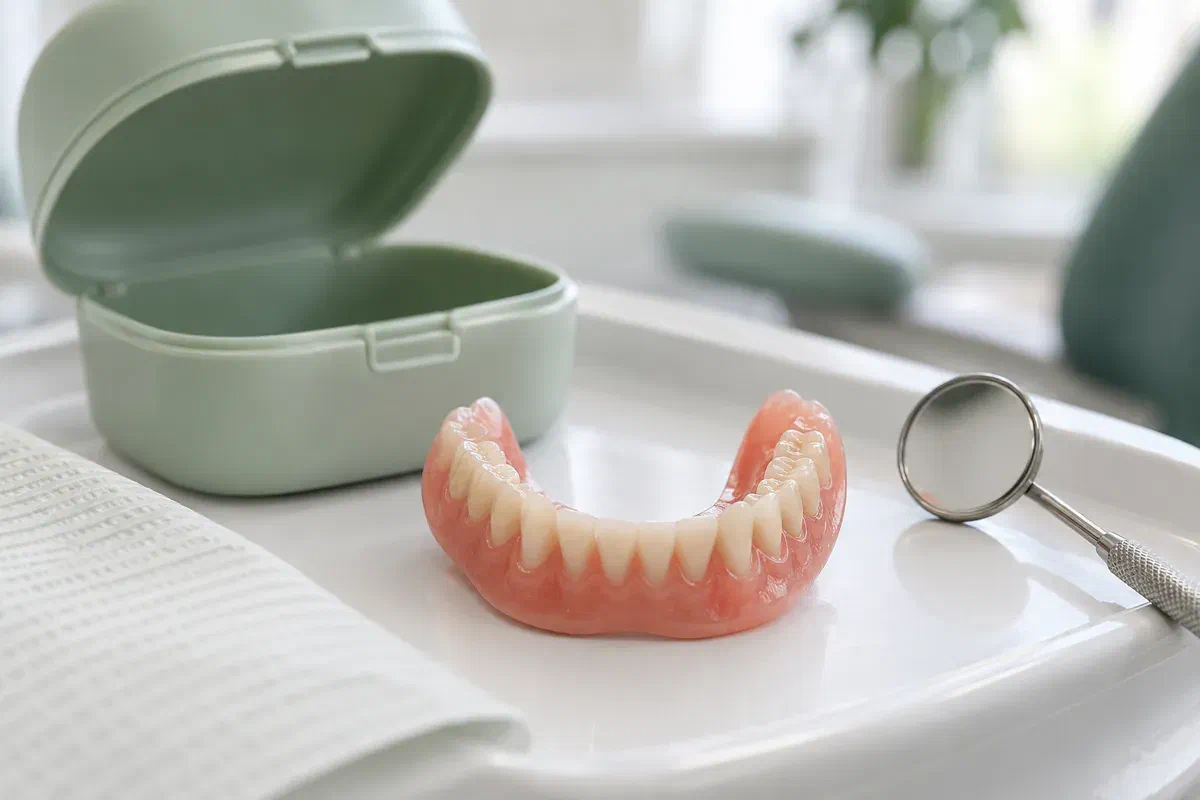
Even if the symptoms feel like last time, the reason may differ. A clear account of when the denture moves, and how that has changed since the last work, helps the dentist examine the right areas.
Note which foods are troublesome again and whether the same side lifts as before. That points the examination at the base, bite or appliance condition rather than straight to adhesive.
If you stopped needing adhesive after the last reline and now use it again, mention when that changed. Bring the product so the support beneath the denture can be reviewed.
Show where soreness has appeared and when you first felt it. A spot that does not heal, or tissue that looks unusual, needs examining separately; friction is not the only explanation.
Phone the clinic if the denture breaks, has a sharp edge or becomes too uncomfortable to wear. Keep the pieces, and avoid household glue or filing it at home.
A review sorts out whether the denture needs routine maintenance or has reached the end of its useful life. Another reline or a targeted adjustment can suit an appliance in good shape. Heavily worn teeth, repeated repairs or a design that no longer suits you may make replacement a more practical discussion.
Grip matters, but so do comfortable eating, natural speech, healthy gums and being able to manage the appliance easily. Ask what further work would improve, what might remain and how long the result is realistically likely to last before another review.
Patient information: American College of Prosthodontists — evaluating dentures for replacement
Each round of maintenance adds to an appliance’s history. Ask whether the teeth and base are still in a condition that makes another reline good value.
Extractions, new dental work or health changes since your last reline can affect fit. Ask whether any work now is interim or intended to last.
Relines and repairs often involve a laboratory. Find out how many days it may be gone, and think ahead about eating, work and family plans while you wait.
The dentist works out why the denture has loosened again and whether it remains a good candidate for modification. Mention all previous work and point out discomfort before the fit is checked.
Expect questions about when the denture was made, previous relines and repairs, and when looseness returned. Describe adhesive use, recent treatment and any difficulty handling it.
The fitting surface, teeth and any clasps or attachments are checked against the current state of your gums and natural teeth, and any sore area is assessed.
You will hear what a further reline, adjustment, repair or a new denture would involve, the likely benefit, limits and an estimate, and how long each might reasonably serve.
After the work, fit and comfort are reassessed and care is explained. Ask how often the denture should be reviewed and who to contact if problems return.
After a reline or repair, the denture may feel different for a time. Advice varies with the work, so check with the team about wearing time, food, cleaning and your next appointment.
Note where soreness develops and what brings it on. Please do not trim acrylic or adjust clasps yourself, since home changes can shorten the life of the work.
Lining materials vary. Confirm which cleaners suit yours and whether adhesive is appropriate, instead of carrying over the routine from before.
Gums and any natural teeth keep changing beneath the denture. Regular reviews allow looseness to be caught early, before it causes soreness or a break.
Your history with this denture is useful. Share when it was last improved, how long that lasted and what practical limits matter as you consider the next step.
Bring a denture that has started to move again to our Bronte Street clinic. We will compare its condition with past work, explain whether maintenance or replacement makes sense and plan the next stage with you.
Bring your denture, any broken pieces and dates of previous relines, repairs or extractions if you know them.
