One end lifts when you chew
Say which side rises and with which foods. That helps the dentist judge whether a clasp, the base, the bite or the condition of the appliance is responsible, rather than reaching for adhesive.

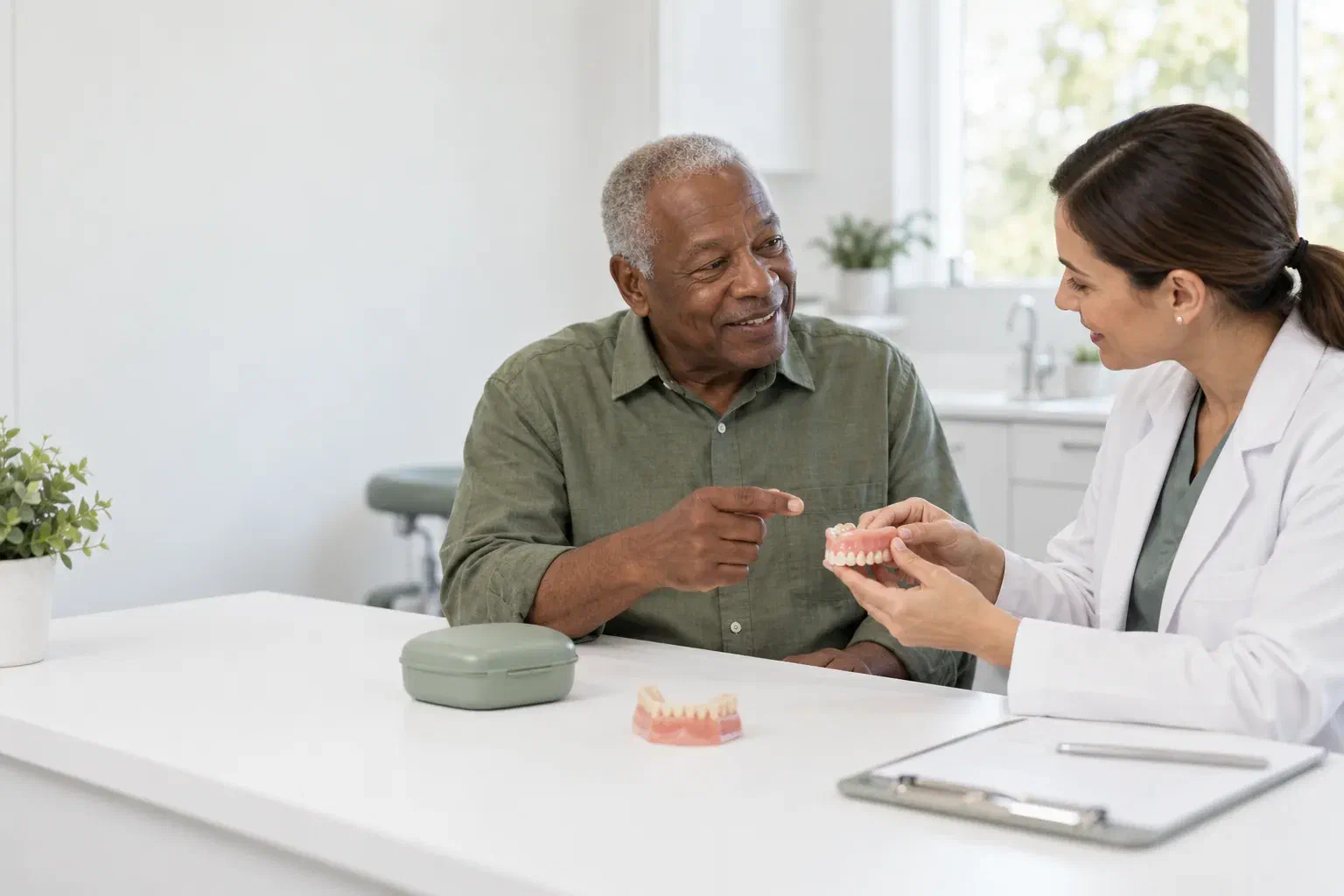
A partial denture leans on your natural teeth, so when it loosens, those teeth deserve a look as well. For rural households around Campbellville, our Milton clinic checks the clasps, the remaining teeth and the fit together, and helps plan any adjustment, reline, repair or replacement around your schedule.
Think of a partial as a team effort. Metal or acrylic clasps hook onto your own teeth, while the base rests on the gums where teeth are missing. If any member of that team changes, the whole appliance can start to wobble, and it tends to happen gradually enough that people adapt without noticing.
Sometimes a clasp has simply opened up with years of use. Other times a supporting tooth has developed decay, gum problems or a new filling that alters its shape, or the ridge under the base has reshaped. Worn artificial teeth, a crack or, for complete dentures, a tired implant attachment can be involved too. The examination looks at each part.
Many people around Campbellville prefer to sort out several things in one trip. When you book, tell us whether you would like a check-up or cleaning arranged alongside the denture assessment. Bring the appliance and any records of extractions, relines or repairs. We will explain what is loosening it, a sensible next step and what that step will not change.
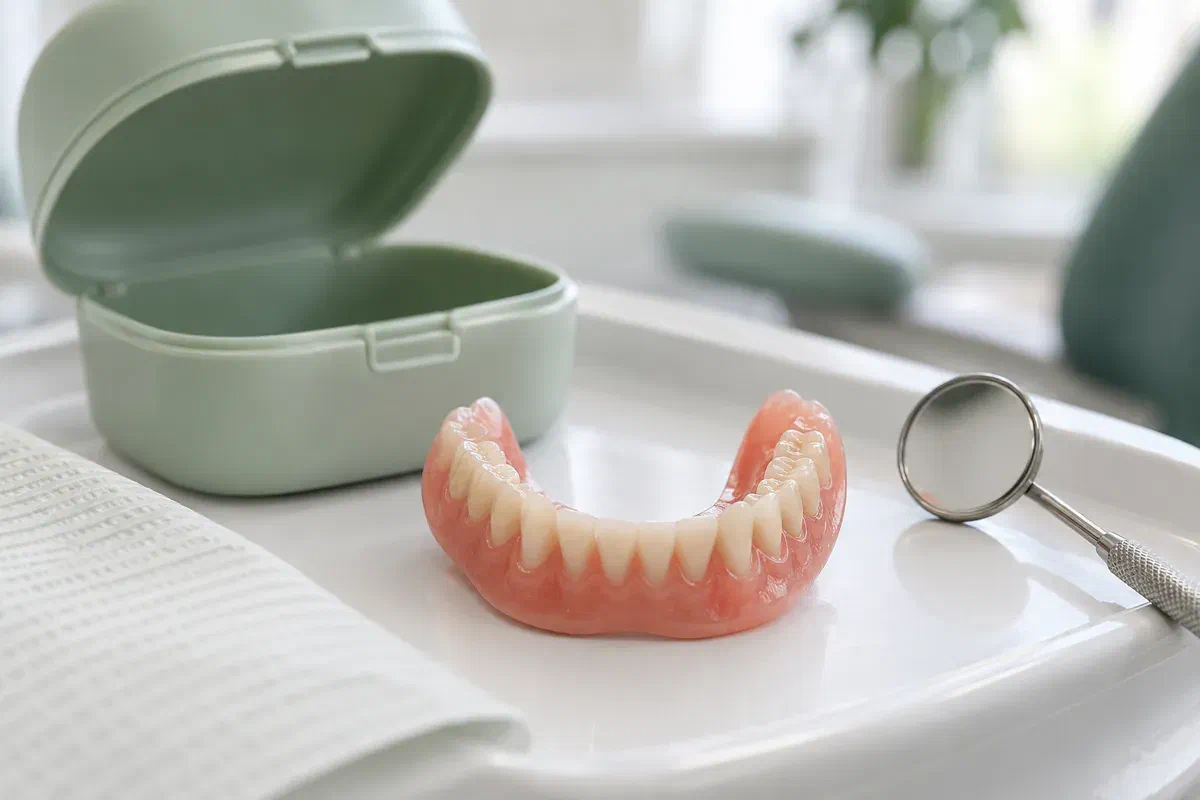
With a partial denture, looseness can show up at the clasps, at the base or both. Your description of where you feel it, and when, helps the dentist decide which component to examine first.
Say which side rises and with which foods. That helps the dentist judge whether a clasp, the base, the bite or the condition of the appliance is responsible, rather than reaching for adhesive.
Partials are usually designed to stay in place with clasps and supporting teeth. If you have begun relying on adhesive, mention the product and how often you use it so the cause can be traced.
Point out tenderness around a clasped tooth or under the base, and how long it has lasted. A sore that does not settle, or unusual tissue, needs its own examination; it is not always friction.
If a clasp breaks, a tooth on the partial comes off or a sharp edge develops, call for advice. Keep all pieces, and please do not bend clasps, glue parts or file the appliance at home.
The assessment separates a component problem from a broader change. A loose clasp may be adjustable, a base may benefit from relining, and a supporting tooth may need its own treatment. When the appliance is worn, damaged or the arrangement of your remaining teeth has changed substantially, a new design may be the more reasonable conversation.
Tightening a clasp is not automatically the answer. Comfort, chewing, speech, the health of supporting teeth and gums, and how easily you can take the partial in and out all matter. Ask what each proposed change is expected to improve and what may remain.
Patient information: American College of Prosthodontists — evaluating dentures for replacement
Clasps, base and artificial teeth can age differently. If a reline or clasp adjustment is suggested, ask how the condition of the other parts affects whether it is worthwhile.
A recent extraction, new crown or filling on a supporting tooth can change how a partial seats. Ask whether the appliance can be modified to match or needs a longer-term rethink.
Some work goes to a laboratory. Ask how long the partial may be away, whether related dental care can be scheduled on the same days and how to manage meals and work meanwhile.
This appointment explains why your denture is unstable and whether it is still suitable to modify. Mention past repairs and recent work on supporting teeth, and point out sore areas before the fit is tested.
You will be asked about the age of the partial, recent work on your natural teeth and how the looseness has developed. Mention adhesive use and any difficulty handling the clasps.
The dentist checks how each clasp engages, how the base sits and the condition of the teeth and gums supporting it, noting anything that needs separate treatment.
Options could include a clasp adjustment, repair, reline, treatment of a supporting tooth or a new partial. Each comes with its likely benefit, limits and an estimate.
After any change, the fit is assessed again and care is explained. Ask when to return and whom to contact if the partial still catches, rocks or presses.
After adjustment or repair, the partial may feel slightly different. Instructions depend on the work, so ask about wear, eating, cleaning and when to come back before going back to your usual routine.
If the partial feels tight or a tooth aches, describe where and when. Bending a clasp at home can strain the supporting tooth or break the metal.
Supporting teeth need thorough daily care, especially where clasps touch them. Confirm which products suit any new lining and whether adhesive is appropriate.
Natural teeth, gums and the partial all change over time. Attend recommended check-ups and mention renewed looseness early instead of waiting for a clasp to fail.
Tell us what has worked, what has changed and how your schedule affects planning, so we can suggest an approach that suits both your mouth and your daily life.
Our Bronte Street practice can assess a partial or full denture that has started to shift. We will examine the clasps, your teeth and the fit, explain your choices and help organize the work with as few trips as practical.
Please bring the appliance, any broken parts and information about recent extractions, fillings, relines or repairs.
