Meals have quietly changed
Mention foods that are now avoided, meals that take longer and whether the denture tips when biting. The dentist can then examine the base, bite and appliance condition instead of suggesting adhesive by default.


Often it is a son, daughter or partner who first notices: a parent eating less, avoiding certain foods or struggling to get a denture in each morning. For families in Erin and Hillsburgh, our Milton clinic assesses the fit and handling together and explains whether adjustment, relining, repair or replacement would help.
Plenty of people with a loose denture simply adapt. They cut food smaller, skip the crusty bread, leave the appliance out when no one is visiting or quietly stop eating with others. Family members are often the ones who spot these changes, and it can be hard to know how to raise them.
Over the years, the gums and bone that support a denture gradually change shape while the base stays fixed. The artificial teeth wear, acrylic can crack, natural teeth still in place may shift, and implant fittings can loosen. Arthritis or reduced grip can also make a denture harder to seat properly, which feels much like a poor fit.
If you are bringing someone in from Erin, it is fine to come along and help describe what you have seen, with their agreement. Bring the denture, any medication list and details of extractions, relines or repairs. We will speak with the wearer directly, explain the likely cause and a practical next step, and be clear about what that step cannot achieve.
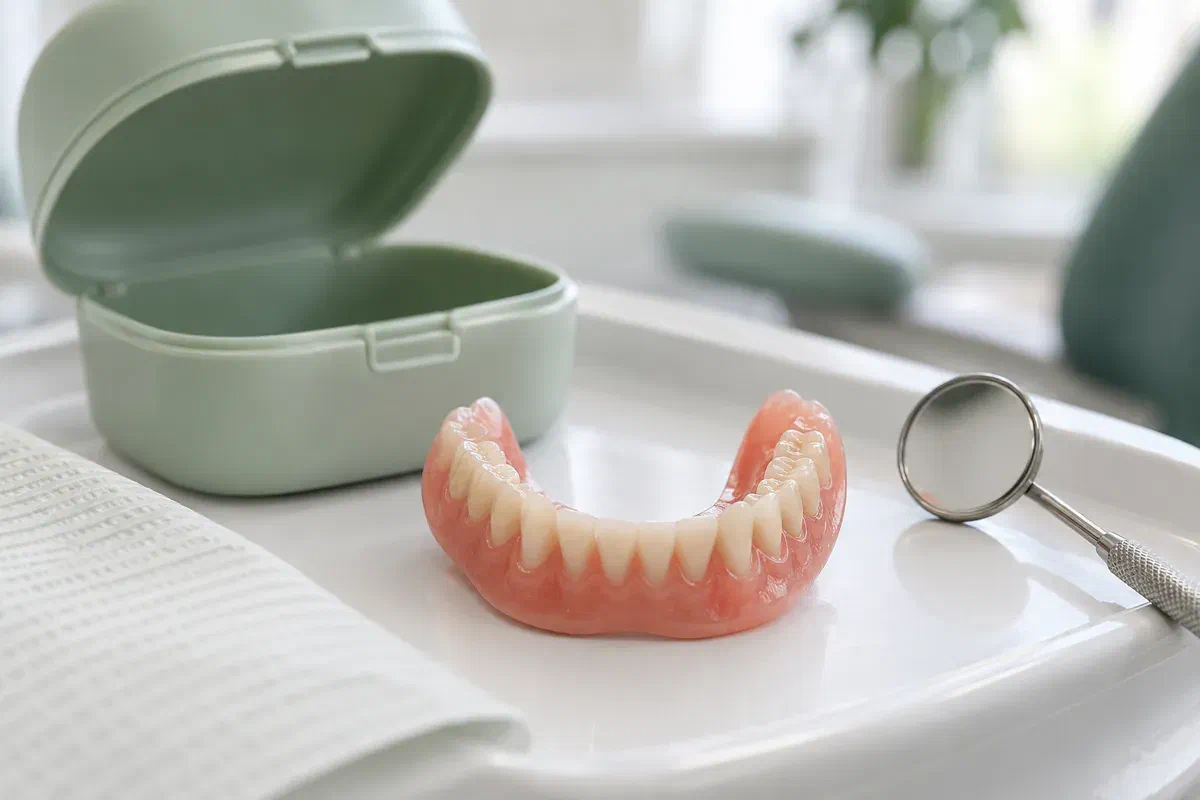
People rarely complain about a denture outright. Describe what you, or the person you support, have observed in daily life; those details help the dentist focus on the right part of the fit and handling.
Mention foods that are now avoided, meals that take longer and whether the denture tips when biting. The dentist can then examine the base, bite and appliance condition instead of suggesting adhesive by default.
Correctly used adhesive can help, but needing more and more, or struggling to apply and clean it off, is worth raising. Bring the product so the fit and support can be checked properly.
Look for wincing, a hand to the cheek or avoiding wearing the denture. Point out where it seems sore and for how long. A lingering ulcer or unusual tissue needs examination of its own, not only a denture tweak.
If the denture breaks, has a sharp edge or cannot be worn comfortably, call the clinic for advice. Keep the pieces together, and please avoid household glue or home filing.
The examination distinguishes a single trouble spot from a fit that has drifted throughout. A targeted adjustment or reline may help an appliance in reasonable condition. Worn teeth, damage or a design that has become hard to manage can make replacement a more realistic discussion.
For many older wearers, ease of handling matters as much as grip. Comfortable eating, clear speech, healthy tissue and being able to put the denture in, take it out and clean it independently all count. Ask what the proposed work should improve and what may remain difficult.
Patient information: American College of Prosthodontists — evaluating dentures for replacement
The base and the teeth may have worn at different rates. If a closer fit is needed alongside other wear, ask how that affects whether relining is worthwhile.
Extractions, new medications that cause a dry mouth or changes in dexterity can all affect how a denture feels. Mention these so the plan reflects the whole situation.
Some work involves a laboratory. Ask how long the denture may be away and how meals and daily routines can be managed, particularly if someone relies on it to eat comfortably.
The aim is to find out why the denture is unstable and whether changing it is sensible. Share any repair history and medical details, and mention discomfort before the fit is tested.
The dentist asks the wearer about the denture’s age, when problems began and what has changed, inviting your observations too. Adhesive use, recent treatment and handling difficulties are covered.
The appliance and any clasps or attachments are examined with the gums and remaining teeth. The dentist may also watch how the denture is inserted and removed, and note any sore area.
Each realistic choice is described with its expected benefit, limits and an estimate. The wearer’s preferences guide the decision, and questions from family are welcome.
After treatment, comfort and fit are reviewed and care is explained to the wearer and anyone who helps. Ask when to return and who to call if problems continue.
A changed denture can feel odd at first, and instructions depend on what was done. Before heading home, ask about how long to wear it, what to eat, how to clean it and when to return.
Note where tenderness appears and what seems to trigger it. Please do not trim the acrylic or bend clasps at home, since small changes can disturb the fit elsewhere.
Ask which products suit any new lining and whether adhesive is still appropriate. If grip is limited, mention it; the team can suggest ways to make handling easier.
The mouth beneath a comfortable denture still needs care. Attend recommended appointments, and let the clinic know if looseness returns or eating becomes harder again.
Your observations are useful, and so is the wearer’s own view. Tell us how things were a year ago, how they are now and which practical limits matter, such as mobility or travel.
Visit our Bronte Street practice with the person you support to discuss a denture that slips or is hard to manage. We will examine the fit and handling, explain options clearly and plan any work at a comfortable pace.
Bring the denture, any broken pieces, a medication list and what you know about past relines, repairs or extractions.
