Foods that unseat it
List what you now avoid and whether the front or one side lifts. Those details steer the examination toward the base, the bite and the state of the appliance, instead of a default suggestion of more paste.


The hardest part of fixing a loose denture is often the logistics: lab time, days without it, and how many trips it will take. For people making the journey from Etobicoke, we assess the fit and condition first, then plan any adjustment, reline, repair or replacement around as few visits as practical.
Before booking, most people want to know one thing: how long will I be without my teeth? That question deserves a real answer, and it depends on what is actually wrong. A quick adjustment, a chairside lining and a laboratory reline involve very different amounts of time away from the appliance.
Finding the cause comes first. The ridges under a denture reshape over the years while the base stays fixed, but worn teeth, a fracture, changes in natural teeth that remain, or a weakened implant attachment can produce the same wobble. Once the reason is clear, the treatment and the timetable follow from it.
If you are coming from Etobicoke, tell us when you book that you would like to keep the number of visits down. Bring the denture, a list of past extractions, relines and repairs, and a sense of which days work for you. We will explain the likely cause and a realistic next step, including its limits, and map out the appointments it would need.
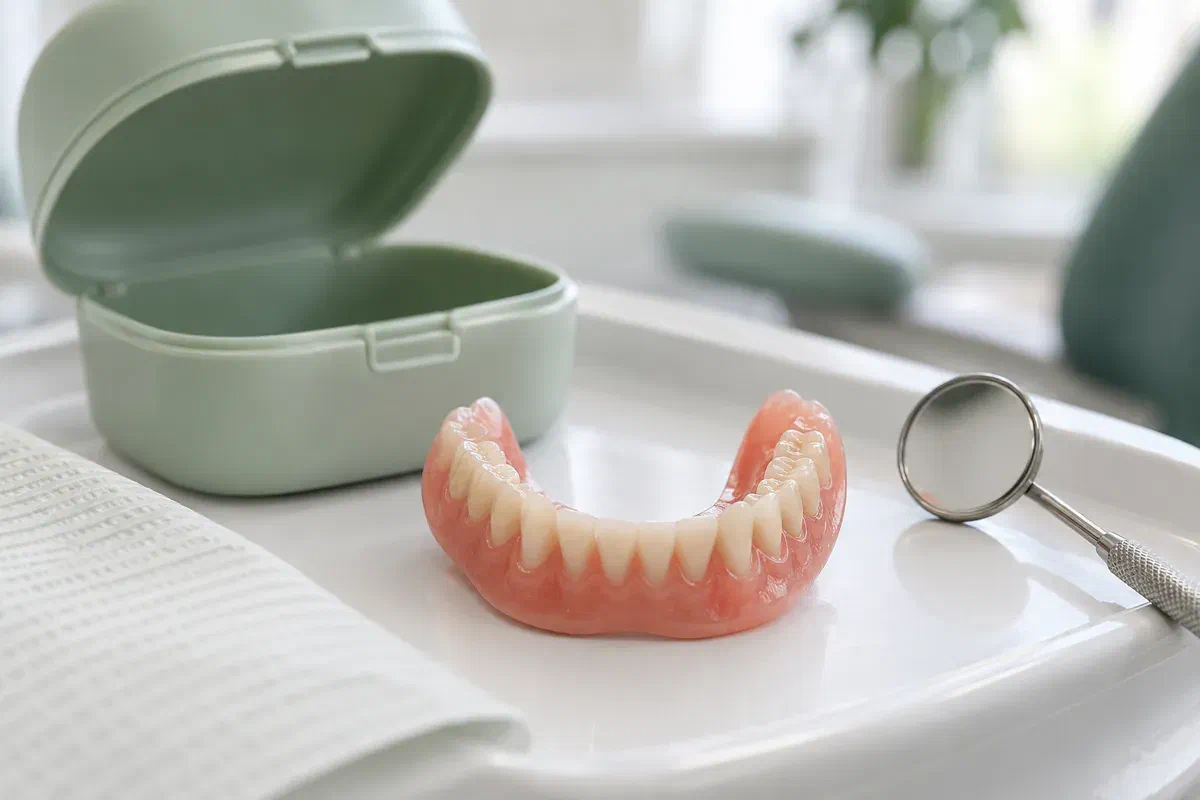
A single, well-prepared appointment can achieve a lot. Because looseness often shows up during meals or conversation rather than in the chair, specific notes help the dentist test the right things the first time.
List what you now avoid and whether the front or one side lifts. Those details steer the examination toward the base, the bite and the state of the appliance, instead of a default suggestion of more paste.
Correctly used adhesive can help some wearers. A steady increase is worth flagging, as it can mean the fit has drifted. Bring the product and an honest estimate of how often you apply it.
Note where it is and when it started. A lingering ulcer or a patch of tissue that looks different needs examining in its own right; it should not be assumed to be rubbing alone.
For a broken denture, a sharp edge or pain that stops you wearing it, phone the clinic first for advice. If you have severe pain, swelling or an urgent problem, seek closer urgent care rather than waiting for the trip. Keep all pieces, and avoid household glue.
The first visit separates a local issue from a broader loss of fit. An identified pressure point or worn clip might be dealt with directly, and a sound denture may suit a reline. Advanced wear, damage or an unsuitable design can make a new appliance the more practical discussion, with a different schedule.
Good results are about more than grip. Comfortable chewing, natural speech, healthy tissue and easy handling all count. Ask what the proposed work should improve, which concerns might remain and how many appointments it is likely to involve.
Patient information: American College of Prosthodontists — evaluating dentures for replacement
A base needing a closer fit may also have worn teeth or damage. Ask how that affects whether relining is worthwhile, so you do not schedule time off for work that will soon need redoing.
After recent extractions, the mouth may change for some months. Ask whether work now would be interim and when a longer-lasting change makes more sense, so visits can be grouped sensibly.
If a laboratory is involved, ask how long the denture would be out of your hands and whether the work can be arranged so you drop it off and collect it on planned days.
The aim is to explain why the denture is unstable, whether it can be modified and how the work fits your calendar. Mention any repairs and sore areas before the fit is tested.
Expect questions on the age of the denture, the onset of looseness and changes in your mouth. Share adhesive habits, recent treatment, handling difficulties and the days you can realistically attend.
The appliance, including any clasps or connectors, is checked alongside your gums and remaining teeth. Stability, comfort and any area that needs a separate look are assessed together.
Each realistic choice is explained with its expected benefit, limits, estimate and the number of visits involved, whether that is an adjustment, a reline, a repair or a replacement.
After the work, the fit is reassessed and care is explained. Ask when the follow-up should be, and how to reach the team by phone if pressure or movement persists before then.
A revised fit can feel unfamiliar, and care advice depends on what was done. Before you leave, ask about wearing time, eating, cleaning and what kind of problem warrants another trip.
Describe where soreness develops and when. The team can advise whether it can wait for your review. Please do not trim acrylic or bend clasps yourself, since that can unsettle the fit elsewhere.
Different lining materials need different products and handling. Ask whether adhesive suits the new surface rather than carrying on with your old routine by default.
Your tissues, and any natural teeth, need ongoing care beneath a comfortable denture. Scheduling reviews ahead makes them easier to keep, and lets looseness be caught before it becomes a problem.
What you already know about your denture saves time. Mention past fixes that helped, anything that feels different lately and which scheduling or practical limits matter most as you weigh a repair, reline or replacement.
Bring your loose or unreliable denture to our Bronte Street clinic. We will assess the appliance and your mouth, explain what is worth changing and organize any lab work, relining or replacement into a schedule that suits you.
Bring the denture, any broken pieces, a note of recent relines, repairs or extractions, and the days you can attend.
