It had been rocking at meals
Say whether the denture pivoted or lifted when you bit into certain foods before it broke. That points the dentist toward checking the base, the bite and the condition of the appliance, not just the visible damage.


A crack across the plate, a tooth that has popped off, a clasp that no longer grips: damage and looseness often go hand in hand. If you are in Georgetown, our Milton team can look at the break and the fit together and explain whether repair, relining or a new denture is the sensible way forward.
When a denture snaps or a tooth comes away, the instinct is to fix it at the kitchen table. Household glue can seem to work for a day, but it can make a professional repair harder and alter how the pieces line up. It is far better to wrap everything carefully and phone for advice.
Breakage and looseness are often linked. A base that no longer sits evenly on the gums flexes with every bite, and that repeated stress can eventually crack the acrylic. Worn teeth, changes in any natural teeth, or a failing implant attachment can contribute too. Repairing the break without understanding the fit may only delay the next one.
From Georgetown, bring every fragment along with the denture and any history of past repairs, relines or extractions. Let us know how the damage happened and how the appliance felt beforehand. We will assess both the break and the underlying fit, explain what can sensibly be done and be upfront about what a repair cannot change.
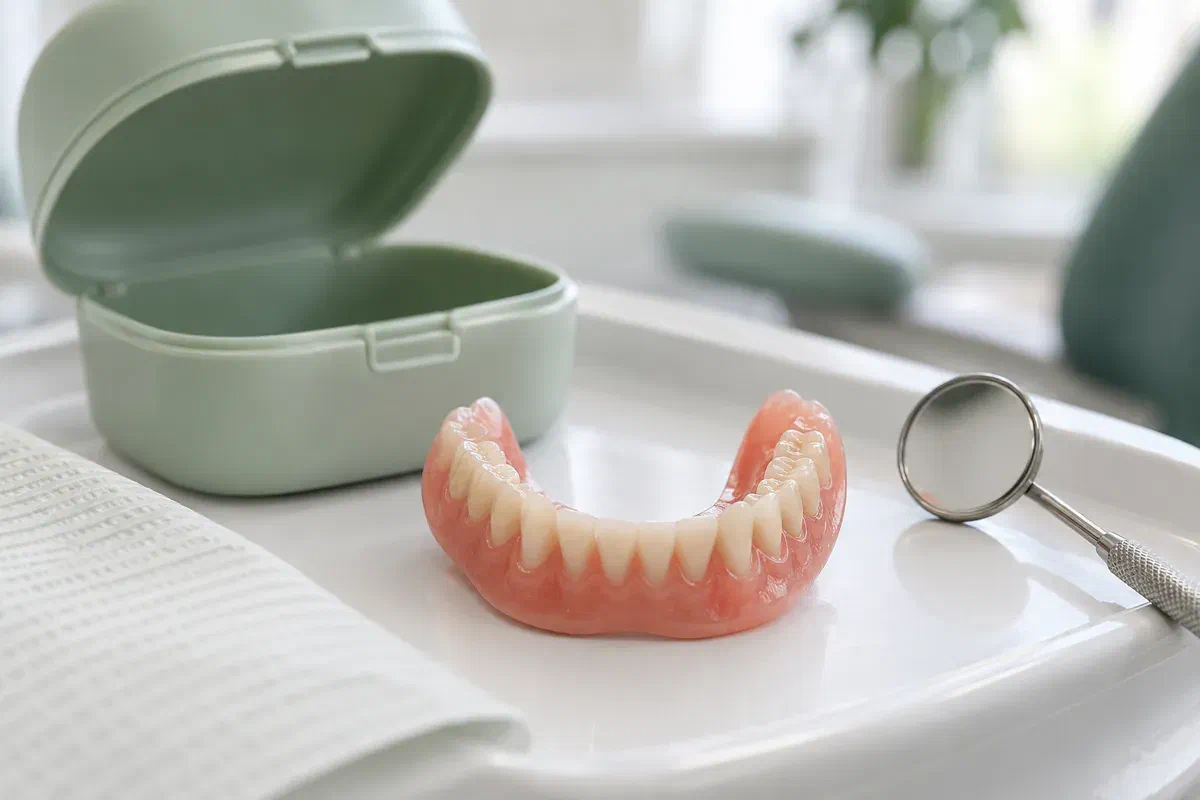
A crack rarely appears from nowhere. Telling the dentist how the denture behaved in the weeks before it broke helps reveal whether a fit problem was building up, which matters for how it should be fixed.
Say whether the denture pivoted or lifted when you bit into certain foods before it broke. That points the dentist toward checking the base, the bite and the condition of the appliance, not just the visible damage.
Adhesive used as directed can be helpful, but a steady increase in how much you needed may have been an early sign of poor fit. Mention your product and routine so the supporting tissues can be checked.
Point out any area the broken edge has rubbed and how long it has been sore. A sore that lingers, or tissue that looks unusual, needs examination of its own, not only a smoother edge.
Call the clinic for advice as soon as a denture breaks or develops a sharp edge. Keep all pieces dry and together, and avoid household glue, super glue or filing the edges at home.
Some breaks are clean and isolated, and a repair may restore the denture well. Others happen because the base has been flexing on a changed ridge, in which case relining alongside the repair may be worth discussing. If the appliance is heavily worn or has been mended several times, replacement may be the more realistic topic.
A repaired denture should be comfortable as well as intact. Chewing, speech, gum health and how easily you handle it all count. Ask what a repair is expected to restore, and which issues might remain even when the mend itself is sound.
Patient information: American College of Prosthodontists — evaluating dentures for replacement
A fracture may be the obvious problem, but worn teeth or other weak spots affect how long a repair is likely to serve. Ask how those findings shape the recommendation.
Extractions or changes in remaining teeth can alter how a denture is supported. Ask whether that played a role in the break and whether any work now is interim.
Many repairs involve a dental laboratory. Ask how long the denture is likely to be away and how you might handle meals, work and social plans in the meantime.
The visit establishes how the denture broke, why it may have loosened and whether repairing it is still worthwhile. Share past repairs and mention any sore area before the dentist checks the fit.
Describe what you were doing when the damage happened and how the denture felt in the weeks before. Mention its age, any earlier repairs or relines, adhesive use and recent dental work.
The dentist checks the fracture, the remaining teeth on the appliance and any clasps, along with your gums and natural teeth. A sore area that needs separate attention is noted.
You will hear what a repair would involve, whether relining should accompany it, how replacement compares and an estimate for each, along with what each can and cannot do.
When the denture comes back, its fit and comfort are reviewed and care is explained. Ask how to handle it, when to return and who to call if movement or pressure continues.
After a repair, the denture may feel slightly different. Advice depends on the work, so ask about handling, eating, cleaning and your review appointment before returning to your usual routine.
Tell us where soreness appears and when it started. Please leave any rough spot or tight clasp for the clinic to adjust; filing or bending at home can weaken the repair or change the fit.
Ask which cleaners suit the repaired or relined areas, and how to store the denture so it is not dropped or knocked. Confirm whether adhesive is appropriate before you resume using it.
Your gums, any natural teeth and the appliance itself need ongoing review. Keep recommended appointments and mention flexing, rocking or new looseness early, before another break.
Tell us how the damage happened, how the denture behaved beforehand and which practical concerns matter most while it is being repaired or reviewed.
Our Bronte Street clinic can assess a broken, chipped or loose denture and the fit behind the damage. We will explain your repair, reline and replacement choices and arrange any lab work with you.
Bring the denture, all broken pieces or loose teeth, and details of earlier repairs, relines or extractions.
