

Illustrative patient discussing the fit of a removable denture with a dentist
Restorative Dentistry

Loose Denture Treatment in Milton

Has your denture started lifting at the dinner table or slipping when you laugh? Here in Milton, we look at the appliance and the mouth beneath it together, then explain whether an adjustment, a reline, a repair or a new denture makes the most sense for you.

Denture fit, close to home in Milton

Did the denture change, or did your mouth?

Most people notice it over supper. A bite of toast tips the lower denture forward, or the upper plate drops slightly when you open wide. Often the appliance itself looks unchanged, which makes the looseness puzzling. That is exactly the kind of detail worth describing at an appointment.

Gums and the bone under them gradually reshape, while the acrylic base keeps the form it was given when it was made. Movement can also come from worn artificial teeth, a crack, changes around natural teeth that still remain, or an implant attachment that has lost its grip. Looking at all of these together points to the real cause.

Since you are already in Milton, coming by for an initial look is usually simple. Tell us what you have tried so far, which moments are hardest, and bring the denture along with any notes about extractions, relines or repairs. From there we can talk through a sensible next step and what it can and cannot achieve, without assuming a brand-new appliance is needed.

Book a denture fit check
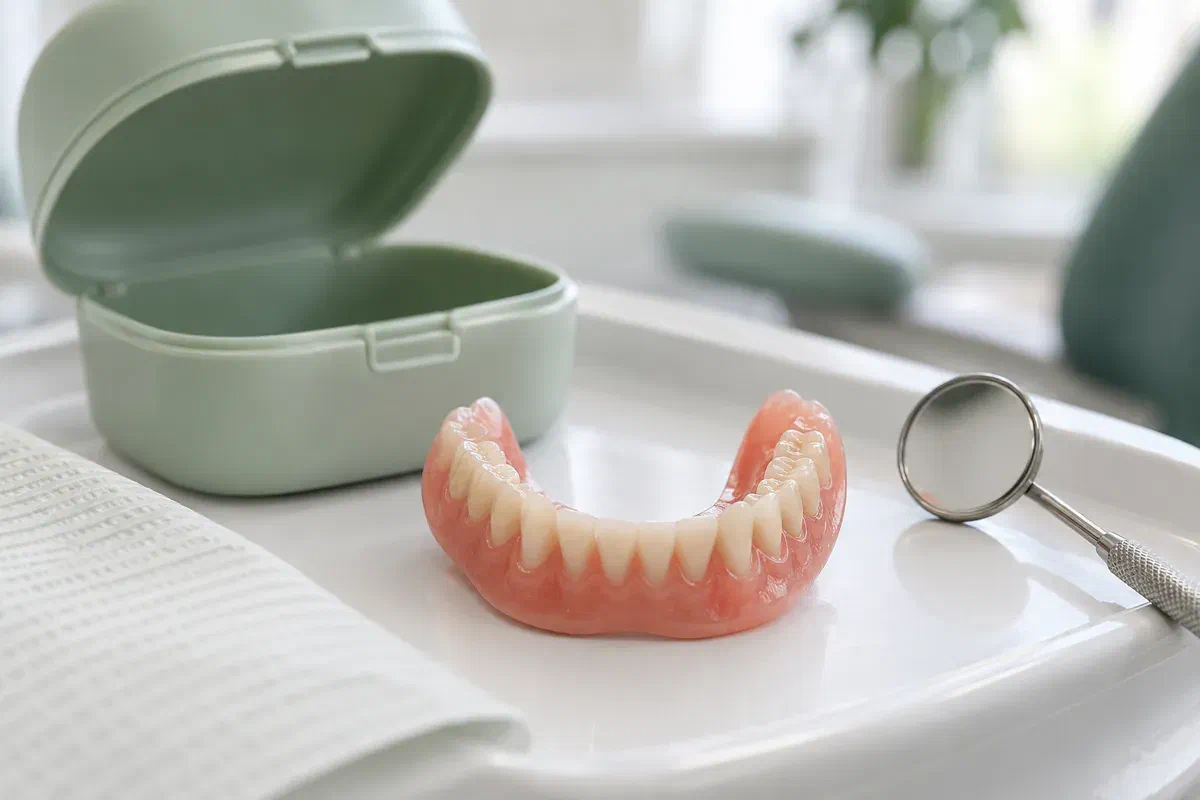
Lower removable denture beside an open storage case and dental mirror
Everyday signs worth mentioning

Small slips that add up over a week

Looseness rarely shows up neatly in the dental chair. The more precisely you can describe when it happens, what you were doing and how it feels, the better the examination can focus on the right part of the fit.

Chewing tips the denture

Note which foods cause trouble, whether one side rises, and if biting with your front teeth makes it worse. The dentist can then check the base, the bite and the condition of the appliance instead of reaching straight for more adhesive.

The adhesive tube empties faster

Adhesive has a place when it is used as directed, yet needing more and more of it can point to a fit that has drifted. Bring the product you use and say how often you apply it so the support underneath can be examined.

A rubbed spot keeps returning

Show where the denture presses and how long the area has been tender. A sore that lingers, or tissue that looks different, needs its own examination alongside the fit check, because not every sore spot is simple friction.

A cracked denture, a sharp edge or an appliance you can no longer wear comfortably is a reason to call the clinic for advice. Keep every fragment, and skip household glue or filing it down at home.

What an assessment can tell you

A clearer picture of why it moves

The first job is telling apart a single problem spot from a fit that has drifted all over. A pressure point or a worn component might respond to a focused adjustment or a fresh lining. Heavy wear, damage or a design that no longer suits your mouth can make a new appliance the more realistic conversation.

Tighter is not automatically better. Comfort, chewing, clear speech, healthy tissues and how easily you can put the denture in and take it out all count. Ask what the suggested work should improve, and which concerns might remain even when the change is carried out well.

Patient information: American College of Prosthodontists — evaluating dentures for replacement

Look at the whole appliance

The pink base and the artificial teeth can age at different rates. A denture that needs closer adaptation may also show wear or damage that affects whether a reline is worthwhile, so ask how those findings shape the advice.

Consider where healing stands

An appliance placed soon after extractions often needs a different plan from one you have worn for years. Talk about how the mouth is expected to keep changing, and whether any work is meant to be temporary or longer lasting.

Allow for time without it

Some fixes involve a dental laboratory. Ask whether the denture needs to stay behind, roughly how long that could take, and how you might manage meals, work and social plans in the meantime.

How the visit unfolds

Understanding the movement comes before any reshaping.

An appointment should explain why the denture is unstable and whether it is still a good candidate for modification. Mention any recent repairs, and let the team know about sore areas before the fit is tested.

  1. Talk through its history

    You will be asked when the denture was made, how the looseness crept in, and what has changed in your mouth since. Mention adhesive habits, recent dental work, trouble handling the appliance and the activities most affected.

  2. Examine the denture and the mouth together

    The base, the teeth and any clasps or attachments are checked along with your gums and remaining teeth. Stability and comfort are judged side by side, and any sore area that needs a separate look is noted.

  3. Weigh the realistic options

    You will hear what the proposed work involves, what it should help with, where its limits lie, and what it is estimated to cost. Depending on the cause, that may be a local adjustment, a reline, a repair or a new denture.

  4. Recheck the fit and plan follow-up

    Once work is done or a new appliance is fitted, the fit is reviewed and care instructions are explained. Ask when adaptation will be checked again and who to call if pressure, movement or handling problems carry on.

Living with the revised fit

Settling in is a process worth reporting on

A changed denture can feel unfamiliar for a while, and the advice varies with the work that was done. Before you go back to your usual routine, ask about wearing time, eating, cleaning products and when you should return.

Tell us where it presses

Describe where tenderness appears and what you were doing when it started. Please avoid trimming the acrylic or bending a clasp at home, since even a small change can throw off other parts of the fit.

Clean the new lining as directed

Lining materials differ, and some need particular cleaners or gentler handling. Confirm the routine and whether adhesive still suits you, rather than carrying every habit over from the old surface.

Keep regular reviews on the calendar

A denture that feels good today still sits on tissues, and sometimes natural teeth, that need ongoing care. Keep recommended visits and speak up early if looseness comes back, instead of expecting the fit to stay the same for good.

Matching the fix to the problem

Three directions, chosen by what the exam finds

Which path suits you depends on your mouth, the appliance and the source of the movement. For each option discussed, ask how it deals with your main complaint and whether it also addresses wear, damage or changed support.

When a particular spot or part is at fault

Adjusting or repairing one area

Localized pressure, a broken component or another clearly identified issue can sometimes be handled without replacing everything. The dentist should explain how far the work goes and what it is likely to change.

When the base has drifted from your gums

Relining the fitting surface

A new inner surface can help a suitable denture follow the current shape of the mouth more closely. It does not, on its own, fix worn teeth, an uneven bite, appearance concerns or a flawed overall design.

When changing the current denture is not enough

A replacement or a different kind of support

A new appliance may be discussed when fit and condition problems are widespread. For some people, an implant assessment is also worth considering, with its own questions about suitability, treatment and upkeep.

Common questions in Milton

What people ask before deciding

Your history with dentures is valuable. Share what worked in the past, what has shifted, and which practical limits matter most to you when weighing a repair, a reline or a new appliance.

(905) 876-4488
My denture looks perfectly fine, so why has it started moving?
An intact denture can still fit poorly. The gums and bone that support it change shape over time while the base stays the same, and other factors can play a part too. Describe the movement and arrange a check rather than judging by appearance.
How do I know whether the problem is my upper or lower denture?
Sometimes it is obvious, and sometimes one appliance makes the other feel unstable through the bite. Note which one you notice moving and when. The dentist will examine both, along with how they meet, before suggesting where work is needed.
Could a loose denture be affecting the way I speak?
It can. Lifting or clicking during conversation is a common complaint with a drifting fit. Mention any words or situations that cause trouble, since that helps the dentist judge stability during movement as well as at rest.
Is a reline always the cheaper or quicker answer?
Not necessarily. A reline only changes the fitting surface, so if the teeth are heavily worn, the bite is off or the denture is damaged, it may not be worthwhile. The examination helps you compare options on their merits, including the estimate for each.
Can I keep wearing my denture while it is being assessed?
In most cases the initial examination does not require you to leave it behind. If later work involves a laboratory, ask in advance how long it might be away and whether any interim arrangement is possible.
What should I do if a sore spot appears after an adjustment?
Contact the clinic and describe where it is and how long it has lasted. Avoid filing or reshaping the denture yourself. A sore that persists, especially for more than three weeks, needs the tissue examined as well as the fit reviewed.
Visit us in Milton

A steadier denture starts with a proper look.

Stop by our Bronte Street practice to talk about a denture that has started to slip or no longer feels secure. We will check its condition, walk you through suitable options and help you plan any adjustment, lab work or replacement.

Please bring the denture, any broken pieces and notes on recent relines, repairs or extractions.

Visit Milton Dental Clinic
Unit 1, 342 Bronte St. S, Milton, ON L9T 5B7
Get directions Clinic hours
Monday–Thursday
11am–7pm
Friday–Sunday
By appointment only

Areas we serve

  • Milton
  • Oakville
  • Mississauga
  • Georgetown
  • Halton Hills
  • Acton
  • Campbellville
  • Brampton
  • Burlington
  • Puslinch
  • Rockwood
  • Erin
  • Caledon
  • Etobicoke
  • Old Milton
  • Bronte Meadows
  • Timberlea
  • Dorset Park
  • Dempsey
  • Clarke
  • Beaty
  • Coates
  • Harrison
  • Scott
  • Willmott
  • Ford
  • Bowes
  • Cobden
  • Walker
  • Mountain View
  • Milton Heights
  • Hawthorne Village
  • Valley View
  • Fallingbrook
  • Nassagaweya
  • Trafalgar
  • Esquesing
  • Nelson
  • Brookville
  • Moffat
  • Glen Williams
  • Norval
  • Limehouse
  • Stewarttown
  • Ashgrove
  • Hornby
  • Silver Creek
  • Speyside
  • Scotch Block
  • North Oakville
  • River Oaks
  • Glen Abbey
  • West Oak Trails
  • Palermo
  • Bronte Creek
  • College Park
  • Joshua Creek
  • Uptown Core
  • Preserve
  • Iroquois Ridge
  • Lisgar
  • Meadowvale
  • Meadowvale Village
  • Churchill Meadows
  • Erin Mills
  • Central Erin Mills
  • Streetsville
  • East Credit
  • Creditview
  • Heartland
  • Sheridan
  • Mount Pleasant
  • Credit Valley
  • Huttonville
  • Churchville
  • Springbrook
  • Northwest Brampton
  • Bram West
  • Fletcher's Meadow
  • Fletcher's Creek South
  • Alton Village
  • Orchard
  • Millcroft
  • Headon Forest
  • Tansley
  • Brant Hills
  • Tyandaga
  • Kilbride
  • Lowville
  • Aberfoyle
  • Morriston
  • Arkell
  • Hillsburgh
  • Freelton
  • Carlisle
  • Waterdown
  • Flamborough
  • Mountsberg

How can we help?

Milton Dental Clinic

Have a question about your smile? Choose the option that works best for you.

For urgent dental concerns, please call.
Messages are reviewed during clinic hours.