Chewing feels less efficient
Describe foods that now take longer to manage and whether the denture tilts when you bite. That helps the dentist look at tooth wear and the bite, along with the base, instead of defaulting to adhesive.


Sometimes a denture loosens not because of the fitting surface but because its teeth have worn down and the bite no longer meets evenly. For people travelling from Rockwood, our Milton team examines the teeth, the bite and the base together before suggesting an adjustment, reline, repair or replacement.
Run a fingertip over the back teeth of an older denture and they may feel smooth where they once had ridges. As those surfaces flatten, the upper and lower teeth can meet unevenly, so one side presses first and the other lifts. Chewing takes more effort, and the appliance starts to feel loose even if the base is not the main problem.
Of course, fit can drift for other reasons as well. The gums and bone beneath a denture change shape with time, a crack may allow flexing, natural teeth that remain can move, and an implant attachment may lose its grip. Often more than one of these is happening at once, which is why the teeth, bite and base are assessed together.
Coming from Rockwood, it helps to bring the denture and, if you have one, a photo of how it looked when new. Note any changes in chewing or how your face looks at rest, and share details of extractions, relines or repairs. We will explain what is driving the movement and what a reasonable next step can and cannot change.
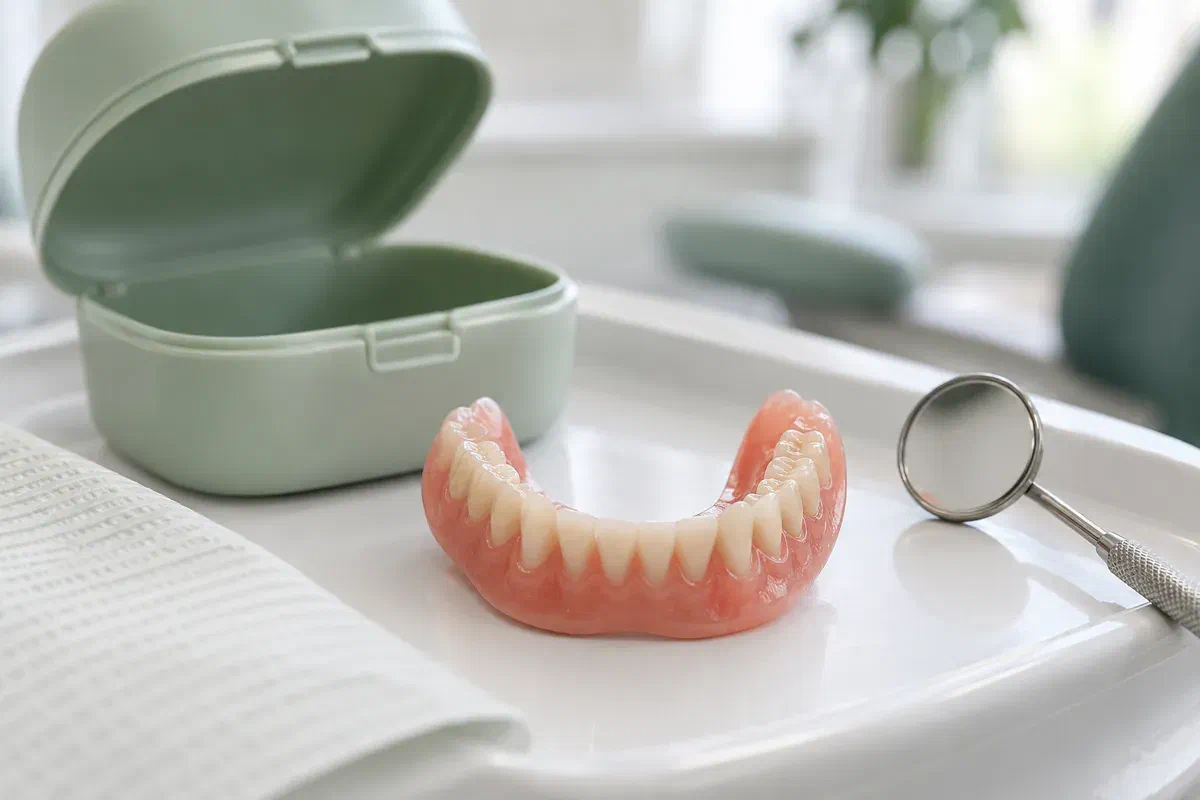
Worn teeth and a loose base can produce similar complaints. How the denture behaves while you eat, speak or rest gives the dentist a head start, since many of those moments are difficult to reproduce during an examination.
Describe foods that now take longer to manage and whether the denture tilts when you bite. That helps the dentist look at tooth wear and the bite, along with the base, instead of defaulting to adhesive.
Adhesive used correctly can help a reasonably fitting denture, but it cannot level a worn bite. If you are using more without much improvement, bring the product and mention how often you apply it.
An uneven bite can push the denture into one spot repeatedly. Show where it hurts and since when; a sore that lingers or tissue that looks unusual needs examining for its own sake.
If the denture breaks, loses a tooth or develops a sharp edge, phone the clinic. Keep every piece, and avoid household glue or filing it smooth yourself.
When the main issue is a fitting surface that no longer matches the ridge, a reline can help a denture whose teeth are still in good shape. When the teeth are flattened or the bite has collapsed, relining alone may change little, and replacement or another approach may be more worthwhile to discuss. A single high spot may need only an adjustment.
Stability is one piece of the picture. Comfortable chewing, clear speech, healthy gums and easy handling matter as well. Ask what any proposed work is expected to improve, and which complaints, such as appearance or chewing efficiency, may remain.
Patient information: American College of Prosthodontists — evaluating dentures for replacement
A base that could be relined may carry teeth that are heavily worn. Ask how that combination affects the recommendation and whether relining would offer real value.
Extractions or changes in natural teeth can alter support and bite. Ask whether proposed work is interim, and how the plan might change as your mouth settles.
Relines, repairs and new dentures often involve a laboratory. Ask how long you might be without the appliance and how to manage meals, work and other commitments.
Not always in that order, but always all three. The dentist works out why the denture moves and whether modifying it still makes sense. Mention past repairs and point out any sore area before the fit is checked.
Expect questions about the denture’s age, when chewing or stability changed and what has happened in your mouth. Mention adhesive habits, recent dental work and any difficulty handling it.
The dentist looks at the biting surfaces, how upper and lower teeth contact, the fitting surface and any clasps or attachments, along with your gums and natural teeth.
You will hear what an adjustment, reline, repair or replacement would involve, the expected benefit, limits and an estimate, with particular attention to how each affects the bite.
After treatment, comfort, fit and bite are reviewed and care is explained. Ask when to return and who to call if pressure, movement or chewing difficulty continues.
If the teeth or fit have been altered, chewing and speaking may feel different at first. Ask about wearing, eating, cleaning and follow-up before returning to your usual routine, since the advice depends on the work done.
Report any spot that becomes sore and what triggers it. Please do not file teeth or acrylic or bend clasps yourself, as even small home adjustments can upset the bite.
New teeth or lining material may need particular cleaners. Confirm the routine and whether adhesive is still appropriate rather than carrying over old habits automatically.
Denture teeth continue to wear and gums continue to change. Keep recommended appointments so the bite and fit can be checked, and mention new looseness early.
Tell us how the denture used to feel, what has changed and what matters most in daily life, so the options can be weighed against your priorities.
Bring your denture to our Bronte Street practice if it rocks, feels worn or no longer chews well. We will examine the teeth, bite and base, explain the options that suit the cause and plan any work with you.
Bring the appliance, any older dentures and broken pieces, and details of past relines, repairs or extractions.
