The replacement tooth rocks or rotates
Avoid deliberately moving it to work out the cause. Different parts can produce a similar sensation, and continued loading may complicate the problem. Describe what you noticed during normal use.


Movement in an implant crown needs a clear diagnosis of the crown, its connection, and the implant support. Arrange loose implant crown repair in Milton to identify what is moving and discuss a suitable repair without guessing at the cause.
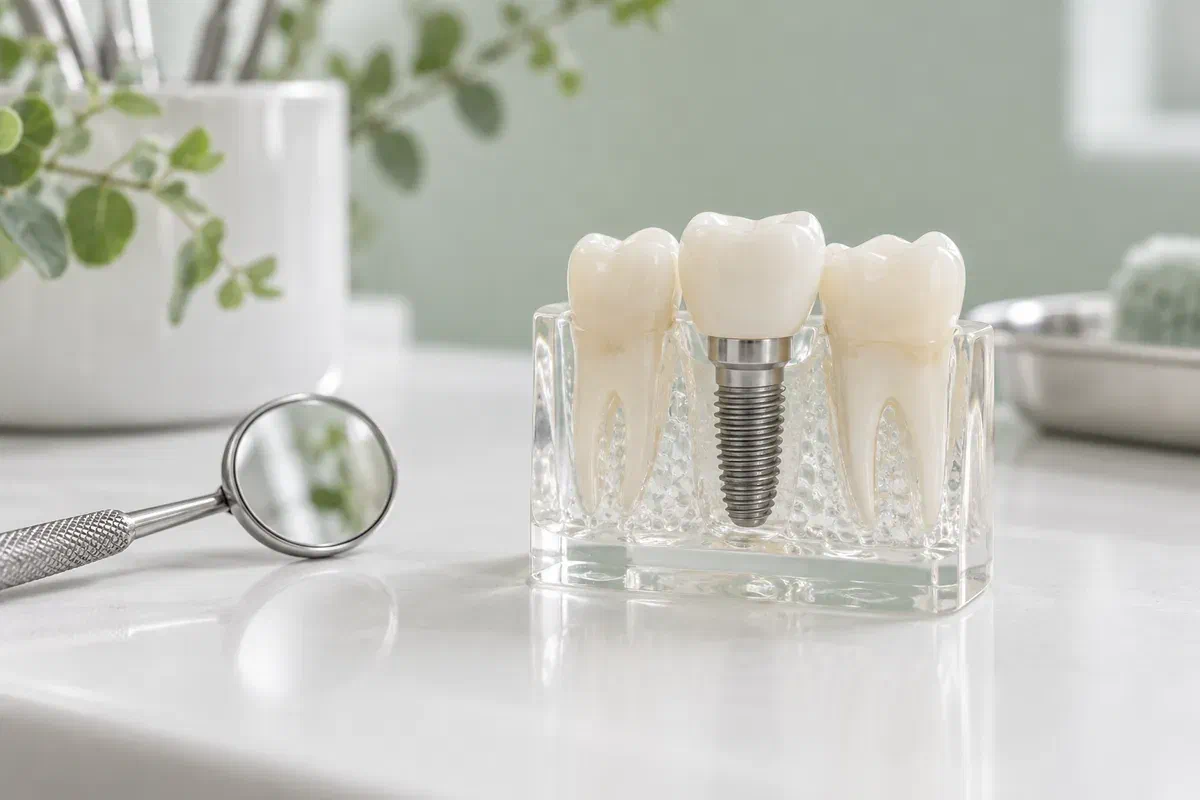
An implant crown is the visible replacement tooth attached to an implant system. Its support includes the implant within the jaw and, depending on the design, connecting components between the implant and crown. A change in how the crown moves can arise at different levels of that arrangement.
A loose restoration does not automatically mean the implant in the bone has failed. It also should not be assumed to be a harmless screw that simply needs tightening. The dentist needs to establish which part is moving, check the surrounding tissues, and assess whether any component or restoration has been damaged.
At Milton Dental Clinic, contact us when you notice movement, clicking, or a change in the bite around an implant crown. Bring implant identification or treatment records if available. Knowing the system and previous restorative work can help the team assess compatibility and plan the appropriate next step.
The location and history of the movement help the team prepare for your visit. Explain whether the crown was recently fitted, has loosened before, or changed after biting or an accident.
Avoid deliberately moving it to work out the cause. Different parts can produce a similar sensation, and continued loading may complicate the problem. Describe what you noticed during normal use.
An unfamiliar sound or contact can be relevant even if visible movement is small. Tell the dentist when it occurs and whether it began suddenly or developed gradually over several days.
Mention bleeding, swelling, tenderness, or discharge around the implant. Mechanical and tissue problems need consideration together, and a repair to the crown alone may not address everything found.
Call promptly about a moving implant restoration. If it detaches, keep it and any small components in a secure container, and do not attempt to reattach them yourself.
When the implant remains stable and the problem is limited to a repairable restoration or connection, treatment may be possible without replacing the implant. The examination establishes whether that is a reasonable option and what parts or additional work would be needed.
A useful assessment also considers why the problem occurred. The crown's fit, the connection, the bite, and the history of previous repairs can influence the plan. Ask how the recommended treatment addresses the finding and what follow-up will check the result.
Patient information: Cambridge University Hospitals — implant restorations and complications
The dentist can explain which part is involved and which parts appear usable. That distinction helps you understand the proposed repair and avoids treating every movement as either complete implant failure or a simple attachment issue.
Implant systems and their restorative parts vary. Records can help establish what is present, whether appropriate components are available, and whether another clinician's input or additional appointments are needed.
Ask whether the crown can remain in use, needs to be removed, or requires a temporary arrangement. The answer depends on the findings and should account for appearance and daily function without overstating what is possible.
Repair begins with assessment of the full implant restoration. The attachment design and findings determine how the crown is accessed, whether components can be retained, and what treatment can proceed at the visit.
The dentist asks about the original treatment, previous loosening, recent changes, and available records. If the restoration was made elsewhere, information from that provider may help clarify the components and design.
Clinical checks and imaging when indicated help locate movement and evaluate the surrounding support. The dentist explains any need to access or remove the restoration for further inspection.
The repair may involve the crown's attachment, a connecting component, or the restoration itself. Confirm the proposed work, limitations, and estimate, including any parts order, laboratory stage, or referral.
The team reassesses the repaired restoration and bite as appropriate, then explains home care and restrictions. Ask what changes should prompt contact and when the stability and tissue response will be reviewed.
Advice depends on which part is affected and what repair is performed. Ask for clear instructions about eating, cleaning, any temporary restoration, and whether you should use an existing bite appliance.
Do not chew hard or sticky food on the affected area while awaiting assessment. Avoid repeated finger or tongue testing, and contact the team if the movement increases or the crown feels close to detaching.
A product intended for a natural-tooth crown may not be appropriate for an implant restoration. Household glue, improvised drivers, and unverified parts can damage the system or make professional access more difficult.
After repair, contact the clinic about renewed movement, clicking, discomfort, or a changed bite. Keep the planned review even if symptoms settle, particularly when the episode has happened before.
The answers depend on the implant system, restoration, and clinical findings. These questions help explain why records and an examination matter before anyone promises a particular repair.
Contact our Bronte Street clinic to discuss an implant crown that has become unstable. We can assess the crown and support, explain the repair options, and identify any records or components needed for the next step.
Please call about active movement, pain, swelling, or a detached component, and bring implant records if available.
