Shifting when you chew
There is no need to test it. Several parts can feel the same when they loosen, and extra force may cause further harm. Tell us what you noticed while eating or speaking.


Bleeding or tenderness around an implant crown that has started to move means two questions need answers at once. For anyone travelling from Acton, our Milton dentist checks the gum and the connection together before suggesting a repair.
Sometimes a loose implant crown arrives with a second clue: a pink tinge when you brush, a puffy gumline, or a bad taste near the tooth. Those signs belong in the same conversation. The crown connects to the implant, frequently through a separate piece, and the implant depends on healthy bone and gum around it.
Gum symptoms do not mean the implant has definitely failed, and movement is not simply a mechanical nuisance to tighten away. Our dentist checks which part is moving, how the tissue around the implant looks, and whether the crown or components show damage, because each finding changes what repair makes sense.
From Acton, it is worth calling our Bronte Street practice as soon as you notice movement alongside soreness or bleeding, so the team can judge how quickly you should come in. If you have an implant card, treatment notes or the name of the clinic that placed it, those help us plan the right next step.
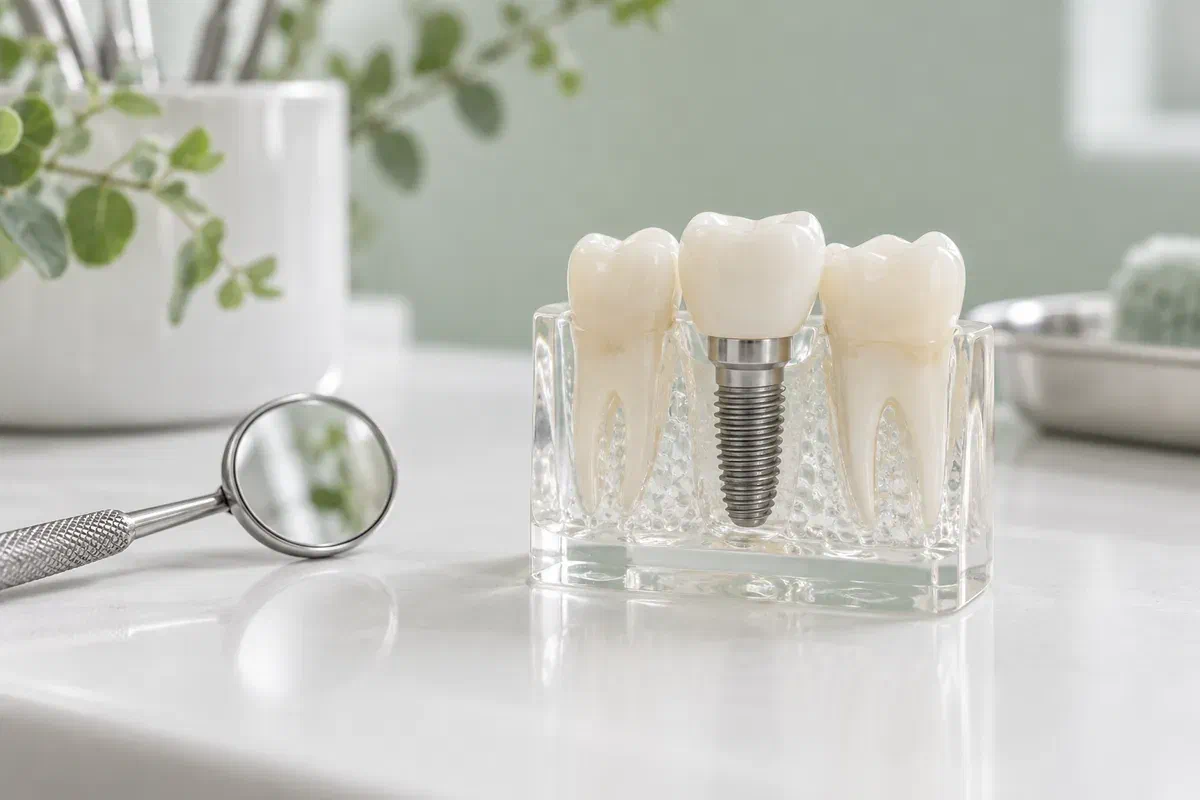
Tell us when the crown went in, whether it has moved before, and whether anything such as a hard bite, a fall or recent dental work came just before the change.
There is no need to test it. Several parts can feel the same when they loosen, and extra force may cause further harm. Tell us what you noticed while eating or speaking.
A new sound or a tooth landing first can be meaningful even if movement looks minor. Mention when it happens and whether it started suddenly or crept in over several days.
Describe any tenderness, puffiness, bleeding, discharge or unpleasant taste at the implant. These tissue signs are assessed alongside the movement, and a crown repair alone may not resolve them.
Phone promptly about a moving implant crown, sooner if the gum is swollen or painful. If the crown comes out, keep it and any parts in a lidded container and leave reattachment to us.
If the implant is firm and the problem is in the crown or connection, a repair may be possible while keeping the implant. The examination shows whether that applies to you, and whether the gum needs attention before, during or after the crown work.
Cause matters here. Fit, the connection, bite forces and any earlier repairs can affect both the crown and the tissue. A loose crown can also make cleaning harder. Ask how the treatment plan addresses each finding and how the gum will be monitored afterwards.
Patient information: Cambridge University Hospitals — implant restorations and complications
The dentist explains which part is moving and what the gum and bone suggest. That helps you understand why a plan may include tissue care as well as crown work.
Implant parts vary across brands. Records help confirm what is present, whether suitable parts can be sourced, and whether a specialist or extra appointments should be involved.
You may be advised on cleaning, a temporary, or removing the crown for a period. That depends on what is found, and should consider comfort, appearance and chewing realistically.
The full restoration is assessed, including the gum around it. How the crown is attached and what we find shape how it is accessed, which parts can stay, and what treatment is suitable that day.
Your dentist asks about the original implant work, earlier loosening, when the gum symptoms began, and any records. Information from a previous provider can clarify the components used.
The tissue is checked for bleeding, swelling and pocketing, and the crown for movement. Imaging is used when indicated to look at the bone. Any need to remove the crown is explained first.
Treatment may include cleaning around the implant, attachment or component work, or a new crown. You confirm the approach, its limits and the estimate, including any parts, lab stage or referral.
Once repaired, we test the bite and how steady the crown feels, then explain home care. A review checks both the connection and how the gum is healing, and you will know what should prompt a call.
Advice varies with the part involved, the repair and the state of the gum. Ask for clear instructions on brushing, interdental cleaning, food, any temporary crown and bite appliances.
Avoid firm or sticky foods on that side until it is assessed. Do not press on it, and get in touch if it loosens further or the gum swells.
Continue brushing with a soft brush and cleaning between teeth gently. Leave home cements, glue and improvised tools alone, as they can irritate the gum and damage implant components.
After repair, contact us about renewed movement, clicking, bleeding, swelling or a bite change. Keep the review visit even if things improve, especially if this has happened before.
Answers depend on your implant system, the crown and what is found. They explain why tissue and records are examined before any particular repair is offered.
Call our Bronte Street office if an implant crown has started moving, especially with gum soreness or bleeding. We will check the crown, the connection and the tissue, explain sensible options, and tell you which records may help.
Please phone sooner about swelling, pain, discharge or a crown that has come out, and bring any implant records you have.
