A tooth that moves when you bite
Please do not keep pushing it to check. Different parts can feel identical when loose, and repeated loading may complicate things. Tell us how it moved during normal chewing or speaking.


Busy weeks make it tempting to live with an implant tooth that has started to shift. If you are coming from Brampton, a prompt visit to our Milton team can show which part is loose and whether a straightforward repair is still on the table.
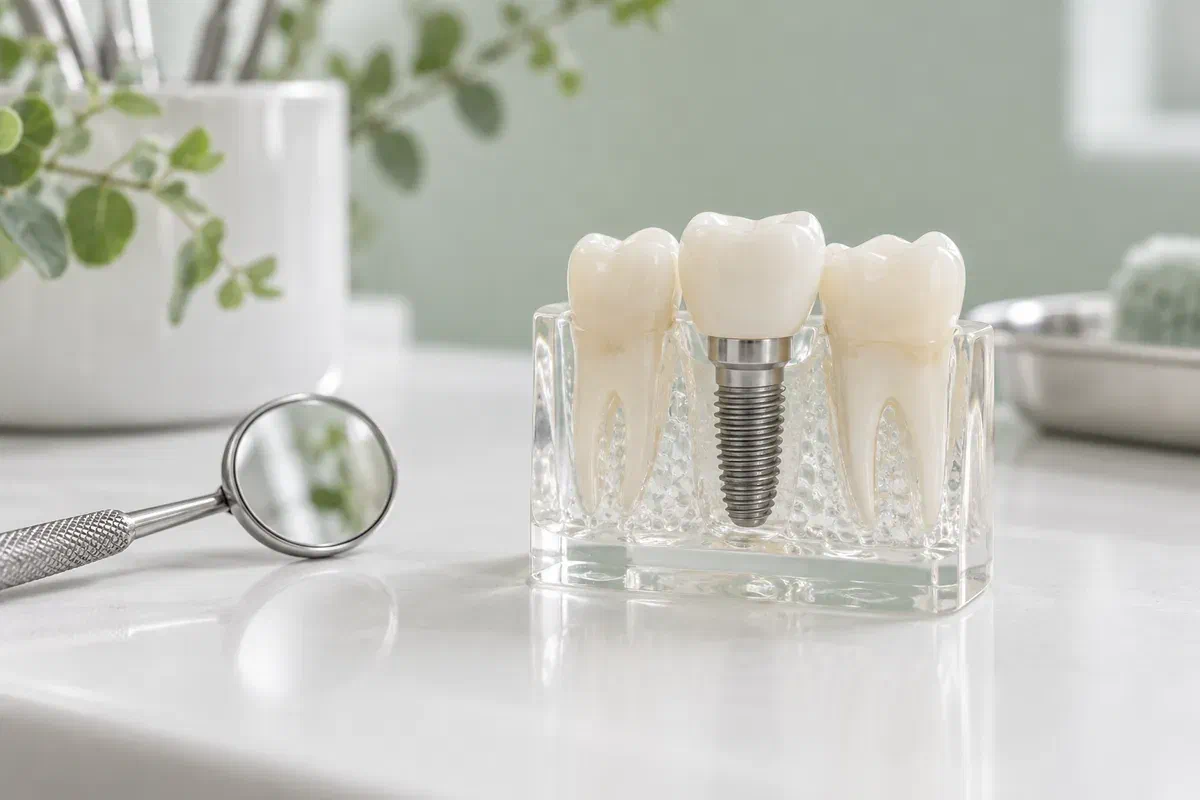
Usually it is better not to wait. An implant tooth has a few distinct layers: the crown you chew with, a connecting part in many systems, and the implant itself in the jaw. Each time you bite on a loose crown, those pieces can rub or strain against each other, and that wear may narrow the options later.
That does not mean panic. Movement is rarely a sign that the implant is finished, though it is not something to tighten up and forget either. The useful first step is a diagnosis: which part is moving, how healthy the surrounding gum and bone are, and whether any component is damaged.
For households in Brampton juggling work, school runs and everything else, a short call to our Bronte Street practice can help you plan. Our Monday-to-Thursday hours run into the evening. Bring an implant card or old treatment notes if you have them, because knowing the system helps us prepare.
A quick note on your phone helps. Record when the crown was placed, any earlier loosening, and whether the change came after a hard bite, a fall or a bump during sports.
Please do not keep pushing it to check. Different parts can feel identical when loose, and repeated loading may complicate things. Tell us how it moved during normal chewing or speaking.
Even subtle signs matter, such as a faint click or one tooth touching first. Note when they happen and whether they arrived suddenly or developed slowly over several days.
Let us know about bleeding, swelling, tenderness or discharge. Mechanical and gum problems are judged together, because fixing the crown alone may not settle what is happening in the tissue.
Call soon about a moving implant crown rather than waiting for a convenient gap. If it detaches, place it and any small parts in a sealed container and do not try to reattach them.
If the implant is stable and only the crown or connection is involved, repair may be possible without replacing the implant. The examination confirms whether that applies, and which parts or extra appointments a repair would require.
Finding the reason matters too. Crown fit, how the connection was made, your bite and any previous repairs can each play a part. Ask how the recommended treatment deals with the finding, and how we will check that it holds over time.
Patient information: Cambridge University Hospitals — implant restorations and complications
The dentist explains which component is at fault and which look serviceable. That prevents every wobble from being treated as either complete failure or a trivial loose fitting.
Restorative parts differ between systems. Records confirm what is in place, whether matching components are available and whether another clinician or more visits need to be scheduled.
Ask whether the crown can stay in use, should be removed, or calls for a temporary. That depends on the findings, and should take your appearance and daily eating into honest account.
We look at the full implant restoration before choosing a method. The crown’s attachment and our findings decide how it is accessed, which parts remain, and how much treatment can happen at the first appointment.
Your dentist asks about the original work, any past episodes, recent changes and available records. If the crown came from another office, information from them can clarify the components.
Clinical checks and imaging when indicated show the source of movement and the condition of the support. If the crown needs to come off for inspection, that is explained and agreed first.
The work may target the attachment, a connector or the crown. You confirm the plan, its limits and an estimate, including any parts order, lab stage or referral, so you can plan your schedule.
The repaired restoration and your bite are rechecked, then home care and any restrictions are explained. Ask what warrants a call and when stability and gum health will be reviewed.
What we recommend hinges on the part involved and the work done. Make sure you leave knowing what to eat, how to clean, how to treat a temporary, and whether your current night guard still fits the plan.
Keep hard or sticky food off the loose tooth until it has been assessed. Avoid testing it during the day, and call if it gets looser or feels close to coming out.
Products intended for natural-tooth crowns are not made for implant restorations. Glue, improvised tools and unknown parts can damage the system or complicate access.
If movement, clicking, discomfort or a bite change returns after repair, contact us. Keep your review appointment even when life is hectic, especially if this has happened before.
Answers depend on the implant system, the crown and what the examination shows. They explain why a proper assessment comes before committing to a repair.
One phone call to our Bronte Street office gets the process moving. At the visit we will assess the crown and its support, explain the repair choices and timeline, and let you know which records or parts might be needed.
Please phone sooner for pain, swelling, a crown that keeps loosening or a part that has come out, and bring implant records if available.
