It tilts, turns or lifts
There is no need to work out the cause yourself by moving it. Different parts give similar sensations, and repeated pressure may make the repair more involved. Tell us how it behaves during normal meals.


Your implant may have been placed by another office, but a crown that now moves still needs a clear answer. From Burlington, you can have our Milton dentist identify the loose part, gather the records needed and explain repair choices.
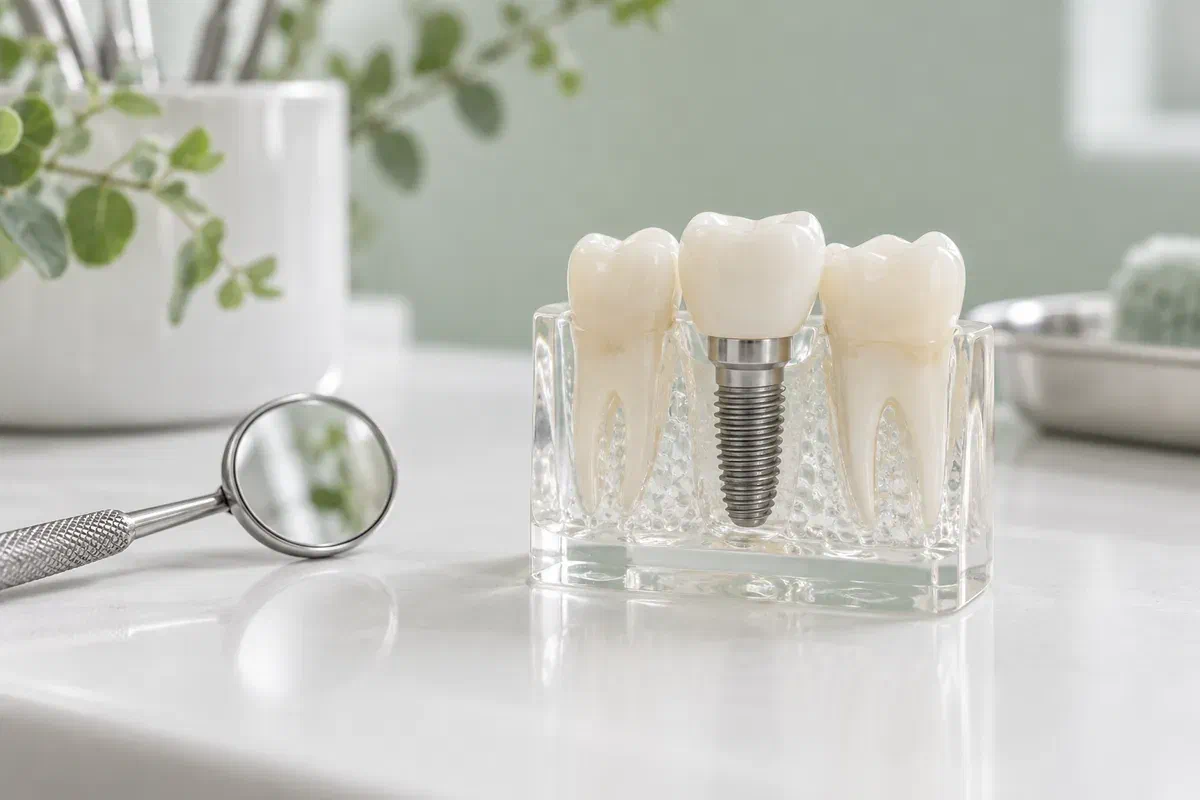
It is common for an implant to be placed by one clinic, restored by another, and later looked after by a third. When the crown starts to move, that history matters. The tooth you see rests on a connecting piece in many designs, which in turn joins the implant set into your jawbone.
Movement could come from any of those parts. A loose-feeling crown is not a verdict that the implant has failed, nor a sign that it simply wants tightening. Our dentist works out which part is shifting, examines the surrounding gum and bone, and looks for components that may be damaged.
Before your visit, try to find the name of whoever placed the implant and anyone who later made the crown. Commuters heading between Burlington and Milton often find it easiest to call those offices first. Treatment notes, a card or an x-ray help us judge compatible parts and the right next step.
We prepare better when we know who did the original work, when the crown went in, whether it has loosened before, and whether the change followed a hard bite, an accident or other dental treatment.
There is no need to work out the cause yourself by moving it. Different parts give similar sensations, and repeated pressure may make the repair more involved. Tell us how it behaves during normal meals.
A click, or teeth meeting in a new way, can be significant even with little visible movement. Mention when you notice it and whether it came on all at once or over several days.
Tell us about tenderness, swelling, bleeding or discharge around the implant. Gum and mechanical issues are considered together, so a crown repair on its own may not be the whole answer.
Please contact us soon about an implant tooth that moves. If it detaches, save it and any small components in a closed container, and do not try to reattach anything yourself.
If the implant is firm and the problem lies in the crown or the connection, the implant itself may not need replacing. The examination shows whether that is realistic, and which components or extra stages a repair would need.
We also look for the reason it happened. How the crown fits, how it was connected, how you bite and what repairs came before all influence the plan. You are welcome to ask how a recommendation responds to the findings and how the outcome will be reviewed.
Patient information: Cambridge University Hospitals — implant restorations and complications
The dentist explains which part is involved and which appear sound. That distinction helps you weigh the proposed repair without assuming either complete failure or a trivial fix.
Restorative components vary from one system to another. Notes from the original provider can confirm what you have, whether compatible parts can be obtained, and whether a second opinion or extra visits make sense.
Ask whether to keep using the crown, have it removed, or wear a temporary while the repair is arranged. That depends on what is found, with realistic attention to looks and chewing.
We begin with the whole restoration rather than the crown alone. Its design, together with what we find, determines how the crown is reached, which parts can stay and how far treatment can go at the first visit.
Expect questions about the original surgery, who restored it, past loosening and recent changes. With your permission, we can contact the previous provider for details on the components used.
Clinical checks, and imaging when needed, show where the movement originates and how the support looks. If removing the crown would help us see more, the dentist talks it through before going ahead.
Work may involve the attachment, a connector or the crown itself. You agree to the plan, its limits and the estimate first, including any part ordering, lab work or referral back to a specialist.
We test the repaired tooth in your bite, explain cleaning and any food limits, and set a review. Ask which signs mean you should call and when stability and gum health will be assessed again.
Guidance depends on the part affected and the repair carried out. Ask for clear advice on eating, brushing and flossing, looking after a temporary, and wearing any existing night guard.
Avoid hard or chewy food on that side until it is assessed. Try not to keep pressing on it, and get in touch if it loosens further or feels as though it might come out.
Cement meant for natural-tooth crowns, household glue or improvised tools can damage implant components and complicate access. Leave the connection untouched until it is professionally assessed.
If movement, clicking, discomfort or a bite change returns after repair, let us know. Attend your review even if it feels fine, especially if the crown has loosened before.
Answers vary with the system, the crown and the examination findings. They explain why records and a proper assessment come before any promise of a particular repair.
Contact our Bronte Street practice about an implant crown that is no longer steady. We will examine the crown and support, explain realistic repair routes, and help gather the records or parts the next step depends on.
Call us about a crown that is actively moving, painful or swollen, or one that has come out, and bring any records from your original provider.
