Movement when you eat
Try not to check it repeatedly with your tongue or fingers. Different parts feel similar from the outside, and constant pressure can worsen the problem. Describe what you felt during meals.


The days between noticing a loose implant crown and getting it examined matter more than most people expect. For households in Erin and Hillsburgh, our Milton team explains how to protect the tooth at home, then finds and repairs what has moved.
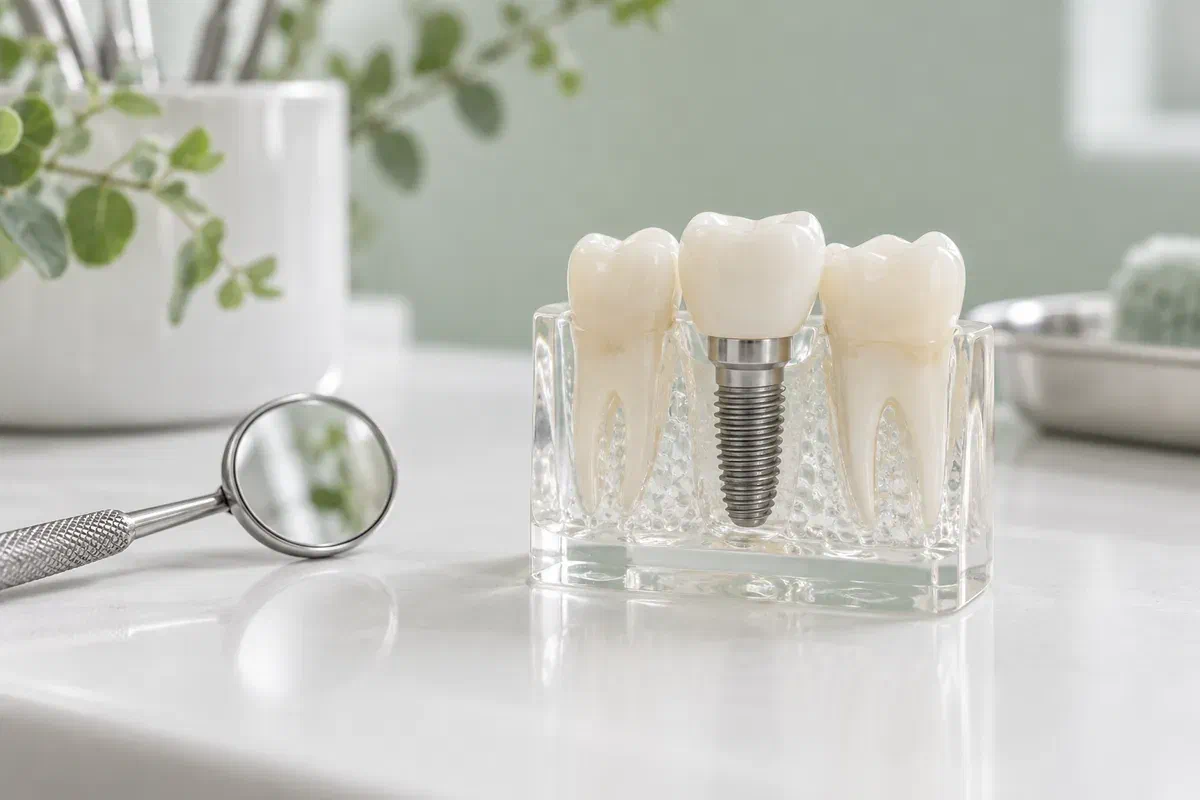
Living north of Milton in a rural town, you may not be able to come in the same afternoon. What you do in the meantime counts. An implant tooth has a crown on top, often a connecting part beneath, and the implant set in your jaw. Chewing on a loose crown can strain whichever of those has given way.
Movement is not a sign the implant has necessarily failed, and it is not something a quick tighten at home can solve. Our dentist pinpoints which part is moving, checks the gum and bone around it, and looks for anything worn or cracked, so the repair addresses the real fault.
From Erin, start with a call to our Bronte Street office. We can talk through how urgent it sounds and how to manage until the visit. Gather any implant card, treatment summary or the name of the clinic that placed it, because knowing the system helps us prepare the right parts.
When you call, tell us the crown’s approximate age, whether it has loosened before, and whether a hard bite, a fall or recent dental work preceded the change.
Try not to check it repeatedly with your tongue or fingers. Different parts feel similar from the outside, and constant pressure can worsen the problem. Describe what you felt during meals.
Listen for new sounds and pay attention to how your teeth meet. Even small changes are worth reporting. Note when they happen and whether they arrived suddenly or slowly.
Watch for bleeding, swelling, tenderness or discharge around the implant, and tell us if these appear or worsen while you wait. Tissue problems are assessed alongside the crown.
Call promptly about a moving implant crown, and again if it worsens before your visit. Should it fall out, save the crown and anything attached to it in a lidded jar, and leave refitting to the clinic.
If the implant is firm and the fault is in the crown or connection, repair without replacing the implant may be possible. Protecting the tooth before your visit helps keep the parts in better condition, and the examination then confirms what is needed.
The cause shapes the plan. Fit, the connection, your bite, grinding and earlier repairs can all contribute. Ask how the treatment addresses the finding, what habits might help the repair last, and when the result will be reviewed.
Patient information: Cambridge University Hospitals — implant restorations and complications
The dentist shows which component is involved and which look sound. That makes it easier to understand the repair and any home care advice that follows.
Implant parts vary between systems. Records help confirm what you have, whether matching components are available and whether another clinician or added visits will be needed.
You will discuss whether the crown stays in use, comes out, or is replaced by a temporary. That depends on the findings, and the advice should fit how you eat, work and look after your teeth.
We assess the whole restoration before deciding on a repair. Its design and what we find determine how the crown is reached, which parts can stay and how much treatment is done that day.
Your dentist asks how the movement developed while you waited, about the original implant work, earlier loosening and any records. Notes from the placing office help identify parts.
Clinical checks and imaging when indicated show where the movement comes from and how the support looks. Any need to remove the crown for inspection is explained first.
Work may focus on the attachment, a connecting component or the crown. We talk through costs, limitations and any ordering, lab stage or referral first, so you can plan travel around the appointments ahead.
The repaired tooth and bite are checked, then you receive specific aftercare advice. A review is arranged, and you will know which signs at home should prompt a call.
Guidance depends on the part involved and the repair performed. Ask for clear instructions on food, brushing, any temporary crown and whether to keep using an existing night guard.
Choose foods that need little chewing and keep them to the other side. Avoid hard, crusty or sticky items near the implant, and call if the crown loosens further.
Brush with a soft brush and clean between teeth carefully. Leave pharmacy cement, glue and improvised tools alone, since these can damage implant parts and complicate repair.
Contact us if movement, clicking, soreness or a bite change returns. Attend your review even if things feel settled, especially if this has happened before.
Answers depend on your system, the crown and the examination. They explain why we check records and assess carefully before recommending a specific repair.
Phone our Bronte Street office if an implant crown has started to move. We will advise you on managing until your visit, examine the crown and support, explain repair options, and identify any records or parts we need.
Please call sooner about pain, swelling, increasing movement or a piece that has come out, and bring implant records.
