It came out, or nearly did
Do not try to seat it back yourself or experiment with how it fits. Parts can be damaged by force, and a crown placed incorrectly may trap material or strain the connection. Simply describe what happened.


An implant crown that has come off, or seems about to, can be unsettling. Across Halton Hills, from Glen Williams to the smaller hamlets, you can bring the crown and any parts to our Milton team for a careful check of what came loose and why.
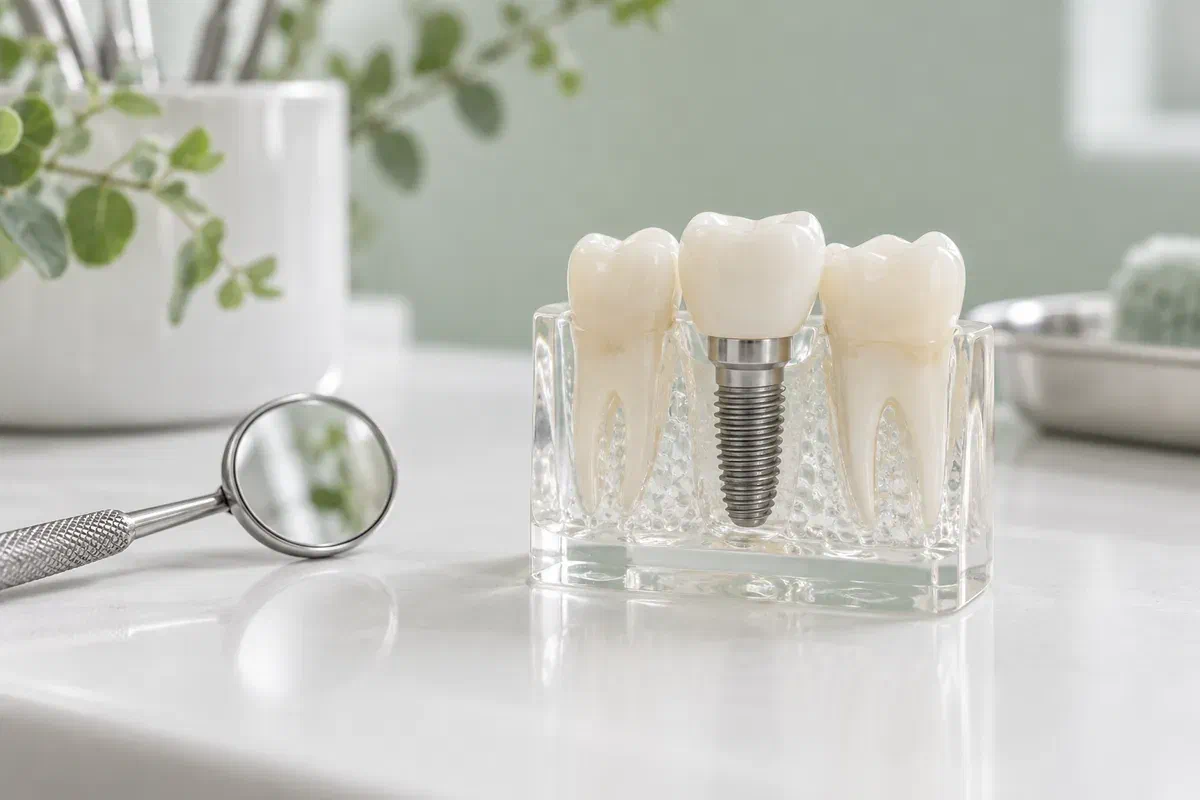
First, put it somewhere safe: a small, clean container with a lid. Look for any tiny screw or metal piece too. An implant tooth is built in layers, with the crown on top, often a connecting component below it, and the implant fixed in the jaw. Whatever came out tells us something about where the problem began.
A crown that has detached does not automatically mean the implant is lost. It also should not be treated as something to push back on and forget. Our dentist examines the implant site and the gum around it, checks the crown and parts for damage, and works out whether they can be reused.
For households in Halton Hills, call our Bronte Street practice before setting out so the team knows what to expect. Bring the container, plus any implant card or records. Knowing the system and earlier treatment helps us judge compatible parts and plan what can be done at the visit.
Let us know when the crown was placed, whether it has loosened before, and what you were doing when it came out or began to move, such as chewing something hard or after a fall.
Do not try to seat it back yourself or experiment with how it fits. Parts can be damaged by force, and a crown placed incorrectly may trap material or strain the connection. Simply describe what happened.
Before a crown comes out, there may be clicking or a change in how your teeth meet. If you noticed anything like that beforehand, mention when it started and whether it built up gradually.
Note any bleeding, swelling, tenderness or discharge where the crown sat. Gum health is assessed with the mechanical problem, since reattaching a crown alone may not solve everything found.
Call soon after an implant crown or part comes out. Keep everything in a closed container, avoid chewing on the exposed site, and do not attempt to put anything back yourself.
When the implant is stable and the crown or connection can be restored, repair may proceed without replacing the implant. Examining the site and the pieces you bring shows whether that is realistic, and which parts or extra steps would be needed.
It also helps to know why it came out. Crown fit, the connection type, your bite and any previous repairs can each contribute. Ask how the proposed treatment addresses the finding, and how its stability will be checked afterwards.
Patient information: Cambridge University Hospitals — implant restorations and complications
The dentist can tell you whether the issue lies with the crown, a component or the implant, and what still looks usable. That distinction shapes everything that follows.
A saved crown or screw can show signs of wear, fracture or fit problems. Along with records of your system, that helps confirm which components are needed and whether more visits or another clinician’s input make sense.
Ask whether the crown can be reattached, needs replacing, or calls for a temporary. That depends on the findings, and the plan should be honest about appearance and chewing in the meantime.
We assess the implant site and whatever came out together. The design of the restoration and our findings determine whether parts can be reused and what can be completed during that visit.
Your dentist asks how and when it came out, whether it happened before, and what records exist. If another office placed or restored the implant, their notes can clarify the components.
Clinical checks, and imaging when indicated, assess the implant and surrounding bone and gum. The crown and any parts you brought are inspected for damage or wear at the same time.
The work may involve reconnecting the crown, replacing a component, or making a new crown. You confirm the approach, any limits and the estimate first, including parts orders, lab time or referral.
Once restored, the bite and stability are checked and home care is explained. Ask what signs should bring you back early and when the gum and connection will be reviewed.
Guidance depends on what came out and how it is repaired. Ask about eating with a gap, cleaning the area gently, caring for a temporary, and whether to keep using a night guard.
Avoid chewing on that side and keep hard or sticky foods away. Rinse gently and brush nearby teeth carefully. Call if the area becomes sore, swollen or starts to bleed.
Crown cement or glue from a store is not designed for implant restorations. Pushing the crown on, or using makeshift tools, can damage components and make the professional repair harder.
If the repaired crown loosens, clicks, hurts or feels different in your bite, contact us. Keep the review visit, since a crown that has come out once may need its cause looked at closely.
Answers depend on the system, the crown and what the examination finds. They explain why the site and parts must be checked before any repair is promised.
Call our Bronte Street practice after an implant crown or part comes out. We will examine the site and the pieces you saved, explain the repair options, and identify any records or parts we need for the next step.
Please phone right away about pain, swelling, bleeding or a missing part, and bring the crown and any records.
