Rocking or turning when you chew
Please avoid wiggling it to find out more. Different components can feel exactly alike from the outside, and extra force may worsen the damage. Telling us what you noticed during ordinary meals is enough.


An implant crown that served you well for years and has now started to move deserves a careful look, not a guess. For households in Old Milton, our nearby team examines the crown, the parts beneath it and the implant, then explains what repair is sensible.
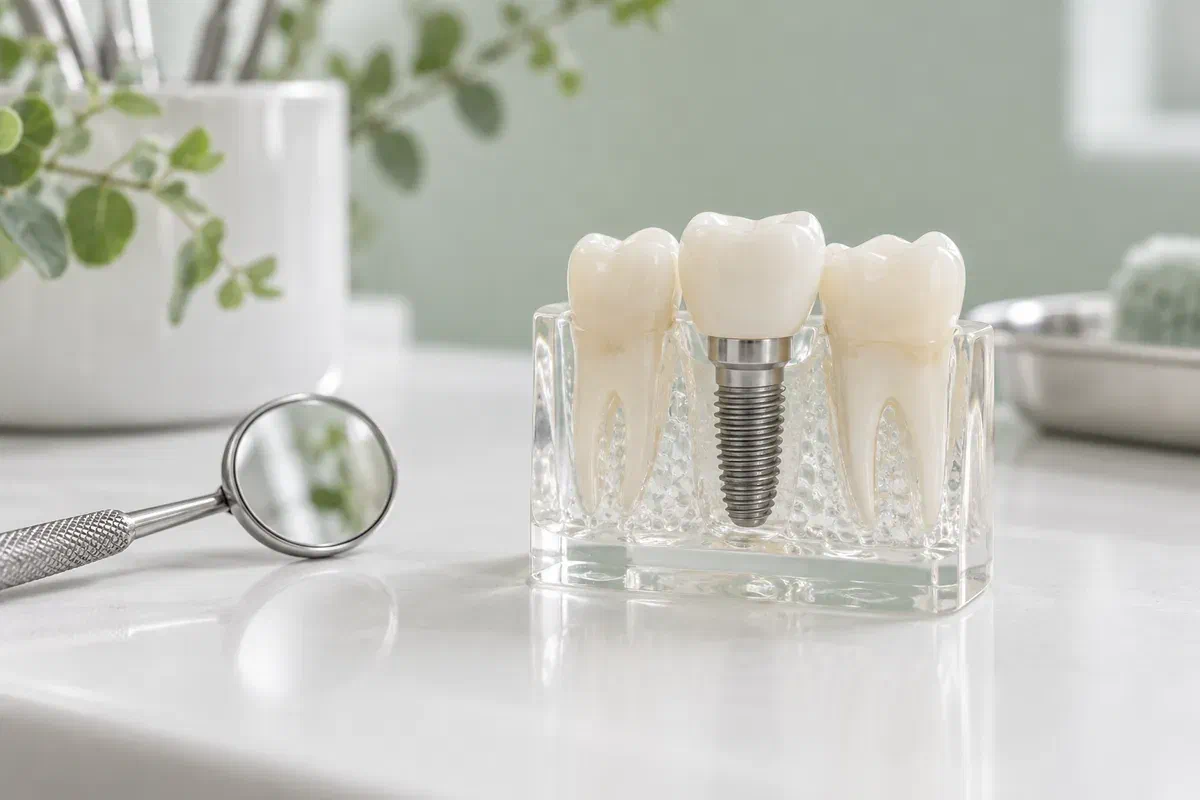
Plenty of people around Old Milton had an implant placed a decade or more ago and have barely thought about it since. Then one day the crown feels slightly loose. That tooth sits on a system: the implant anchored in the jaw, often a connecting component, and the crown on top. Any of those layers can be the source.
Age alone does not mean the implant has given out. Equally, a crown that has worked for years is not automatically just due for a quick tighten. Our dentist identifies which piece is moving, examines the gum and bone around it, and checks for parts that have worn or been damaged over time.
Our Bronte Street practice is a short way from Milton’s historic downtown, so contact us when you first feel rocking, hear a click or sense a bite change. Older paperwork is worth digging out. An implant card, a receipt or the name of the original office can help us work out the system and plan next steps.
Think about when the crown was placed, whether it has ever loosened, and what happened just before you noticed it. A hard bite, a stumble or a dental visit elsewhere can all be relevant history.
Please avoid wiggling it to find out more. Different components can feel exactly alike from the outside, and extra force may worsen the damage. Telling us what you noticed during ordinary meals is enough.
Even without obvious movement, an odd sound or a change in how your teeth come together is worth reporting. Mention when it happens and whether it arrived suddenly or gradually over several days.
Let us know about any soreness, bleeding, swelling or discharge around the implant. Tissue and mechanical problems are assessed side by side, because fixing only the crown may not resolve everything.
Call soon about an implant tooth that moves. If the crown or a small part comes out, store it in a sealed container and do not try to fit it back yourself.
Where the implant is firm and the fault is in the crown or its connection, repair may be possible while keeping the implant. Examination tells us whether that is realistic for a restoration of your crown’s age and which parts or extra steps would be involved.
Long service brings its own questions. Has the fit changed, has the bite shifted as neighbouring teeth aged, or were there repairs along the way? Those factors shape the plan. Ask how the suggested treatment addresses what we find, and how its success will be checked.
Patient information: Cambridge University Hospitals — implant restorations and complications
We can explain which part is causing the movement and which parts look usable. That keeps you from assuming the worst, or assuming it is trivial, before the facts are in.
Older systems and parts are not always easy to source. Records help confirm what you have, whether compatible components are available, and whether input from another clinician or extra visits will be needed.
Ask whether you can keep using the crown, whether it should come out, or whether a temporary is better. That depends on the findings and should balance appearance and comfortable chewing realistically.
We assess the whole implant restoration before choosing a method. The crown’s design and the findings decide how we reach it, which components can stay, and how much is possible at that appointment.
Your dentist asks who placed the implant, roughly when, whether it has loosened before and what has changed. If the original office still has records, a request to them can clarify the design and parts.
A clinical examination, with imaging where it is warranted, shows where the movement starts and how the surrounding bone and gum look. If the crown must be removed for a better view, you will hear why first.
Work may involve the attachment, a connecting part or the crown. You review the proposal, its limits and the estimate before anything proceeds, including part orders, lab time or a referral if those apply.
We recheck the restored tooth and how it meets the others, then explain cleaning and any limits on chewing. Ask what would warrant a call and when we will look at stability and the gum again.
What to do depends on the part involved and the repair completed. Ask for plain instructions on eating, cleaning, any temporary crown, and whether to keep wearing a night guard you already own.
Until we have seen it, keep firm or sticky foods to the other side. Avoid testing it with a finger or your tongue, and call if it gets looser or feels close to coming out.
Products made for crowns on natural teeth are not suited to implant restorations. Glue, improvised tools or mismatched parts can harm the system and make our access more difficult.
Once repaired, contact us about renewed movement, clicking, discomfort or a bite that changes. Keep the review visit even when things feel settled, particularly if this has happened before.
Each answer depends on the system, the crown and what the examination reveals. They explain why records and an assessment matter before a particular repair is recommended.
Reach our Bronte Street practice to talk about an implant crown that has started to move. We will examine the crown and its support, explain repair choices, and help track down any records or parts the next step requires.
Please call about active movement, pain, swelling or a part that has come out, and bring any implant records you can find.
