A crown that moves or turns
Do not try to diagnose it by moving it. Different parts can create the same sensation, and repeated loading may complicate the repair or add a stage. Describe what happened during everyday use.


Some loose implant crowns are sorted in one sitting; others need parts ordered or a lab stage first. If you are travelling from Puslinch, our Milton team explains early on which kind of repair you are facing and what each stage involves.
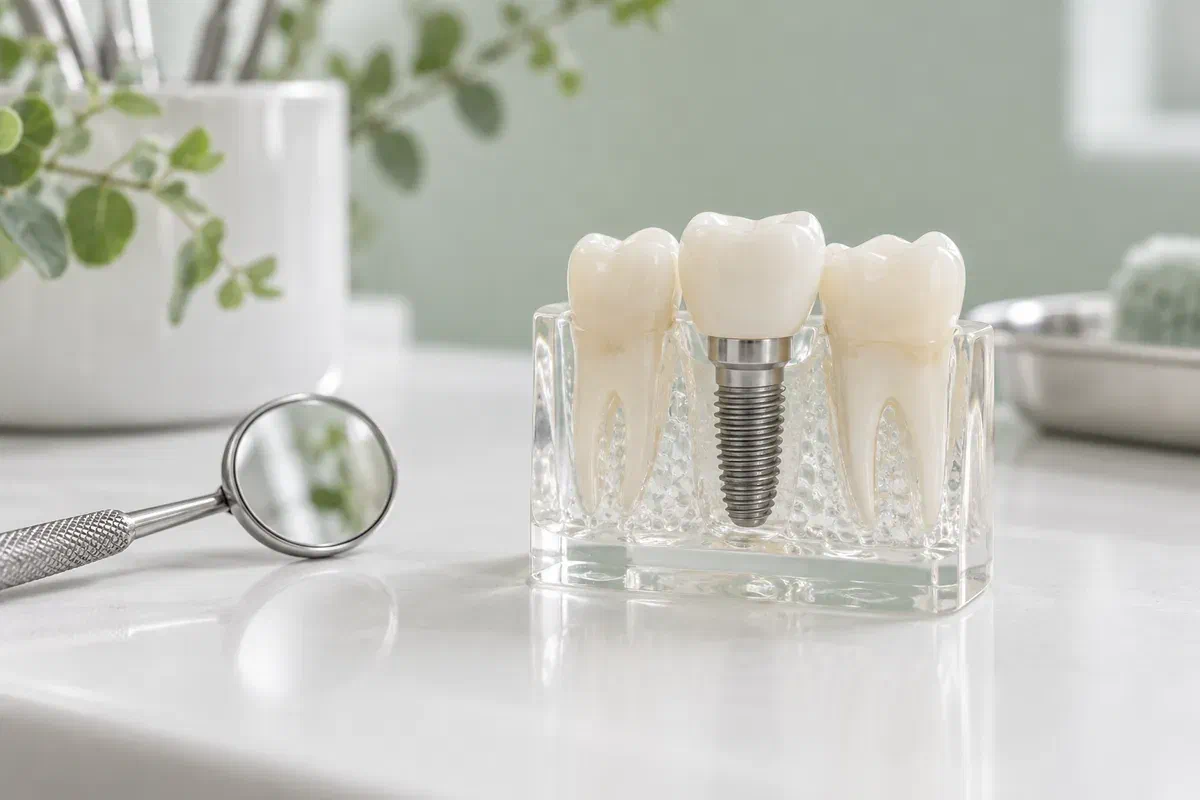
A frequent question on the phone is how long this will take. That depends on what turns out to be loose. Above the gum is the crown; beneath it, in many systems, a connecting piece; and below that, the implant anchored in your jaw. A fault in one layer can be quick to address, while another may need parts or lab time.
Movement on its own does not mean the implant has failed. It is also not something to assume is a two-minute tighten. Our dentist identifies which part is moving, checks the gum and bone, and looks for damaged components. Only then is it clear whether repair can be completed at once or needs to be staged.
Coming from Puslinch, west of Milton, it helps to know the likely number of trips early. Call our Bronte Street office when you first notice rocking or clicking, and mention any implant card or records. Identifying the system ahead of time can let us check part availability sooner.
Share when the crown was placed, whether it has loosened before, and whether the change followed a hard bite, a fall, farm or yard work, or recent dental treatment.
Do not try to diagnose it by moving it. Different parts can create the same sensation, and repeated loading may complicate the repair or add a stage. Describe what happened during everyday use.
A click or a new contact can matter even when the tooth barely moves. Mention when you notice it and whether it began suddenly or developed over several days.
Tell us about bleeding, swelling, tenderness or discharge. Tissue findings can add a step to the plan, because repairing the crown alone may not address everything found.
Call promptly about an implant crown that moves. If it detaches, store it and any small parts in a closed container, and do not attempt to refit anything yourself.
When the implant is firm and the fault is in the crown or connection, repair is often possible without replacing the implant. The examination shows whether that applies, and whether parts need ordering or a lab stage is involved before completion.
Understanding the cause keeps the stages purposeful. Fit, the connection type, the bite and any previous repairs can all affect the plan. Ask how each stage addresses the finding, what happens between appointments, and how the final result will be reviewed.
Patient information: Cambridge University Hospitals — implant restorations and complications
The dentist explains which part is involved, what looks reusable, and what needs replacing. That makes the sequence of visits easier to understand and plan around.
Implant components vary across systems. Records help confirm what you have, whether compatible parts can be sourced and how long that may take, and whether another clinician should be involved.
You will discuss whether the crown stays in, comes out, or is replaced by a temporary while parts or lab work are prepared. That depends on findings, with honest attention to looks and chewing.
The whole restoration is assessed at the outset. Its design and what we find decide how the crown is accessed, which parts stay, and whether the repair finishes that day or continues later.
Your dentist asks about the original implant work, previous loosening, recent changes and any records. If another provider made the crown, information from them can clarify which parts were used.
Clinical checks and imaging when indicated locate the movement and assess the support. If the crown needs removing for a better look, you are told why and what that means for the next steps.
Treatment may involve the attachment, a connector or the crown. You approve the plan, its limits and the estimate, including any parts order, lab stage or referral and roughly how long each takes.
Once completed, the bite and stability are checked and home care is explained. A review is booked, and you will know which signs between visits should prompt a phone call.
Advice depends on which part is involved and what stage you are at. Ask for clear instructions on food, cleaning, caring for a temporary crown and wearing any existing bite appliance.
Temporary crowns and loose restorations both need care. Avoid hard or sticky food on that side, do not test the tooth, and call if it loosens further or comes away.
Cement meant for natural-tooth crowns, household adhesives or improvised tools can damage implant parts and may undo work already done at an earlier stage.
Contact us about increased movement, clicking, soreness or a bite change between visits or after completion. Keep each planned appointment, especially if the crown has loosened before.
Answers depend on the system, the crown and the findings. They explain why a proper assessment is needed before a timeline or repair can be confirmed.
Reach our Bronte Street office about an implant crown that has become unstable. We will assess the crown and support, explain whether repair can be done at once or in stages, and identify the records or parts involved.
Please call sooner about pain, swelling or a crown or temporary that has come out, and bring your implant records.
