Slight movement or rotation
Avoid pushing on it to check. Several parts can cause similar movement, and testing it may make matters worse. Tell us what you feel during ordinary chewing and talking.


Your teeth close and something lands a fraction early, right on the implant. That changed bite can be the first hint a crown is loosening. From Rockwood, you can have our Milton dentist find the cause and check how the repaired tooth meets the rest.
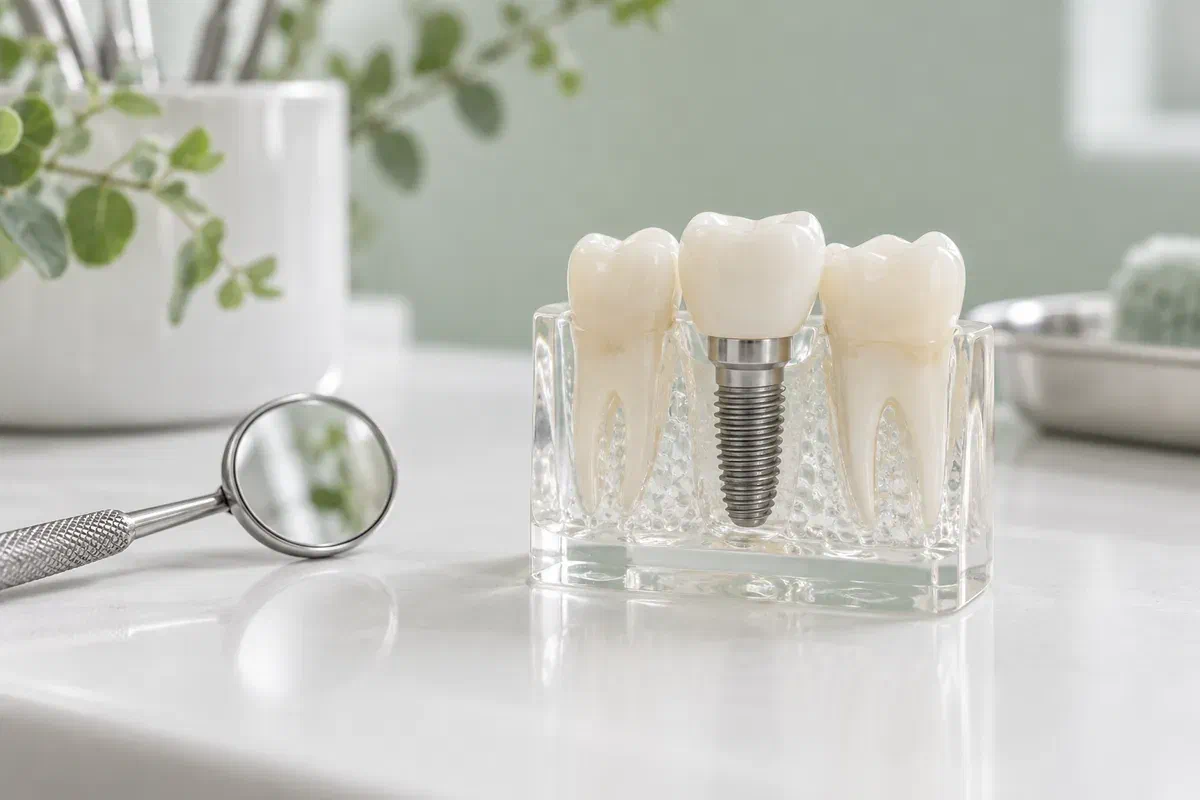
Your jaw is remarkably sensitive to small changes in how teeth meet. A crown that has lifted or rotated even slightly can make your bite feel uneven before you see any movement. That crown is attached to an implant, often through a separate connecting part, and the implant is fixed in the bone of your jaw.
A bite change is a prompt to investigate, not a diagnosis. It does not tell us the implant has failed, and it does not confirm a loose screw. Our dentist identifies the part that has shifted, looks at the gum and bone, and checks for wear or damage that might explain the altered contact.
Rockwood is northwest of Milton, so a call before you set out helps our Bronte Street team plan the visit. Describe when the bite started feeling different and whether it has worsened. If you have an implant card or notes from the original treatment, bring them; knowing the system helps us choose suitable parts.
Tell us when the crown was fitted, whether it has loosened previously, and whether the bite change began after a hard bite, an injury or other dental work.
Avoid pushing on it to check. Several parts can cause similar movement, and testing it may make matters worse. Tell us what you feel during ordinary chewing and talking.
A tooth landing first, or a click as you close, can be significant even with no visible looseness. Note whether it happens on every bite or only sometimes, and whether it came on quickly.
Mention any soreness, bleeding, swelling or discharge around the implant. A heavy contact can cause discomfort, and tissue problems need to be assessed alongside the mechanical issue.
Call soon about a bite change or movement around an implant crown. A crown that falls out should travel to us in a sealed pot with any small parts, rather than being pushed back into place.
If the implant is firm and the problem is in the crown or connection, repair may be possible without replacing the implant. The examination confirms this and shows what parts or extra steps are needed to restore a stable, comfortable contact.
Bite forces can be both a sign and a cause. A heavy contact may strain the connection, while a loose crown can alter how teeth meet. Fit, grinding and earlier repairs also matter. Ask how the plan accounts for your bite and how it will be rechecked later.
Patient information: Cambridge University Hospitals — implant restorations and complications
The dentist explains which part has moved and which still look sound. That helps you understand whether the bite change comes from loosening, wear, or something else entirely.
Restorative components differ between brands. Records help confirm what is present, whether compatible parts are available, and whether input from another clinician or extra visits would help.
You will discuss whether the crown should remain, be removed, or be replaced by a temporary. That depends on findings, and should consider how you chew and how the tooth looks.
Assessment covers the entire implant restoration and how it meets the opposing teeth. The attachment design and our findings guide how the crown is accessed and what can be done at the first visit.
Your dentist asks when the bite started to feel different, about the original implant treatment, earlier loosening and available records. Details from a previous provider can clarify the components.
Clinical checks, with imaging when indicated, locate any movement and evaluate the surrounding bone and gum. Your bite is examined closely. If removing the crown would help, that is explained first.
Treatment may involve the attachment, a connecting component, the crown or a bite adjustment. The dentist sets out the approach, its likely limits and the cost beforehand, and flags whether parts, a lab step or referral will be involved.
After repair, the contact is checked in different chewing positions and home care is explained. A review confirms stability, and you will know which changes in the bite should prompt a call.
Advice depends on the part affected and the repair carried out. Ask for guidance on chewing, cleaning, any temporary crown, and whether to wear a night guard or other bite appliance.
Until assessed, keep hard and sticky foods away from the implant. Do not grind or tap on it to test the bite, and call if the contact worsens or the crown feels close to detaching.
Products for natural-tooth crowns are not designed for implants. Glue, improvised drivers and unverified parts can damage components and change the bite in unpredictable ways.
After repair, contact us if the contact feels high again, or if movement, clicking or soreness returns. Keep your review appointment, particularly if this has happened before.
Answers depend on the system, the crown and the findings. They explain why examination and records come before any specific repair or adjustment.
Call our Bronte Street office about an implant crown that feels loose or makes your bite feel off. We will examine the crown, support and contact, explain the repair options, and identify any records or parts needed.
Please phone sooner about pain, swelling, rapidly increasing movement or a part that has come out, and bring implant records.
