
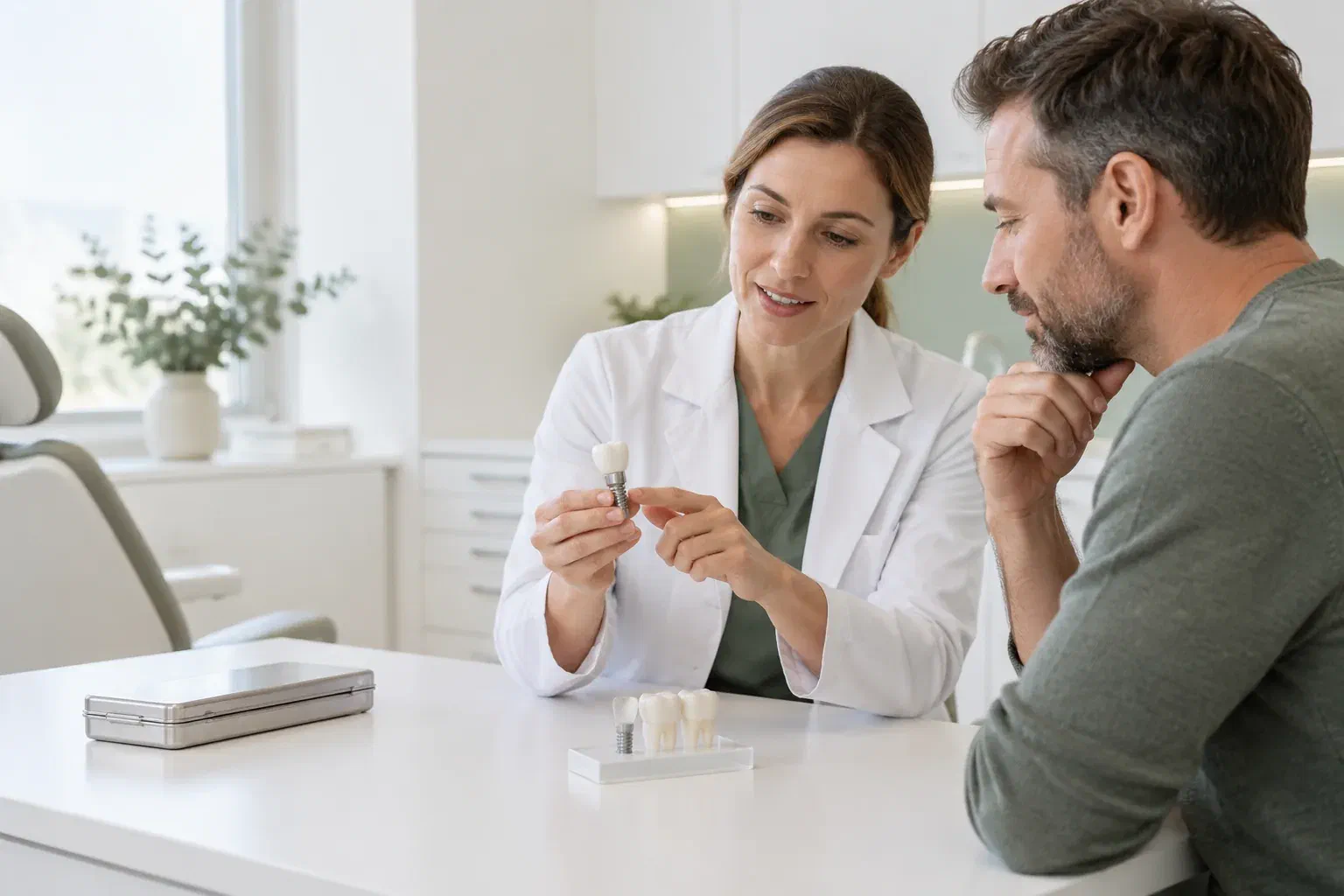
Illustrative discussion about the connecting components of an implant restoration
Restorative Dentistry

Loose Implant Screw Repair

A suspected loose implant screw needs assessment of the connection and the restoration it holds. Discuss loose implant screw repair in Milton, including component identification, the reason for movement, and whether professional tightening, replacement, or further treatment is needed.

A closer look at loose implant screw repair

A small connector needs a precise diagnosis.

Some implant restorations rely on a small screw to secure a connecting component or the restoration to its support. This prosthetic screw is different from the larger implant placed within the jaw. A concern described as a loose screw may therefore involve a repairable connection rather than movement of the implant itself.

The first task is to confirm what is actually happening. A loose screw, a damaged screw, an ill-fitting component, and a problem elsewhere in the restoration can produce overlapping symptoms. Repeated tightening without understanding the cause may leave the underlying issue unresolved.

At Milton Dental Clinic, we can assess the restoration and discuss the appropriate next step. Bring implant identification, previous repair details, and any detached components. The more clearly the existing system can be identified, the better the team can explain compatibility, access, and the work required.

Discuss a suspected implant screw problem
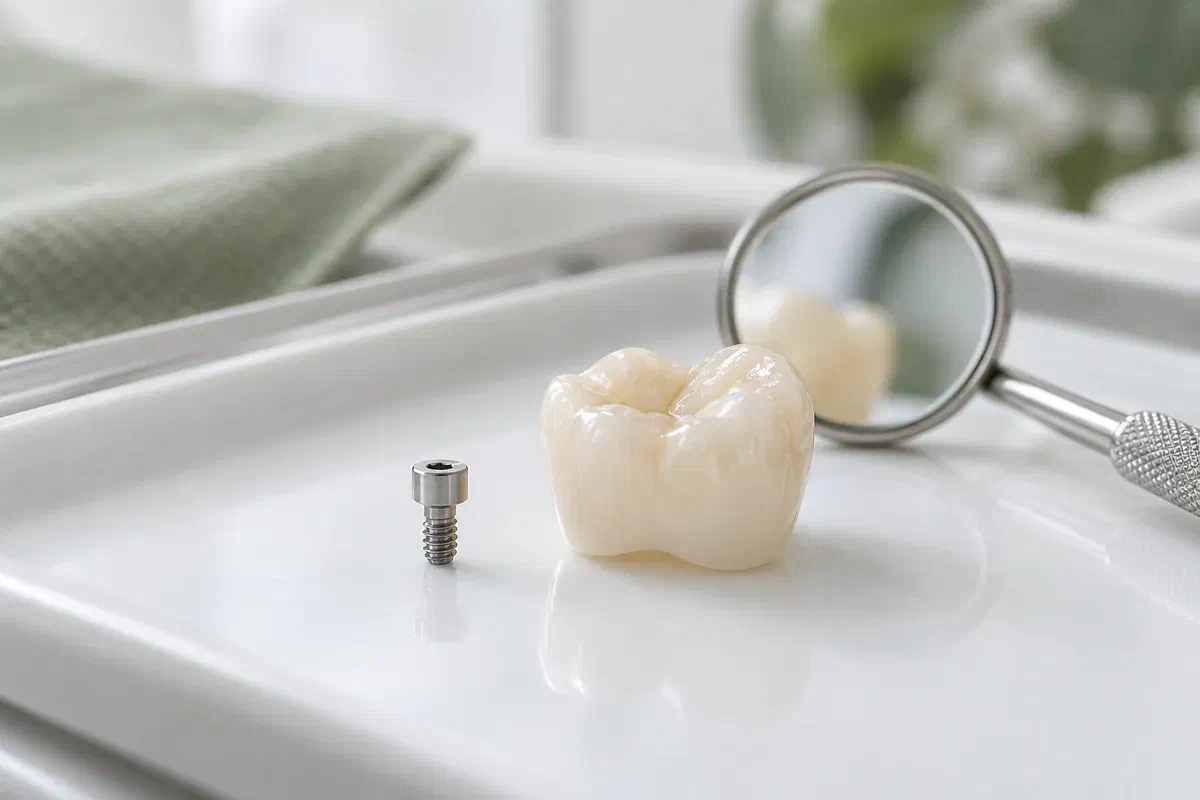
Small prosthetic connecting screw beside a ceramic crown and dental mirror
Signs to describe when booking

Movement is a reason to check the connection, not to adjust it yourself.

You do not need to know which screw or component is involved. Tell the team what has changed, whether the restoration is a crown or bridge, and whether the issue has occurred before.

The restoration moves or clicks during use

Explain when you first noticed the change and whether it is becoming more obvious. Avoid repeatedly loading or rotating the restoration to test it; the components need assessment under appropriate clinical conditions.

An access opening or small part has changed

A missing access-hole covering does not automatically establish that the screw is loose. Keep any recovered part and describe what you see without inserting a tool into the opening.

The same connection has needed attention before

Previous tightening or replacement is relevant to the assessment. Bring the dates and any available records so the dentist can consider recurrence, component history, restoration fit, and the bite.

Call promptly about an unstable implant restoration. Mention pain, swelling, a detached part, or movement that seems to involve the support in the mouth as well as the replacement tooth.

Why the cause matters

Restore a suitable connection and look for the reason it loosened.

A prosthetic screw helps clamp accurately fitting components together. Its performance depends on the system, the condition and fit of the parts, and how forces act on the restoration. The assessment should consider those relationships instead of treating the screw as an ordinary fastener that only needs more force.

Where the implant and restoration remain suitable, targeted connection work may allow them to stay in use. The dentist should explain whether the screw can appropriately be retained, needs replacement, or is part of a more complicated problem requiring another approach.

Patient information: International Team for Implantology — mechanics of implant connectors

Use the correct system information

A similar-looking screw is not enough to confirm compatibility. Identifying the implant and restorative components helps establish the appropriate parts, instruments, and manufacturer's requirements for the proposed work.

Consider the condition of the complete joint

The screw, its seating surfaces, and the connected restoration are assessed together. Damage or an incomplete fit may change the repair plan even when the most noticeable symptom is only a small amount of movement.

Make recurrence part of the review

If the issue has happened more than once, ask what is being reconsidered. The explanation may involve fit, component condition, or loading, and should include a plan for checking the result after repair.

Your implant screw assessment and repair

Identify, inspect, restore, and verify the connection.

This is professional component work guided by the restoration's design and clinical findings. The appointment may require records, compatible parts, or additional expertise before the definitive repair can be completed.

  1. Confirm the history and likely source of movement

    The dentist reviews the restoration and previous work, examines the area, and considers imaging when indicated. The assessment distinguishes a suspected connector problem from other reasons for crown, bridge, or implant movement.

  2. Identify the system and inspect accessible components

    The team determines how the connection can be accessed and explains any removal involved. Available records support component identification, while inspection helps establish whether parts are intact and suitable for reuse.

  3. Carry out the agreed connection work

    Appropriate tightening or component replacement is performed according to the identified system and findings. A damaged or fractured part may require a different procedure, additional appointments, or referral.

  4. Check the restoration and arrange follow-up

    The connection, restoration, and bite are reassessed as appropriate. Any access opening is managed according to the design, and you receive instructions about use, care, and the timing of review.

Protecting the repaired connection

Notice changes early and leave component work to the clinical team.

Follow the instructions given for your repair, including any temporary restrictions. If the restoration still feels unfamiliar after the appointment, describe the sensation rather than trying to adjust it yourself.

Avoid home tightening or part substitution

Do not use a household screwdriver, online replacement screw, or glue in the restoration. The wrong part or force can damage the components and make later assessment or repair more difficult.

Keep track of movement or bite changes

Report renewed clicking, rocking, or an altered contact when you close your teeth. If a protective bite appliance is part of your existing care, ask whether it remains appropriate after the repair.

Retain the updated component information

Keep any treatment summary or implant details provided after the work. These records can help future maintenance, particularly if you move or need care from a different clinician.

Choosing the right component treatment

Loosening, damage, and poor fit are different findings.

The repair should follow inspection of the connection and its supporting restoration. Ask which part is affected, whether the remaining components are usable, and what limitations or uncertainty remain.

When the components remain suitable

Professional management of an intact connection

The clinician may be able to restore the connection using the appropriate system requirements. The fit and bite still need assessment, particularly if the screw has loosened previously.

When a part cannot be reliably retained

Replacement or retrieval of a damaged component

A worn or fractured screw may need replacement or specialized retrieval. The team should explain access, potential risks, and whether referral is advisable before proceeding.

When the problem extends beyond the screw

Revision of the restoration or further implant care

A fit problem, damaged connection, or concern about implant support may require a broader plan. Repeatedly tightening a screw is not a substitute for addressing those findings.

Patient information: International Team for Implantology — technical implant-restoration complications

Questions about implant screws

Understand the connector without trying to repair it yourself.

Implant systems use specific components and professional handling requirements. These answers explain the assessment at a patient level; the exact repair is determined after the restoration has been examined.

(905) 876-4488
Is the small screw inside an implant crown the same as the implant in my jaw?
No. A prosthetic screw can connect parts of the restoration, while the implant within the jaw provides the underlying support. The terminology is sometimes used loosely, so ask the dentist to show which part is involved in your concern.
Can a loose implant screw simply be tightened as firmly as possible?
No. The identified system has specific handling requirements, and excessive force can cause damage. The clinician needs to assess the components and fit before carrying out appropriate connection work. This is not a home adjustment.
Does losing the filling over a screw-access opening mean the screw is loose?
Not necessarily. The access covering and the screw have different functions. Contact the clinic to have the opening and restoration checked, and avoid placing tools or unapproved materials inside while waiting for advice.
Why might a dentist replace a loose implant screw instead of reusing it?
The decision depends on the component’s condition, previous use, the system’s requirements, and the repair being performed. A damaged part may be unsuitable to retain. Ask what finding supports replacement and whether other components also need attention.
Can a broken prosthetic screw sometimes be managed without removing the implant?
Sometimes a fractured component can be retrieved while retaining a suitable implant, but this is not guaranteed. The position of the fragment, damage, access, and system affect the options. Additional expertise or referral may be needed.
What should I bring if my implant screw has loosened several times?
Bring implant identification and records of previous repairs or component changes if available. Note when the movement returned and any bite changes. That history helps the dentist reassess the connection rather than treating each episode as an isolated event.
Loose implant screw repair in Milton

Let’s check the connection with the right information.

Contact our Bronte Street clinic about a suspected implant screw problem. We can assess the restoration, review available records, and explain whether connection work, component replacement, or further assessment is appropriate.

Bring any recovered components and implant records, and call about active movement or discomfort.

Visit Milton Dental Clinic
Unit 1, 342 Bronte St. S, Milton, ON L9T 5B7
Get directions Clinic hours
Monday–Thursday
11am–7pm
Friday–Sunday
By appointment only

How can we help?

Milton Dental Clinic

Have a question about your smile? Choose the option that works best for you.

For urgent dental concerns, please call.
Messages are reviewed during clinic hours.