Chewing brings a click or slight rock
Note when it started and whether it has become more noticeable. Hold off on pressing or twisting it to check; repeated loading puts strain on parts that should be assessed clinically.


A slightly loose implant tooth is tempting to ignore until the calendar clears. From Brampton, an early assessment can be simpler to plan than a bigger repair later. We look at the crown or bridge and its connection, identify the system, and explain whether securing the screw, replacing a part, or further care fits best.
Busy weeks make it easy to postpone a tooth that only shifts a little. The trouble is that a loose connection keeps getting loaded every time you chew. On many implant teeth that connection is a small prosthetic screw, a separate piece from the implant that sits in the jawbone.
From the outside, a screw that has unwound, a worn or cracked screw, an ill-fitting component and a fault elsewhere in the crown or bridge are hard to tell apart. Each calls for a different response, so turning the screw tighter without a diagnosis may only delay the real repair.
When you book, gather what you can: an implant card, notes from a previous repair, or any part that has come out. The dentist at our Bronte Street clinic will look closely at the restoration and walk you through the options. Clear system details help us explain compatible components, access and the scope of work.
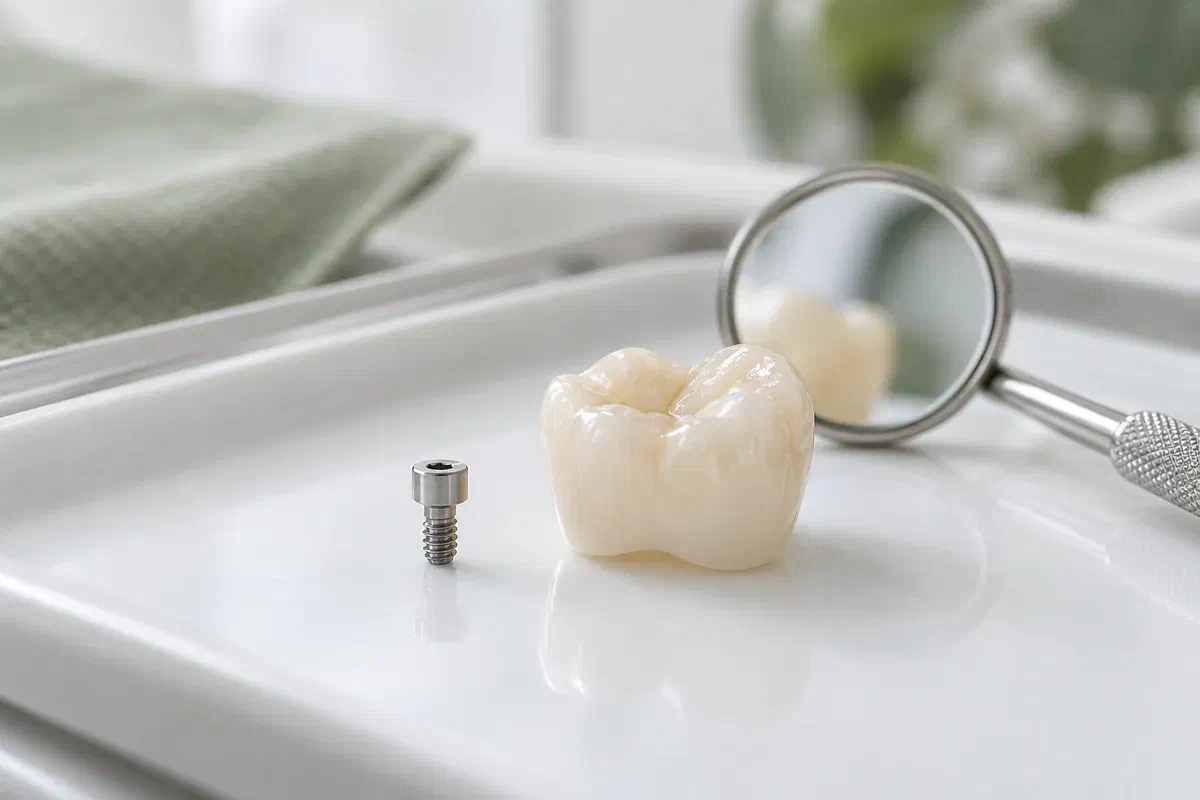
You won’t be asked to identify components. Tell us what has changed, whether the implant holds a crown or a bridge, and whether the same connection has been repaired before.
Note when it started and whether it has become more noticeable. Hold off on pressing or twisting it to check; repeated loading puts strain on parts that should be assessed clinically.
A worn or missing seal over the screw-access hole doesn’t prove the screw has loosened. Keep any fragment you find, tell us what the area looks like, and keep tools out of it.
Recurrence is part of the story. Bring any dates or records so the dentist can consider how often it has happened, which parts were changed, how the crown fits and how you bite.
Don’t wait if an implant tooth is clearly unstable. Call promptly about pain, swelling, a detached part, or movement that seems to come from the implant support as well as the tooth.
A prosthetic screw clamps closely fitted parts together under controlled tension. Its hold depends on the implant system, the fit and condition of each component, and how your bite loads the tooth. Looking only at the screw, and adding force, misses most of what keeps the joint stable.
When the implant and restoration are still in good shape, focused connection work may let you keep using them. The dentist should tell you plainly whether the screw can stay, whether a new one is needed, or whether a more complicated issue calls for another approach.
Patient information: International Team for Implantology — mechanics of implant connectors
Similar appearance is not proof of compatibility. Identifying the implant and restorative components points to the correct parts, instruments and manufacturer guidance for the repair.
Mild movement can still hide wear or an imperfect fit. The dentist considers the screw alongside what it seats on and the crown or bridge it holds, and adjusts the plan to match.
If this keeps happening, ask what is being looked at differently. Fit, worn parts or bite forces may be involved, and the plan should include rechecking the connection later.
The repair is guided by how your restoration was designed and what the examination finds. Some cases need records, specific parts or another clinician’s input before the final step.
We review your history and earlier treatment, examine the area, and take images when they are warranted. The dentist is looking to separate a connection problem from other reasons for movement.
The team explains how the screw will be reached and whether anything must be removed first. Records help confirm the system, and inspection shows if the parts are intact and reusable.
The connection is secured or a component replaced to suit the system and findings. If something is broken or damaged, a different procedure, extra visits or a referral may follow.
The connection, restoration and bite are rechecked. The access hole is sealed to fit the design, and you go home with care instructions and a time for review.
Follow the instructions you receive, including any temporary limits. If the tooth still feels a little different afterwards, tell us about it rather than trying to adjust it.
A household screwdriver, an online replacement screw or glue should never go near an implant crown. The wrong part or force can damage components and complicate later care.
Call if clicking or rocking comes back or your bite feels off. If you already use a night guard, ask whether it remains suitable after the repair.
Store the treatment summary or implant information we give you. It helps future maintenance, especially if you move or see another clinician.
Systems differ in their components and handling. These answers are general; your repair is decided after the restoration has been examined.
Phone the Bronte Street team when an implant tooth has begun to move. We will examine the restoration, review the records you bring, and explain whether connection work, a replacement component or further assessment is the right next step.
Bring implant records and any loose parts, and call right away about pain, swelling or worsening movement.
