Give, rocking or clicking
Let us know when you first noticed it, and whether it happens while chewing, brushing or both. Avoid pushing on it to check again; repeated loading can stress components that should be examined first.

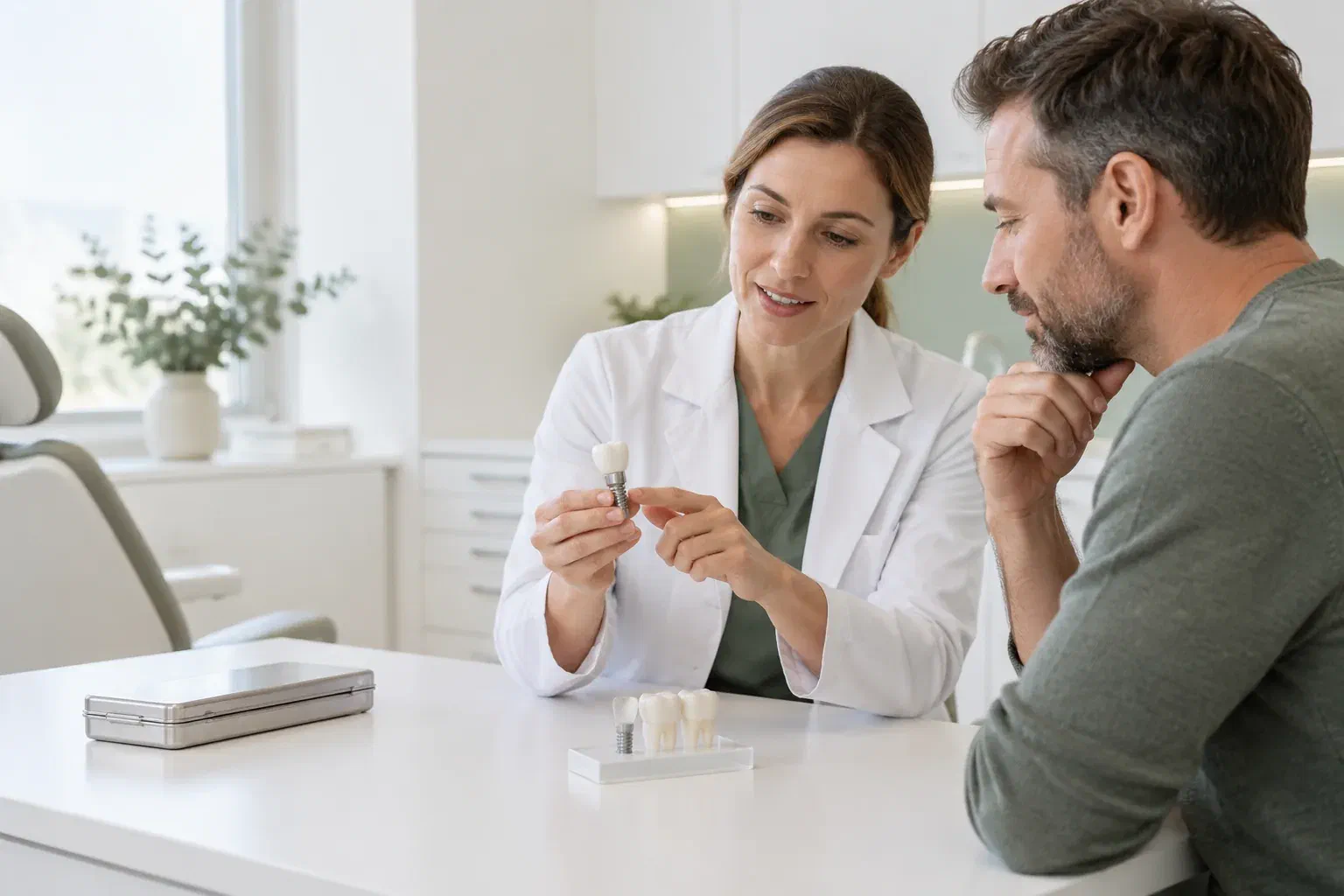
Sometimes the first hint is during flossing: the implant crown gives slightly under the floss or brush. For people in Burlington, our team can check whether a prosthetic screw has loosened, identify the components, and explain if the connection can be secured, a part should be replaced, or more care is needed.
A slight give under the floss is easy to dismiss, but it is worth a call. Many implant crowns and bridges are secured by a small prosthetic screw that joins them to the implant or to a connecting part. That screw is separate from the implant in your jaw, and it is often where movement begins.
Several problems feel the same from the outside. The screw may have backed off, worn or cracked; a component may not be seating fully; or the issue may sit somewhere else in the restoration. Tightening it repeatedly without an explanation risks the same thing happening again.
From Burlington, it helps to come prepared. Our Bronte Street team will examine the restoration and talk through next steps, and implant cards, earlier repair notes or a part that fell out all help. With a clear picture of the system, we can explain compatible parts, access and what the work involves.
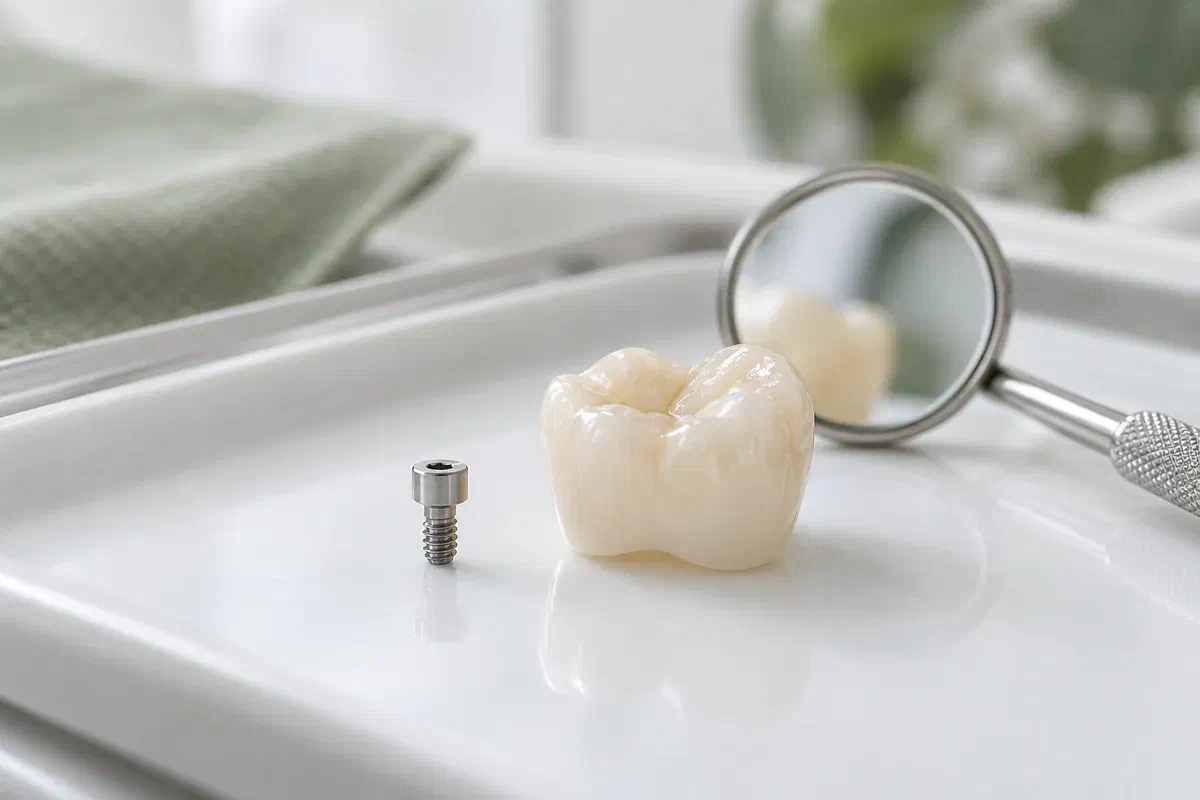
Naming the exact part isn’t your job. Share what you have noticed, whether the tooth is a crown or part of a bridge, and whether the same implant has been repaired before.
Let us know when you first noticed it, and whether it happens while chewing, brushing or both. Avoid pushing on it to check again; repeated loading can stress components that should be examined first.
The material covering a screw-access hole can come away while the screw stays secure. Save anything that came out and describe what you see, without putting a pick or tool inside.
Earlier tightening or a replaced part is useful information. Bring dates or records if you have them, so recurrence, component history, crown fit and your bite can all be weighed.
Call us promptly if an implant tooth is unstable. Tell us about pain, swelling, a part that has come off, or movement that seems to involve the supporting implant and not only the crown.
The prosthetic screw keeps closely fitted implant parts clamped together. How well it holds depends on the implant system, the state and fit of the components, and the forces your bite puts through the tooth. A sound assessment weighs those factors rather than simply applying more torque.
If the implant and restoration are still suitable, focused connection work may let you keep them. You should be told whether the existing screw can stay, whether it should be replaced, or whether the findings point to a broader problem that needs a different plan.
Patient information: International Team for Implantology — mechanics of implant connectors
A look-alike screw does not confirm a match. Identifying the implant and restorative components helps establish the correct parts, instruments and manufacturer requirements for the planned work.
The screw, the surfaces it seats on and the restoration it holds are checked together. Damage or an incomplete fit can change the plan, even if the only symptom is slight movement.
When loosening recurs, ask what is being reconsidered. Fit, worn parts or bite loading may be part of the explanation, and a recheck after the repair should be arranged.
This is precise component work, guided by the design of your restoration and the clinical findings. Records, compatible parts or extra expertise may be needed before the final repair is completed.
After reviewing your history and the restoration, the dentist examines the area and uses imaging if indicated. That helps distinguish a connector issue from other causes of crown, bridge or implant movement.
We explain how the connection will be accessed and whether anything must be removed. Records help with identification, and inspection shows whether the parts are intact and reusable.
Appropriate tightening or part replacement is carried out to suit the system and findings. A cracked or broken component may need a different procedure, further appointments or a referral.
The connection, the crown and your bite are reassessed. The access opening is managed according to the design, and we explain use, cleaning and when to return for a check.
Follow the instructions for your repair, including any temporary restrictions. If the tooth feels unfamiliar afterwards, describe what you notice instead of trying to change it.
Clean around the implant as advised, but never use a screwdriver, a replacement screw from online, or glue. The wrong part or force can damage components and complicate future repair.
Call if the crown starts to move again, clicks, or meets the opposing teeth differently. If you use a night guard, ask whether it still suits you after the repair.
Keep the treatment summary or implant details we provide. They support future maintenance, especially if you move or are treated by another clinician.
Each implant system has specific parts and handling rules. These answers give a patient-level overview; the actual repair is chosen after your restoration is examined.
Reach our Bronte Street clinic about an implant crown that gives, rocks or clicks. We will examine the restoration, review your records, and explain whether connection work, a new component or further assessment is appropriate.
Bring any parts that came out and your implant records, and call promptly about ongoing movement or soreness.
