How much it moves, and when it started
A slight click is different from a crown that wobbles freely. Tell us which you notice and whether it is getting worse. Until the visit, please stop testing it; every push loads the parts.


An implant crown that loosens on a Saturday raises a practical question: can it wait, and what should you do meanwhile? For households in Campbellville, a call to our team is the first step. We help you judge urgency, then examine the connection, identify the system and explain whether securing, replacing or further care is needed.
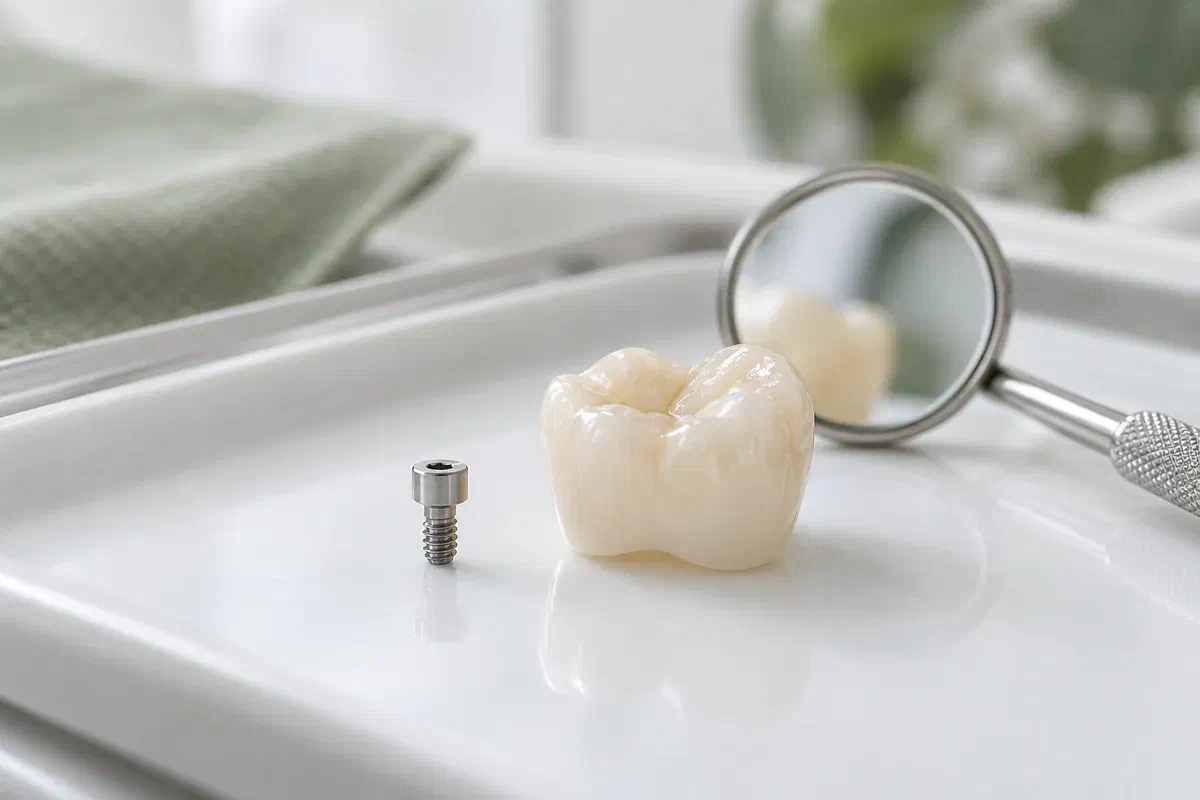
Often a slightly loose implant crown without pain or swelling can be managed carefully for a short time while you arrange an appointment. What makes the difference is knowing which part is involved. Many implant crowns are held by a small prosthetic screw, a separate component from the implant set in the jawbone.
Only an examination can separate the possibilities. The screw could have unwound or been damaged, a connecting part might not seat fully, or the crown may have its own problem. Each leads to a different repair, and repeated tightening without a diagnosis tends to bring the movement back.
Calling before you drive in from Campbellville lets us ask the right questions and set aside suitable time. Have implant cards, earlier repair notes and any loose piece ready. Our Bronte Street team can then examine the crown and explain the parts, access and work your system requires.
Component names don’t matter on the call. We’ll want to know what changed, whether the implant carries a crown or a bridge, and whether this connection has needed work before.
A slight click is different from a crown that wobbles freely. Tell us which you notice and whether it is getting worse. Until the visit, please stop testing it; every push loads the parts.
A missing access filling can look worrying, but it doesn’t confirm the screw is loose. Put any recovered piece in a container, describe the opening, and don’t probe it with anything.
If the same crown has been tightened or had parts replaced, let us know roughly when. That helps the dentist weigh recurrence, previous components, crown fit and your bite.
Don’t wait if there is pain, swelling, a detached component, or a feeling that the implant support itself is moving. Call promptly so we can advise on timing.
Behind every implant crown that uses one, the prosthetic screw is clamping finely matched parts together with a measured amount of tension. How long that lasts relies on the system, the fit and state of the components, and the loads from your bite. Simply turning it tighter overlooks most of that.
If the implant and crown remain suitable, focused connection work may allow you to keep both. The dentist should say whether the current screw is fit for reuse, whether a new one is warranted, or whether there is a wider problem requiring another plan.
Patient information: International Team for Implantology — mechanics of implant connectors
Screws from different systems can look the same. Identifying your implant confirms the correct parts, instruments and manufacturer instructions for the work.
The dentist examines the screw along with the surfaces it seats on and the crown above. Wear or a poor fit can change the plan, however small the movement felt.
If this has happened before, ask what is being done differently. Fit, part condition or bite loading could be involved, and the result should be rechecked later.
Expect careful component work based on the design of your restoration and the findings on the day. Some repairs need records, particular parts or another clinician before they can be completed.
The dentist asks about the timeline, reviews earlier work, examines the area and arranges imaging if it is indicated. The goal is to confirm whether the connection is the source.
We explain how the screw is accessed and whether anything must be removed. Records help with identification, and inspection shows whether the parts can be used again.
Appropriate tightening or part replacement follows the system’s requirements and what was found. Damaged or broken parts may require a separate procedure, extra visits or referral.
Your bite and the crown’s stability are reviewed. Any access opening is closed according to the design, and we explain care at home and the timing of your review.
Stick to the instructions you were given, such as avoiding hard foods on that side for a short while. If the tooth feels slightly unfamiliar over the next few days, call and describe the sensation instead of trying to adjust it.
It can be tempting when the crown feels slightly off, but household screwdrivers, screws sold online and glue can damage implant components. Using the wrong part or force can also make a later repair more difficult.
Call if clicking or rocking comes back or if your bite feels different. If you wear a night guard, check with us that it still suits you after the repair.
Store the treatment summary or implant information we provide. It helps with future maintenance and with care from another clinician if needed.
These answers offer general, patient-level guidance. Implant systems vary, and the actual repair is decided once your restoration has been examined.
Phone our Bronte Street practice about an implant crown that has started to move. We can advise on what to do meanwhile, then examine the restoration, review your records and explain whether connection work, a new part or further assessment fits.
Keep any loose part in a container, bring your records, and call right away about pain or swelling.
