The crown looks turned, or feels loose
Say when you first saw or felt the change and whether it is progressing. Please don’t twist the tooth back into place or keep pressing on it; that loading should wait for a proper clinical check.


A front implant tooth that looks slightly turned, or sits a touch differently in the mirror, may have a loosened connection. For anyone travelling from Georgetown, our team checks the crown, the prosthetic screw and the parts between them, identifies the system, and explains whether securing, replacing or reworking is needed.
Not every loose implant tooth announces itself by clicking. On a front tooth, the first clue might be visual: the crown appears faintly rotated, or its edge no longer lines up with its neighbours. A small prosthetic screw often holds that crown in position, and it is a different component from the implant fixed in the jaw.
A change in appearance can come from several causes. The screw may have unwound, worn or broken; a connecting part might no longer seat fully; or the crown itself may have a problem. Turning it back into line with more force, without knowing why it moved, rarely holds for long.
Before you come in from Georgetown, look for any implant card, records from earlier repairs, or a piece that has come away. At our Bronte Street practice, the dentist can examine the crown and talk you through the options. Knowing the system helps us discuss suitable parts, how the screw can be reached and the work involved.
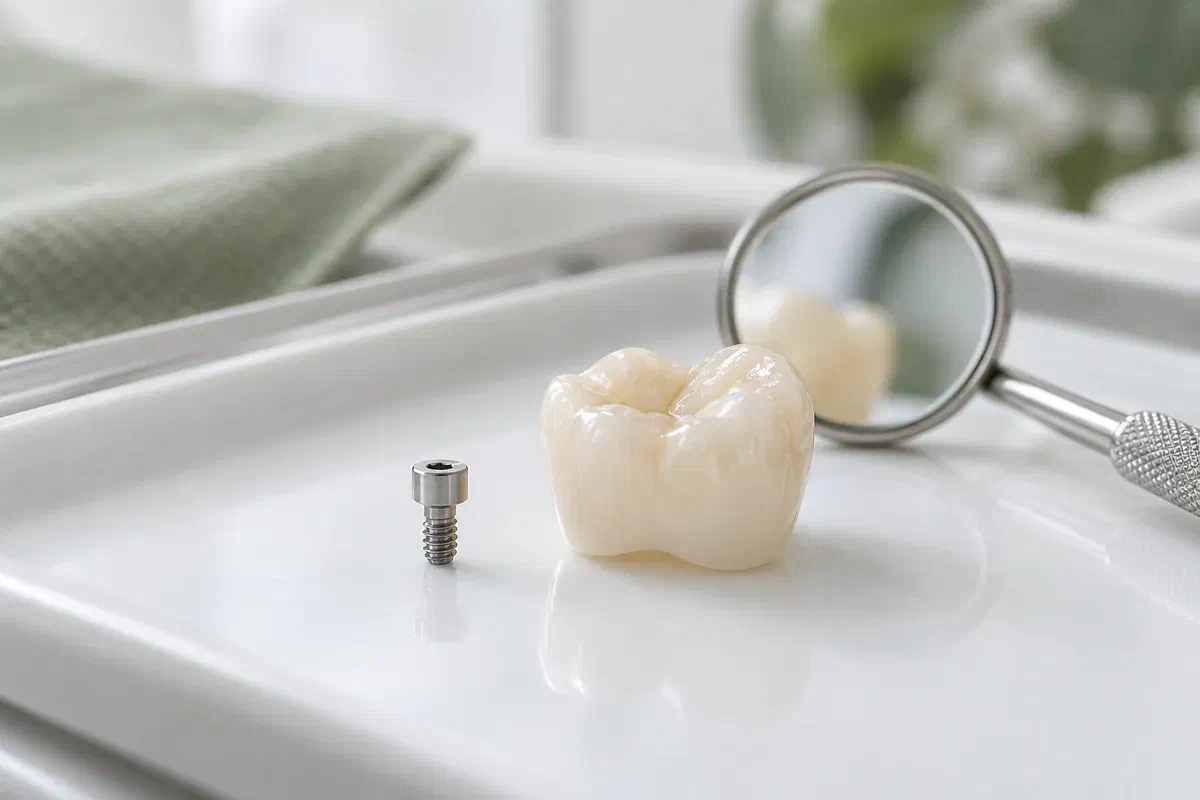
You aren’t expected to know which part has moved. Describe the change, tell us if it is a single crown or part of a bridge, and mention any previous work on the connection.
Say when you first saw or felt the change and whether it is progressing. Please don’t twist the tooth back into place or keep pressing on it; that loading should wait for a proper clinical check.
Some front crowns have a sealed screw-access hole on the tongue side. If the seal wears away, the screw may still be secure. Keep any fragment and describe the spot, without probing it.
Tell us about earlier tightening or replaced parts, with dates if possible. That lets the dentist look at recurrence, component history, how the crown fits and the way your front teeth meet.
Call soon if an implant tooth is unstable or has visibly shifted. Mention pain, swelling, a detached part, or movement that seems to come from the support beneath the crown.
Implant parts are made to fit together accurately, with the prosthetic screw holding them under controlled tension. When that tension is lost, a front crown can rotate slightly. Restoring it well means considering the system, the condition and fit of each part, and how your front teeth contact one another.
If the implant and crown are still suitable, connection work may bring the tooth back to a stable position. The dentist should explain whether the current screw can be reused, whether a new one is better, or whether the findings suggest a broader issue needing another approach.
Patient information: International Team for Implantology — mechanics of implant connectors
Implant screws from different makers can look interchangeable but are not. Identifying the system establishes the right components, tools and manufacturer requirements.
The dentist checks how the crown and its connecting parts sit against one another. Damage or incomplete seating can affect both appearance and stability, and may change the plan.
If the crown has shifted before, ask what might be driving it, such as fit, worn parts or how your front teeth meet. A recheck after the repair should be planned.
This is precise component work shaped by your restoration and the clinical findings. Records, particular parts or another clinician’s expertise may be needed before the final repair is complete.
The dentist reviews your history, looks at the tooth and gum, and uses imaging if it is indicated. This clarifies whether the movement comes from the connection or another source.
We explain how the screw is reached, which may involve the access hole on the back of the crown. Records support identification, and inspection shows whether parts are intact.
Connection work follows the system’s requirements and the findings. If a component is broken or damaged, another procedure, further appointments or a referral may be required.
We confirm the crown sits correctly and that your front teeth meet as they should. The access hole is sealed to suit the design, and you receive care guidance and a review date.
Follow your instructions, including any temporary advice about biting into firm foods with your front teeth. If the crown feels different for a few days, tell us rather than adjusting it.
Never try a household screwdriver, an online replacement screw or glue on an implant crown. These can damage the components and make future repair harder.
Contact us if the crown appears to turn again, starts clicking, or your bite feels different. Wear a protective appliance only as advised, and ask whether your existing one still suits.
Keep the treatment summary or component details we give you. They help with future care, particularly if you move or see a different dentist.
Every implant system has particular parts and handling rules. These answers are general guidance; the repair itself is decided after an examination.
Contact our Bronte Street practice about an implant crown that looks or feels like it has moved. We will examine it, review your records, and explain whether connection work, a replacement part or further assessment is the right step.
Bring implant records and any parts that came off, and call promptly if movement or discomfort is increasing.
