Rocking, clicking or a slight twist
Say when you first felt it and whether it has grown more obvious. Try not to bite hard on it or turn it to check; that kind of repeated stress is best avoided until the parts can be examined.


When an implant tooth loosens, the first decision is often who to call: the clinic that placed it, or a dentist who can see you soon. For people coming from Oakville, our team can assess the crown and its connection, gather system information, and explain whether tightening, a replacement part, or referral is the sensible next step.
“My implant is loose” can describe several different situations. An implant tooth is usually built in layers: the implant set in the bone, sometimes a connecting abutment, and the crown or bridge on top. A small prosthetic screw often holds those upper layers in place, and that screw is a common source of movement.
Because a backed-off screw, a worn or broken one, a poorly seated part, and trouble elsewhere in the restoration feel much alike, the first appointment is about diagnosis. Re-tightening without knowing why the screw loosened may simply bring you back with the same problem.
If you are travelling from Oakville, our Bronte Street team can examine the restoration and outline the options. Gather implant cards, repair notes, and anything that has come out of the tooth. Knowing the exact system lets us talk clearly about part compatibility, access and the likely scope of work.
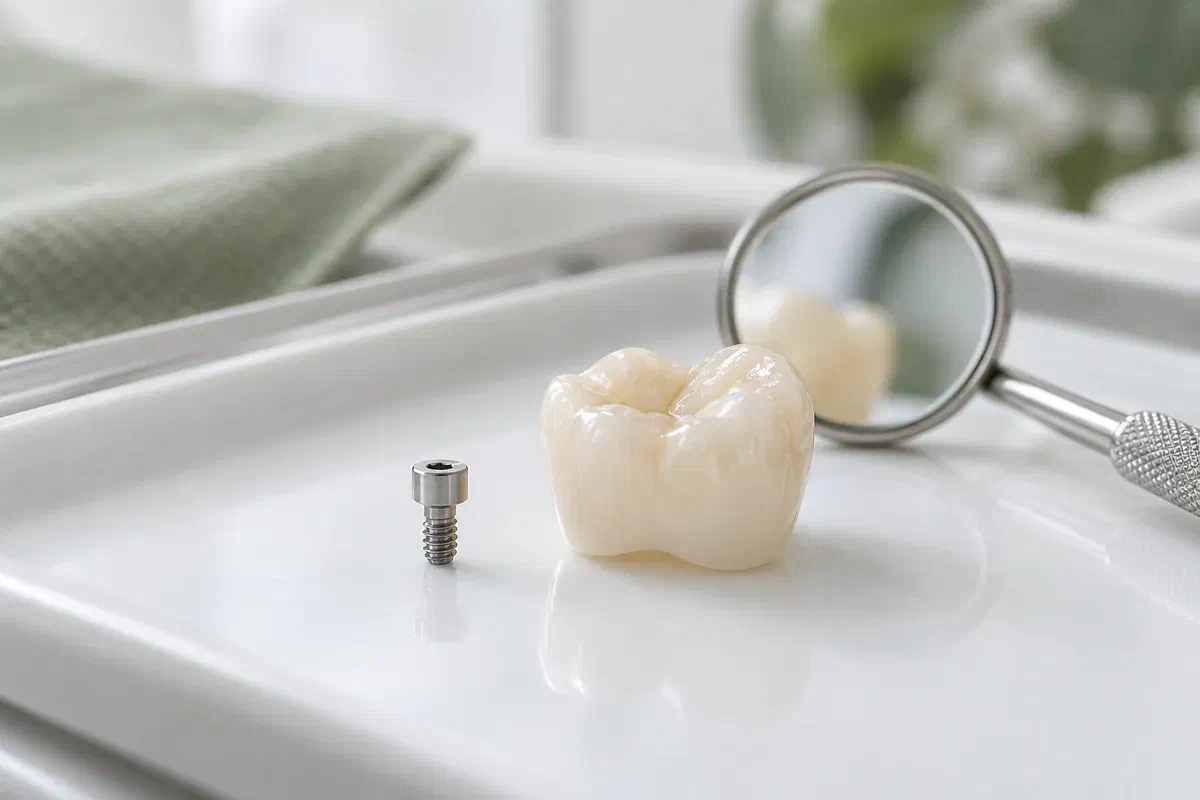
Nobody expects you to know which component is involved. Tell us what you have noticed, whether it is a single crown or a bridge, and whether this implant has given trouble before.
Say when you first felt it and whether it has grown more obvious. Try not to bite hard on it or turn it to check; that kind of repeated stress is best avoided until the parts can be examined.
Many screw-retained crowns have a small sealed opening. If that seal comes out, the screw is not necessarily loose. Keep what you find, describe the gap, and avoid putting anything into it.
If the screw has been tightened or replaced before, that history shapes the assessment. Bring dates or notes so the dentist can look at recurrence, which parts were changed, crown fit and how you bite.
Phone us promptly about any implant tooth that has become unstable. Tell us about pain, swelling, a detached part, or movement that seems to come from the implant support as well as the crown.
Implant components are made to fit together precisely, and the prosthetic screw keeps them clamped under controlled tension. Its success depends on the system, the condition and fit of each part, and the loads your bite applies. Simply adding force ignores those factors and can make things worse.
Where the implant and restoration remain suitable, targeted work on the connection may allow you to keep them. The dentist should explain whether the existing screw is fit to stay, whether a new one is warranted, or whether a more complex problem needs a different approach.
Patient information: International Team for Implantology — mechanics of implant connectors
Two screws can look nearly identical and still belong to different systems. Identifying the implant and its parts points to the correct components, tools and manufacturer requirements.
The screw, its seating surfaces and the attached crown or bridge are evaluated together. Damage or an incomplete fit may alter the plan even when movement is the only thing you have felt.
A repeat loosening deserves a closer look at fit, wear or bite forces. Ask what will be done differently and when the connection will be rechecked after the repair.
The work follows the design of your restoration and what the examination reveals. Sometimes records, specific parts or another clinician’s expertise are needed before the definitive repair is possible.
The dentist reviews your history and the restoration, examines the site, and takes images when they are indicated. This separates a connection problem from other reasons a crown, bridge or implant may move.
We determine how the connection can be accessed and explain any removal involved. Records support identification, and close inspection shows whether the parts are intact and suitable to reuse.
The connection is tightened appropriately or a component is replaced, following the system and the findings. A fractured or damaged part may require another procedure, more visits or a referral.
We reassess the connection, the restoration and your bite. Any access opening is sealed to suit the design, and you get instructions on eating, cleaning and when to come back.
Follow any instructions we give, including short-term chewing limits. If the tooth feels a little unfamiliar for a while, let us know what you are feeling rather than trying to fix it.
A household screwdriver, a screw bought online, or adhesive can damage implant parts. The wrong component or force can also make any future assessment and repair more difficult.
Call if rocking or clicking returns, or if your teeth come together differently. If you already wear a night guard, ask whether it is still suitable after the repair.
Keep the treatment summary or implant details we give you. They make future maintenance easier, especially if you move or see another clinician later.
Implant systems differ in their parts and handling. These answers are a general guide; the exact repair is decided once the restoration has been examined.
Call our Bronte Street clinic about an implant crown or bridge that has started to move. We will examine the restoration, review the records you bring, and explain whether connection work, a replacement part or further assessment is appropriate.
Bring implant records and any loose parts, and phone us quickly about ongoing movement or discomfort.
