The tooth rocks or makes a sound as you bite
Note roughly when it began and whether it is more noticeable now. Resist the urge to push or turn the crown to check it, since repeated loading can strain parts that need a proper clinical look.


An implant that has served you well for years can still develop a loose or worn connecting screw. Close to Old Milton, our team reviews older implant work carefully, tracks down system details where possible, and explains whether the connection can be secured, a part replaced, or broader care is needed.
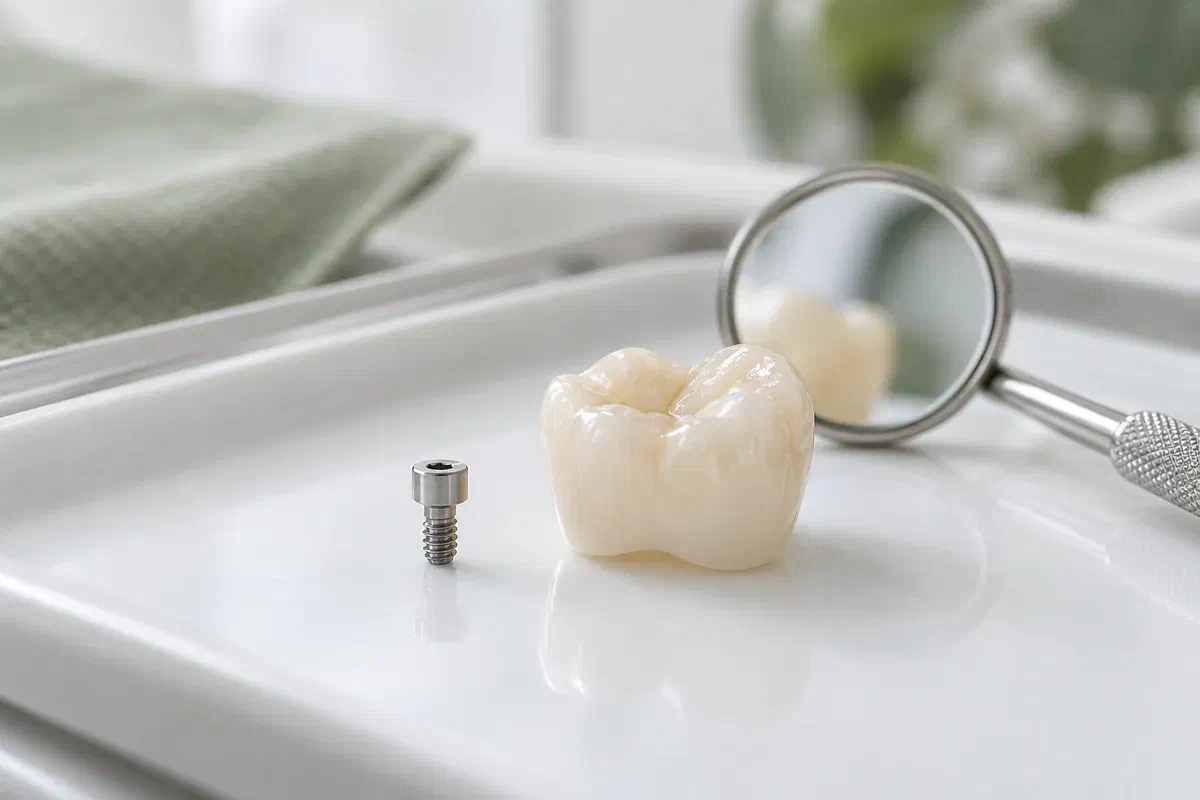
An implant crown placed a decade ago may have needed nothing but cleaning until now. When it starts to feel loose, the change usually points to a question about its parts. Many implant teeth are held by a small prosthetic screw, which is not the same as the implant fixture set into the jawbone.
Age alone does not explain movement. A screw that has backed off, one that has worn or fractured, a component that no longer seats well, and an issue elsewhere in the crown or bridge can all feel similar. Simply turning the screw tighter each time it loosens can leave the actual cause untouched.
Our Bronte Street practice sits close to Milton’s historic downtown, and we regularly see implant work that was done elsewhere. Any card, letter or invoice from the original clinic is worth finding. The clearer the system history, the easier it is to discuss compatible parts and access.
You don’t have to name the part. It helps to tell us what you have felt, whether the implant supports a crown or a bridge, and whether anyone has worked on the connection in the past.
Note roughly when it began and whether it is more noticeable now. Resist the urge to push or turn the crown to check it, since repeated loading can strain parts that need a proper clinical look.
The filling over a screw-access hole can wear or chip without the screw itself loosening. Keep any piece you find, tell us what the opening looks like, and keep tools and toothpicks out of it.
A repeat problem tells the dentist something. Share whatever you remember about earlier repairs, and bring paperwork if you have it, so recurrence, part history, fit and your bite can be considered together.
Call without delay if an implant tooth has become unstable. Mention any pain, swelling, a part that has detached, or a sense that the whole implant is moving rather than just the crown.
The job of a prosthetic screw is to clamp carefully machined parts together with the right amount of tension. That depends on the implant system, the condition of every component, how accurately they fit, and the forces your bite delivers. Treating it as an ordinary fastener misses most of that picture.
If the implant and crown are still suitable, focused work on the connection may let them stay in service. You should hear plainly whether the current screw can be kept, whether it needs replacing, or whether the findings suggest a more involved problem that needs another plan.
Patient information: International Team for Implantology — mechanics of implant connectors
Looking similar is not proof of a match, and older systems can be harder to identify. Knowing the implant and its restorative parts helps confirm the right components, instruments and manufacturer guidance.
The screw, the surfaces it presses against, and the restoration on top are reviewed as a group. Wear or an imperfect fit can change the plan, even if all you have felt is a slight shift.
If this has happened before, ask what will be looked at differently this time. Fit, part condition or bite forces may be involved, and there should be a plan to recheck the connection after the repair.
Repairing an implant connection follows the design of your restoration and the clinical findings. Some visits need records, specific parts or another clinician’s input before the final repair can be finished.
The dentist reviews the restoration and any earlier treatment, looks closely at the site, and uses imaging when it is warranted. The goal is to separate a connector problem from other causes of crown, bridge or implant movement.
We establish how the screw can be reached and explain any removal that is involved. Records help identify the components, and inspection shows whether they are intact and fit to use again.
The connection is secured or a part is replaced in line with the system and the findings. A broken or damaged component may call for a different procedure, extra visits or a referral.
We review the connection, the crown and your bite as needed. The access opening is sealed according to the design, and you receive guidance on use, cleaning and when to return.
Follow the instructions given after your repair, including any temporary limits. If the tooth still feels slightly unfamiliar, describe that to us rather than trying to adjust anything yourself.
Household tools, screws ordered online and adhesives do not belong in an implant crown. The wrong component or too much force can damage the parts and complicate any later repair.
Let us know if rocking or clicking comes back, or if your teeth meet differently. If you already use a night guard, ask whether it still fits your needs after the work.
Store any treatment summary or component information we provide. Those records make future maintenance simpler, particularly if you ever see a different dentist.
Each implant system has its own components and handling rules. These answers are general; the precise repair is decided after your restoration has been examined.
Get in touch with our Bronte Street practice about an implant tooth that has started to move. We will examine it, look through any records you can find, and explain whether connection work, a new part or further assessment fits.
Bring old implant paperwork and any parts that came out, and call promptly about movement or discomfort.
