Play found at a cleaning or exam
Share when it was noticed and whether you have felt any change since. Try not to check the crown yourself in the meantime; repeated pushing loads parts that are better examined clinically.


You may feel nothing at all, yet a hygienist or dentist notices slight play in an implant crown during a routine cleaning. If you are coming from Rockwood after that kind of finding, we can examine the connection properly, identify the implant system, and explain whether the screw can be secured, needs replacing, or points to further care.
It can be surprising to hear that an implant crown has a little movement when it has felt perfectly normal. Early loosening doesn’t always cause discomfort. On many implant teeth, the crown is fastened with a small prosthetic screw, and that part is quite separate from the implant itself, which sits within the jaw.
Catching it early is useful, but it doesn’t tell you the cause. A screw that has unwound slightly, a worn or damaged screw, a component that no longer sits fully, or an issue with the crown can each produce that small amount of play. Tightening without asking why may mean the same note at your next cleaning.
Bring along anything that might help: the implant card, records of any earlier repairs, and a note from the clinician who spotted the movement, if they provided one. Our Bronte Street dentist can examine the crown and explain what they find, which components suit your system, and what the repair involves.
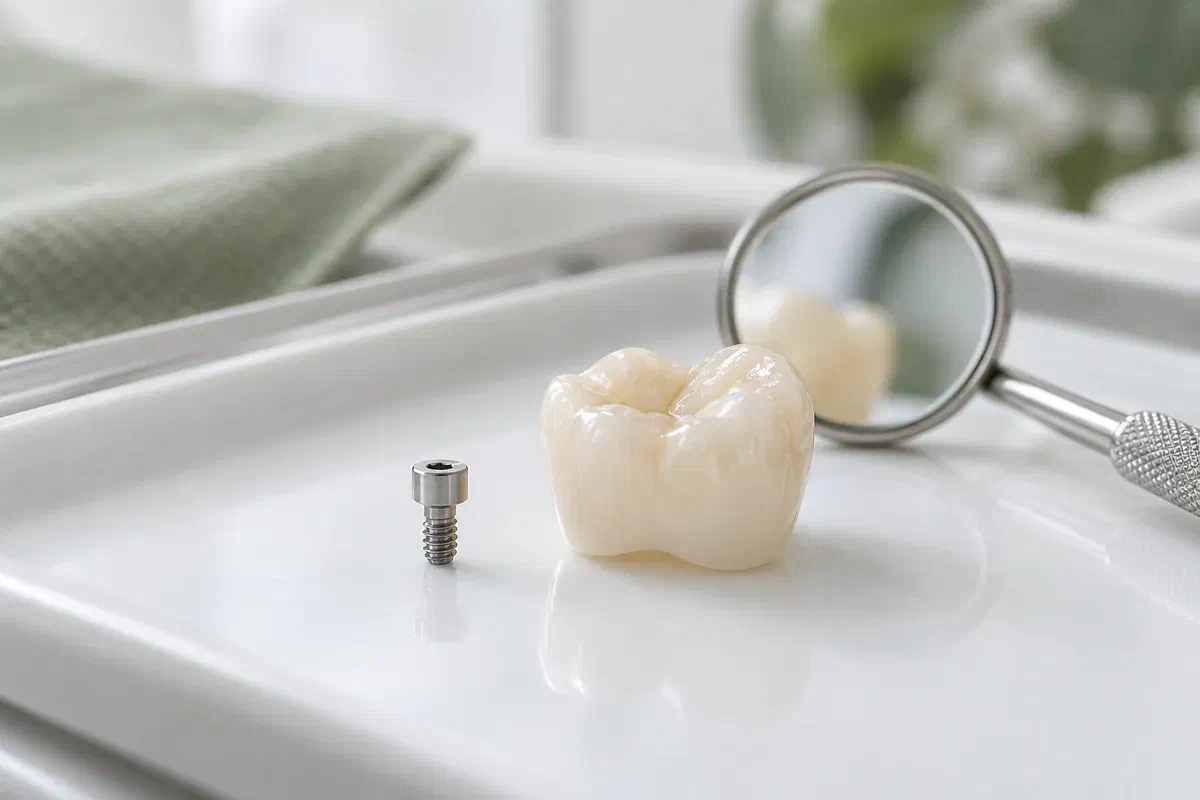
Don’t worry about naming parts. Tell us who noticed the movement and when, whether it is a crown or a bridge, and whether the same implant has been repaired before.
Share when it was noticed and whether you have felt any change since. Try not to check the crown yourself in the meantime; repeated pushing loads parts that are better examined clinically.
If the clinician mentioned a worn filling over the screw opening, that doesn’t necessarily mean the screw has loosened. Keep any piece that comes out and avoid putting tools into the hole.
Past tightening or a replaced screw adds context. Records or approximate dates let the dentist look at recurrence, which parts have been used, the crown’s fit and your bite.
If the crown becomes clearly loose, painful or swollen, or a piece comes away, call promptly. Let us know as well if it feels as though the implant itself, not just the crown, is moving.
A prosthetic screw holds precisely fitted components together under carefully set tension. When some of that tension is lost, the crown can develop slight play long before you feel it. Whether a simple repair will hold depends on the system, each part’s condition and fit, and the forces from your bite.
Where the implant and crown are still suitable, focused work on the connection may let you continue using them. The dentist should tell you if the current screw can be retained, if a replacement makes more sense, or if the findings call for a different plan.
Patient information: International Team for Implantology — mechanics of implant connectors
Similar-looking screws can belong to different systems. Knowing your implant confirms which parts, instruments and manufacturer requirements apply to the repair.
The dentist considers the screw alongside its seating surfaces and the crown it holds. Early wear or an imperfect fit may influence the plan.
If loosening has been found before, ask what will be done differently, whether about fit, wear or bite. Agree on when the connection will be checked again.
Expect precise component work, guided by your restoration’s design and what the examination shows. Records, specific parts or another clinician’s help may be required before the definitive repair.
The dentist reviews the original finding and your history, assesses the movement and takes images if needed. This confirms whether the connection is the source or something else is involved.
We explain whether access is through the crown or whether removal is needed. Records help confirm the system, and inspection shows whether the parts are in good condition.
Tightening or component replacement follows the system’s requirements. If something is fractured or damaged, a different procedure, additional visits or a referral may be needed.
We confirm stability and your bite, seal any access opening to suit the design, and record the work so your next routine check can include the connection.
Follow any instructions given after the repair. If the crown feels slightly different afterwards, describe that to us rather than trying to adjust it.
Household screwdrivers, online replacement screws and glue can damage implant components and make future repairs harder.
Tell your hygienist the connection was repaired so they can watch for renewed play. Call between visits if clicking or rocking returns or your bite changes, and ask whether any night guard you use remains suitable.
Keep the summary and component information from the visit. It saves time for any clinician who looks after the implant later.
Every implant system has particular components and requirements. The answers below are general; your repair is decided after the restoration is examined.
Get in touch with our Bronte Street clinic if you have been told an implant crown has some movement. We will examine it, look through your records, and let you know whether securing the connection, replacing a component or further assessment is advisable.
Bring the implant card and any notes from your cleaning, and call promptly if pain or obvious movement develops.
