You have found the detached crown
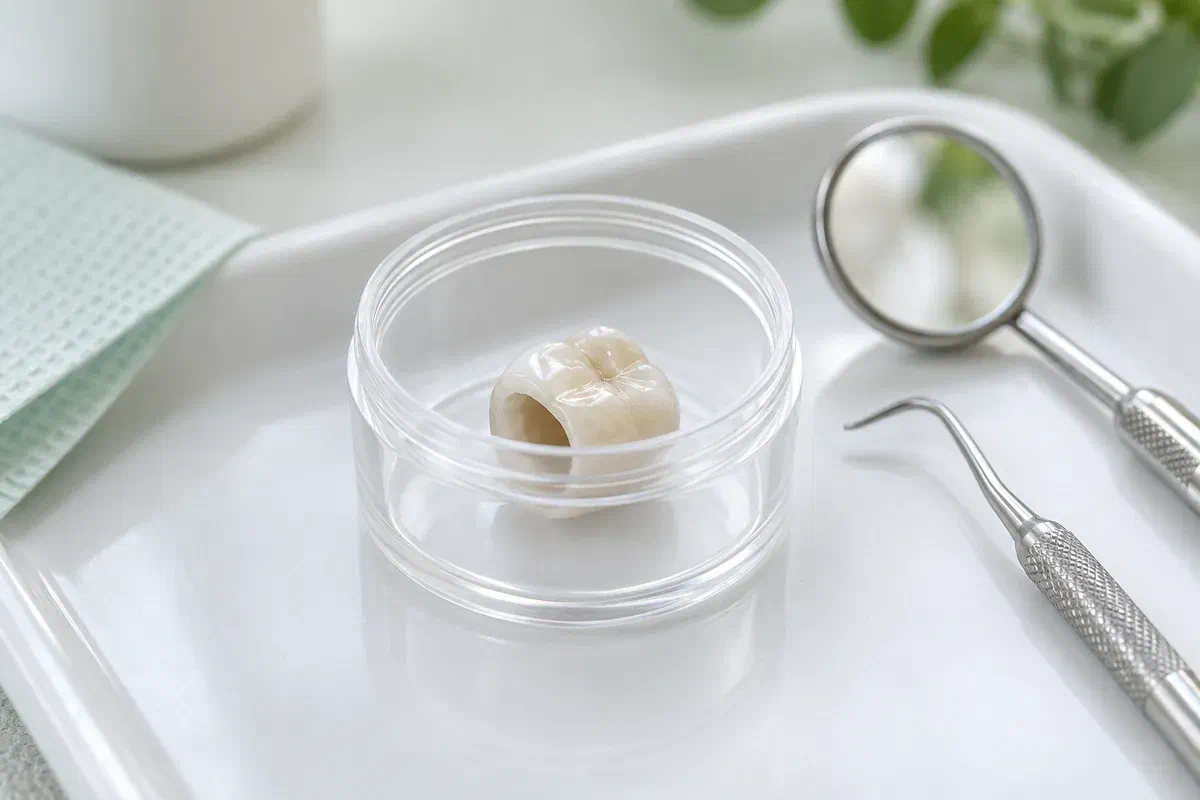
Keep it in a clean container and bring it with you. Do not scrape out material, pull off an attached post, or use household glue; the dentist needs to inspect the restoration as well as the tooth.


A crown that has come off leaves a tooth needing assessment and protection. Arrange lost dental crown treatment in Milton to check the exposed tooth, review a recovered crown if you have it, and discuss suitable temporary or definitive restoration.
When a dental crown comes off a natural tooth, the remaining tooth can look unexpectedly small, uneven, or different in colour. It was shaped to receive coverage, so appearance alone does not tell you whether it is damaged or whether the old crown can be used again. An examination is the next useful step.
The cause may involve the crown's attachment, its fit, or the tooth and foundation beneath it. Sometimes the restoration is intact and suitable to resecure; in other cases, treatment of the tooth or a replacement crown is needed. A recovered crown is worth bringing even when you are unsure about its condition.
At Milton Dental Clinic, tell us when the crown came away, whether you found it, and whether the tooth is painful or sensitive. Mention any recent injury or previous root canal treatment. We can advise on arranging care and assess how to restore coverage without assuming that the original crown is automatically the right repair.
You do not have to identify every piece yourself. Describe what happened, save anything you recovered, and explain any symptoms so the team can plan an appropriate assessment.
Keep it in a clean container and bring it with you. Do not scrape out material, pull off an attached post, or use household glue; the dentist needs to inspect the restoration as well as the tooth.
An assessment can still proceed without an intact crown. Tell the team whether it was lost while eating or following an injury, and whether you recovered any fragments that may help explain the damage.
Describe triggers, duration, and whether discomfort is increasing. Pain, swelling, or a change in the gum may affect the timing and type of assessment; do not judge the tooth's condition by appearance alone.
Contact the clinic after a crown is lost, even without pain. If a missing crown is associated with choking, breathing difficulty, or concern that it was inhaled, seek urgent medical assessment.
The examination considers the amount and condition of remaining tooth structure, the previous restoration, and any signs of a deeper problem. That information helps the dentist explain whether the existing crown can be reused, a new one is needed, or the tooth requires another form of care.
The first visit can also clarify the difference between protection for now and the final treatment. If additional work or laboratory fabrication is needed, ask how the tooth will be managed in the meantime and what limits apply to the temporary arrangement.
Patient information: NHS Wales — advice after losing a filling or crown
An intact appearance is only one consideration. The dentist checks whether the crown still fits the tooth appropriately and whether the supporting structure can provide a suitable foundation for reuse.
A crown may have detached with a piece of tooth or foundation material inside it. Identifying that finding matters because simply putting the crown back may not address the reason it came away.
Discuss the likely appointments, temporary protection, appearance concerns, and estimate. If the plan cannot be confirmed at the first visit, ask what additional information is needed and what happens while it is obtained.
Bring the crown or fragments if available, along with relevant treatment information. Tell the team if you are anxious about the exposed tooth or uncomfortable during examination so the approach can be explained.
The dentist asks how the crown was lost and assesses the tooth, gums, bite, and symptoms. Tests or imaging may be recommended when they would help clarify the underlying condition.
If the restoration is available, its fit and condition are evaluated alongside the tooth. Any attached material, post, decay, or fracture is considered before deciding whether the crown can be reused.
Discuss the diagnosis, options, and costs. The visit may allow suitable recementation, or the tooth may need interim protection while a new restoration or additional treatment is organized.
After the agreed work, the dentist checks the relevant fit and bite. Clarify whether the restoration is temporary, how to care for it, and which appointments are still required to complete treatment.
Ask the clinic for instructions appropriate to your symptoms and treatment stage. A crown on an implant, a temporary crown, and a crown on a natural tooth may need different advice.
Avoid hard or sticky foods on the exposed tooth and choose foods you can manage comfortably. If hot or cold triggers sensitivity, avoid those triggers while arranging assessment rather than repeatedly testing the tooth.
Continue careful brushing around the area as tolerated and ask for advice if cleaning is painful. Do not dig into the tooth, scrape its surface, or apply household substances to cover it.
If a temporary restoration or other interim measure is provided, follow its instructions and keep the completion appointment. A comfortable temporary covering does not necessarily mean the tooth's treatment is finished.
Crown loss can be unsettling, especially when the tooth looks unfamiliar. The examination provides the information needed to distinguish an exposed prepared tooth from a problem requiring more extensive care.
Contact our Bronte Street clinic after a crown has come off or gone missing. We can review the tooth, inspect any recovered restoration, and explain appropriate protection and longer-term treatment.
Keep the crown or fragments safely and call about pain, swelling, or uncertainty over a missing component.
