Keeping the crown safe
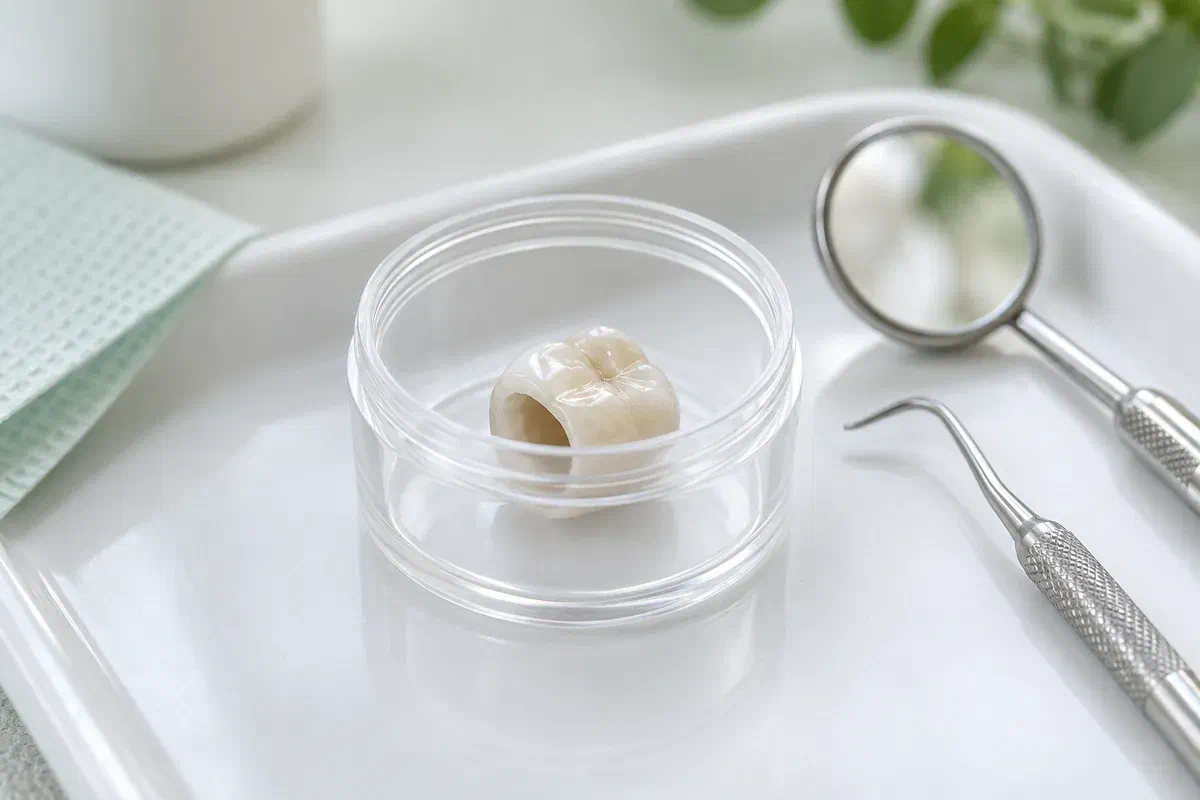
A clean, lidded case works well; a tissue is easy to throw out by mistake. Don't dig out cement, wiggle a post free, or glue it with anything from the junk drawer, because the crown and tooth are examined together.


Found your crown in a bite of toast or a napkin? Keep it. Lost dental crown treatment for Burlington checks that crown and the tooth it came from, then explains whether it can be refitted or whether temporary and new coverage makes more sense.
It often turns up somewhere unglamorous: in a sticky candy, on a fork, or wrapped in a lunch napkin. Once you know what it is, put it somewhere safe. The bare tooth it left behind was shaped years ago to hold it, so it can look stubby or discoloured, and that appearance alone does not reveal its condition.
A recovered crown gives the dentist two things to examine instead of one. Its inside surface may show worn cement, a broken edge, or a piece of tooth or core that came away with it. Those clues help explain why it came off and whether it is fit to go back on, or whether the tooth needs work or a new crown instead.
When you call from Burlington, tell us roughly when it happened, that you have the crown, and how the tooth has felt since. Note any knock to the mouth and any root canal treatment on that tooth. That lets us set aside the right kind of appointment, without promising in advance that your own crown will be the answer.
There is no need to work out the cause yourself. Explain what happened, protect what came out, and mention any discomfort so the visit can be planned around what you actually need.
A clean, lidded case works well; a tissue is easy to throw out by mistake. Don't dig out cement, wiggle a post free, or glue it with anything from the junk drawer, because the crown and tooth are examined together.
Fragments are still useful, and a lost crown doesn't stop an assessment. Tell the team whether it broke while eating or after a knock, and bring every piece you were able to gather.
Note what makes it twinge, how long that lasts, and whether it is getting stronger. Pain, swelling, or a sore gum can mean you should be seen sooner. A dark or yellowish core is not proof of a problem on its own.
Even a crown that comes off painlessly needs a call. If you believe it may have gone down the wrong way, or there was choking or breathing trouble, get urgent medical help.
The dentist examines how much healthy tooth remains, how the recovered crown has fared, and whether there is any sign of decay, cracking, or another deeper issue. Putting those together shows whether refitting is sensible, whether a replacement is the better route, or whether the tooth needs other care first.
This visit is also where short-term cover and the final repair are told apart. If extra treatment or a lab-made crown is needed, ask how the tooth will be shielded meanwhile and which activities that temporary cover may not tolerate.
Patient information: NHS Wales — advice after losing a filling or crown
Looking fine in your hand is a start. The dentist checks how it seats on the tooth and whether the foundation beneath is solid enough to rely on again.
If tooth or core material is lodged inside, that changes the plan. Simply cementing it back would cover the weakness that let it come off in the first place.
Ask about the visits likely to be involved, protection along the way, any cosmetic worries, and the estimate. When more information is needed before deciding, find out what it is and how the tooth is cared for until then.
Carry the crown or fragments in their case, and share what you know about past work on the tooth. Nerves about a bare tooth are understandable; mention them, or any discomfort during the exam, and you'll hear what each step is for.
You describe how the crown came loose, and the tooth, gums, bite, and symptoms are checked. Imaging or a simple test may be advised if it would make the underlying condition clearer.
The crown's fit and condition are compared with the tooth it came from. Attached material, a post, decay, or a fracture all feed into whether it can be reused.
You discuss the findings, your options, and the costs. Recementing may be possible at that appointment, or the tooth may get interim protection while a new crown or other treatment is arranged.
When the agreed treatment is complete, fit and bite are confirmed. Ask whether what you have is temporary, how to care for it, and which visits are still needed.
Ask the team for guidance that fits your symptoms and where you are in treatment. A crown on an implant, a temporary crown, and a crown on your own tooth may each come with different instructions.
Keep hard, sticky, or very chewy foods off the uncovered tooth and choose meals that feel easy. If hot or cold sets off sensitivity, avoid those temperatures while you wait instead of checking the tooth repeatedly.
Keep cleaning around the area as comfort allows and ask for help if brushing is painful. Avoid poking the tooth, scraping it, or covering it with chewing gum, wax, or other household items.
Follow the instructions that come with any temporary covering, and keep the appointment that completes the work. Comfort with a temporary in place does not mean treatment is finished.
Seeing an unfamiliar-looking tooth in the mirror can be worrying. The examination is how the dentist tells an ordinary prepared tooth from one that needs more extensive treatment.
Get in touch with our Bronte Street practice after a crown comes away or goes missing. We'll look at the tooth, examine the crown you saved, and explain protection for now and treatment for the long run.
Keep the crown and any fragments in a closed case, and call about pain, swelling, or uncertainty over a missing part.
