Do you have the crown?
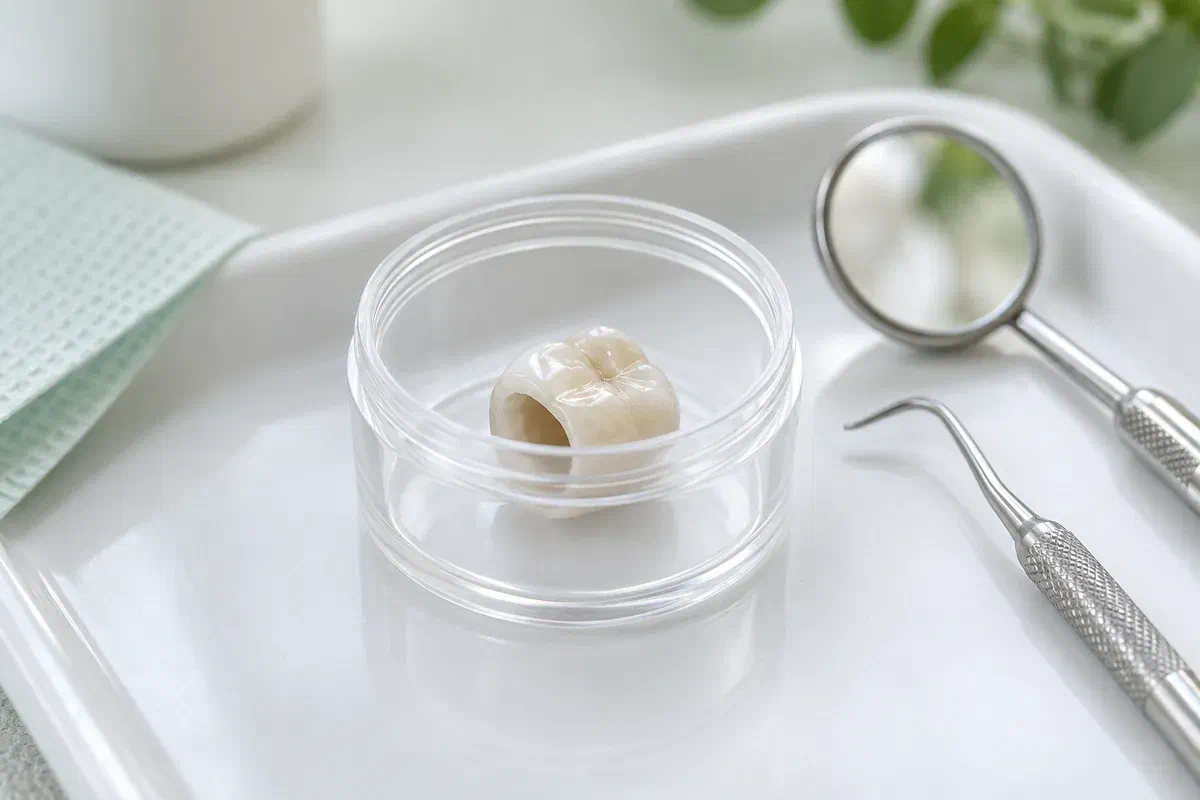
If you do, keep it in a small sealed container. Leave cement, a post, or fragments inside as they are, and avoid any home adhesive, since the crown and tooth are assessed together to judge reuse.


Put the old crown back, make a new one, or treat the tooth differently? For people in Bolton and the villages of Caledon, our lost dental crown treatment examines the exposed tooth and any saved crown so you can weigh those choices with clear information.
Most people hope the crown can simply be popped back on, and sometimes it can. But that choice should follow an examination, not come before it. The prepared tooth under the crown often looks small, ridged, or off-colour, and none of that settles whether it is sound enough to hold the same crown, or any crown, again.
The deciding factors are fairly consistent. How much healthy tooth is left? Is there decay, a crack, or a loose build-up? Does the old crown still fit snugly, or has it worn, chipped, or distorted? Did the cement simply age? Each answer nudges the plan toward recementing, a replacement crown, or a different treatment altogether.
When you reach us from Caledon, tell us the day the crown came off, if it's in your keeping, and how the tooth feels. Note any injury and any root canal on that tooth, as well as any preferences about appearance or the number of visits. Those details help the dentist present options that make sense for you, once the facts are in.
Leave the diagnosis to the clinic. What helps is an account of what happened, everything that came out kept safely, and a description of any symptoms.
If you do, keep it in a small sealed container. Leave cement, a post, or fragments inside as they are, and avoid any home adhesive, since the crown and tooth are assessed together to judge reuse.
A damaged or missing crown narrows the options but doesn't stop treatment. Mention whether it failed while eating or after a fall or blow, and bring any pieces you recovered.
Note triggers, how long discomfort lasts, and whether it's worsening. Pain, swelling, or gum changes can shift both timing and the likely plan. Colour alone doesn't predict the outcome.
Call after a lost crown, with or without pain. If it might have been inhaled, or you choked or had any trouble breathing, seek emergency medical care immediately.
The dentist weighs the amount and quality of remaining tooth, the condition and fit of the old crown, and any evidence of decay, fracture, or infection. That is the groundwork for explaining whether your crown can be reused, whether a new one would serve you better, or whether the tooth needs another kind of care.
The assessment also makes clear what is short-term and what is definitive. If the chosen route involves lab work or more treatment, ask how the tooth will be protected in the gap and what that interim solution should be spared from.
Patient information: NHS Wales — advice after losing a filling or crown
Appearance is just one factor. Fit on the prepared tooth and the strength of the foundation determine whether reusing it is a sound choice.
Tooth or core material inside the crown suggests the base gave way. Recementing without dealing with that would leave the original problem in place.
Compare the number of visits, interim protection, appearance, and the estimate for each option. If a decision needs more information, ask what's missing and how the tooth is cared for until it's gathered.
Bring the crown or any fragments and what you know about earlier work on the tooth. If you feel uneasy, or the exam becomes uncomfortable, let the team know and they'll explain what they're doing.
You describe how the crown came off. The dentist then examines the tooth, the gum line, your bite, and any symptoms, recommending imaging or tests if they'd help clarify the picture.
The recovered crown is checked for fit and condition on the tooth. Any post, decay, crack, or attached material counts toward the decision about reuse.
You'll hear the diagnosis, the realistic options, and their costs. A suitable crown may be recemented right then; otherwise the tooth is protected while the chosen restoration or treatment is prepared.
After the agreed work, fit and bite are verified. Check whether you have a temporary or final restoration, how to look after it, and what's still to come.
Ask for advice that fits your symptoms and treatment stage. A temporary, an implant crown, and a crown on your own tooth don't always share the same care instructions.
A chip or crack now could limit the choices later, so avoid hard, sticky, or tough foods on that side. If hot or cold sets off sensitivity, avoid those rather than testing the tooth again.
Brush softly near the tooth as comfort permits and ask for help if cleaning is sore. Don't scrape or dig at it or plug it with anything improvised at home.
Follow instructions for any interim cover and attend the follow-up. A temporary can feel fine while the definitive treatment is still outstanding.
Choosing what to do after a crown comes off can feel like a lot. The examination shows whether the tooth is ready to be covered again or has a problem needing more extensive care.
Reach out to our Bronte Street team once you know the crown is off or lost. We'll examine the tooth, assess the crown you kept, and explain each option for protecting and restoring it, so the decision is yours to make with clear information.
Keep the crown or fragments in a sealed container, and call about pain, swelling, or a part you can't find.
