Storing the crown at home
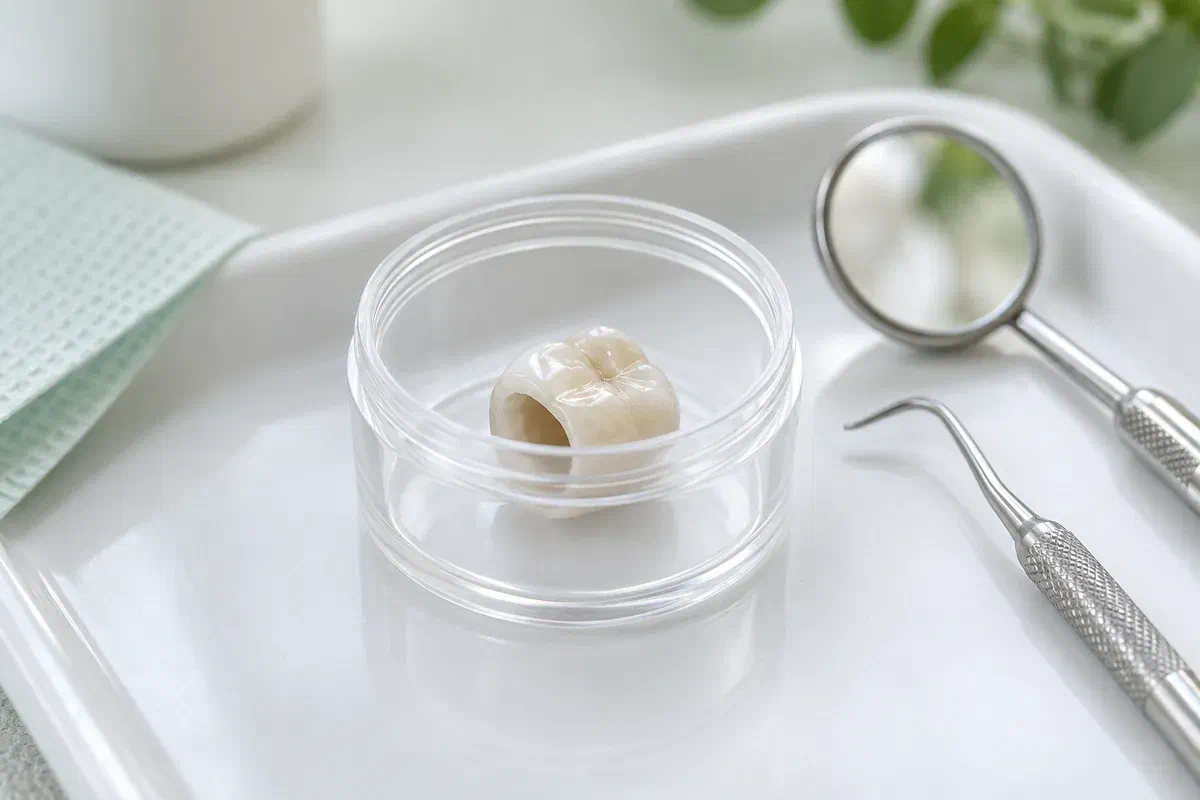
Choose a small lidded pot or case kept away from children and pets. Don't clear out the inside or pull a post, and don't fix it with glue from the shed; it is examined together with the tooth.


Until your appointment, everyday life carries on: meals, brushing, sleep. For households in Erin and Hillsburgh, our lost dental crown treatment starts with practical home advice, then an exam of the bare tooth and any recovered crown to plan proper cover.
Not much, if you're careful. Chew on the other side, keep the area clean, and store the crown out of harm's way. The tooth you're left with was shaped long ago to hold that cap, so expect it to look smaller and possibly darker. Its looks won't tell you whether it's healthy, and that's what the exam is for.
A crown comes off for a reason: tired cement, a fit that has drifted, or a tooth or core weakened by decay or a crack. In some cases the same crown can go back on after checks. In others, the tooth needs attention first, or a fresh crown is the more dependable choice. Keep the old one, even in pieces.
Calling from Erin, mention when the crown came off, whether you have it, and how the tooth has felt at meals and overnight. Tell us about any bump to the mouth or earlier root canal. Rural households often like to group appointments, so if someone else at home is due a visit, ask whether they can be booked close together.
There's no need to diagnose anything. Tell us what happened, put aside what came out, and note how the tooth reacts to food, drink, and brushing.
Choose a small lidded pot or case kept away from children and pets. Don't clear out the inside or pull a post, and don't fix it with glue from the shed; it is examined together with the tooth.
An assessment works without the crown too. Mention whether it broke during a meal or after a fall, and keep any fragments you find while tidying up, since even small pieces can show what gave way.
Notice what triggers the twinge, how long it lasts, and whether it's getting worse. Pain, swelling, or a sore gum may mean you should be seen sooner. Don't judge the tooth by its colour.
Call us after a lost crown, even if it feels fine. Any choking, breathing difficulty, or worry that the crown went into the airway calls for urgent medical help straight away.
The dentist checks how much sound tooth is left, how the crown has held up, and whether there are signs of decay, a crack, or something deeper. With that, it's clear whether to recement your crown, make a new one, or treat the tooth in another way before covering it. Imaging may help with the parts of the tooth that can't be seen directly.
You'll also understand what is temporary and what is final. If further treatment or a lab-made crown is planned, talk about what will cover the tooth until then and which everyday habits that cover won't tolerate.
Patient information: NHS Wales — advice after losing a filling or crown
Intact doesn't mean ready. The dentist checks the seat and fit on the tooth and whether the foundation can support it once more.
Tooth or core material sometimes comes away inside the crown. Catching that prevents a quick recementation that wouldn't solve the real problem.
Go over the visits likely to be needed, interim protection, appearance, and the estimate. If more information is required first, ask what it is and how to care for the tooth until it's in hand.
Bring the crown or pieces and whatever you know about past work on the tooth. If you're nervous, or something is uncomfortable, tell the team; they'll explain what they're checking and why.
You explain how the crown came off and how home life has been since. Then the tooth, gums, bite, and symptoms are checked, with an x-ray suggested if it would clarify things.
If you brought it, the crown is tried against the tooth and inspected. A post, fracture, decay, or stuck material is considered before any talk of reuse.
Findings, choices, and costs are talked through. Your crown might be recemented during the appointment, or the tooth may be protected for now until replacement or extra care is ready.
After treatment, fit and bite are confirmed. Find out whether the cover is temporary, how to treat it day to day, and what's left to do.
Ask for instructions that match your symptoms and treatment stage. Implant crowns, temporaries, and crowns on natural teeth can need different care.
Soups, eggs, pasta, and soft vegetables are easier than toffee, nuts, or crusty bread. Chew on the other side, and avoid very hot or cold drinks if they cause a twinge rather than testing the tooth.
Brush gently near the tooth as far as is comfortable, and ask for advice if it's painful. Don't poke or scrape it or cover it with household products, and never sleep with the crown loosely placed.
If you head home with interim cover, follow the instructions that come with it and keep the appointment that completes the work. A temporary can feel so natural that it's easy to forget, but comfortable doesn't mean finished, and the tooth still needs its planned restoration.
A missing crown can make ordinary things feel uncertain. The examination tells you whether the tooth simply needs covering again or needs more extensive care.
Reach our Bronte Street practice after a crown comes away or goes missing. We'll examine the tooth, check any crown you saved, and explain how to protect it now and restore it for the long term.
Store the crown or fragments away from little hands and paws, and phone us if pain, swelling, or a missing piece is a concern.
