Crown recovered intact
Carry it in a sealed container in your bag rather than a pocket or tissue. Don't clean out its inside, pull at a post, or fix it with home glue; the dentist examines the crown alongside the tooth.


Coming from Etobicoke for a lost crown means making each trip count. We plan the assessment so the exposed tooth, any crown you kept, and the options for covering it are dealt with in as few well-organized visits as the tooth allows.
From the west end of Toronto, a dental visit takes some planning, so it pays to call before you set out. A short conversation lets the team decide what kind of appointment you need, how much time to set aside, and whether anything about your symptoms means you should be seen somewhere nearer first.
What we will be looking at is the prepared tooth that sat under the crown. It often seems small, uneven, or off-colour, and none of that settles whether it is healthy. The crown may have come away because its cement failed, its fit changed, or the tooth or core beneath it broke down. Each points to a different repair.
Before booking, gather a few details: the day it came off, whether you have it, how the tooth feels, and any injury or root canal history. Put the crown and any fragments in a small case to bring. With that information, the first appointment can cover as much as is clinically sensible, rather than serving only as a look.
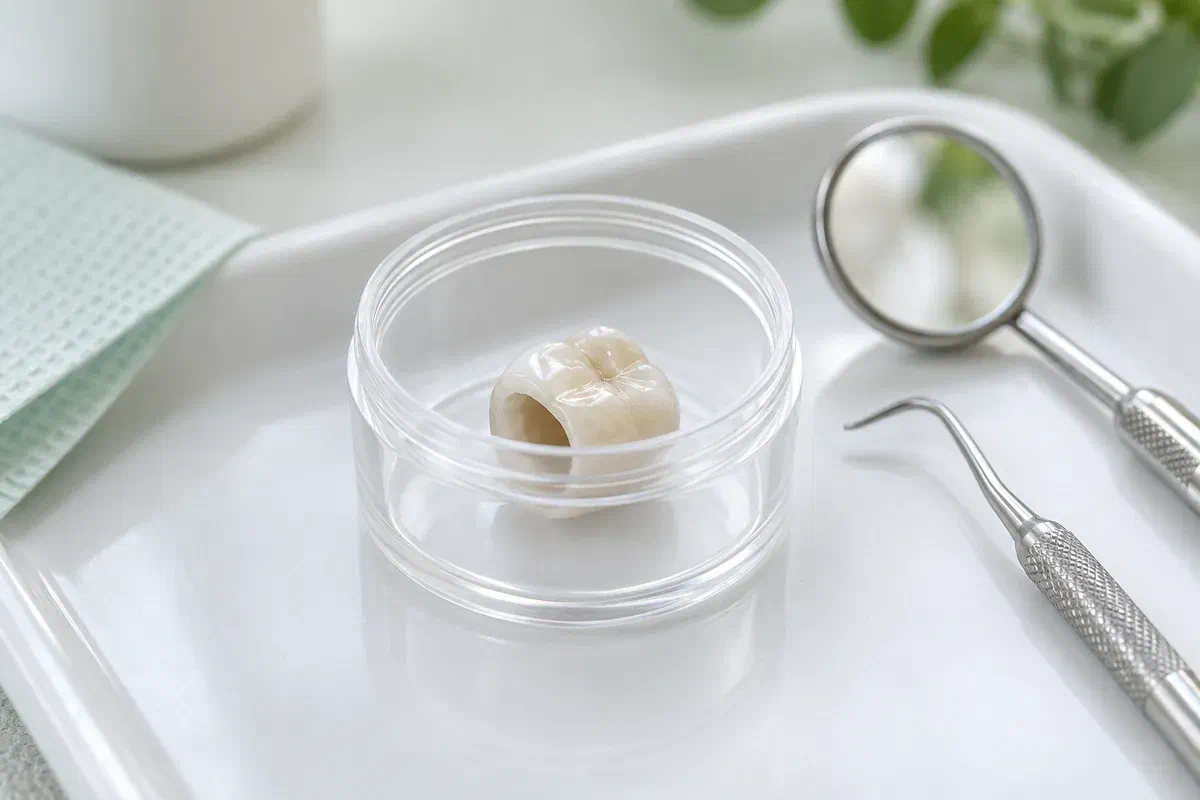
Nobody expects a diagnosis from you. What helps is a clear account of what happened, everything that came out kept together, and an honest description of how the tooth feels.
Carry it in a sealed container in your bag rather than a pocket or tissue. Don't clean out its inside, pull at a post, or fix it with home glue; the dentist examines the crown alongside the tooth.
The visit can still go ahead. Mention whether it broke while eating or after a fall or blow, and bring any pieces you found. An injury to the face may need assessment closer to home first.
Note triggers, duration, and whether symptoms are worsening. Facial swelling, fever, or severe pain should not wait for a longer trip; seek urgent care nearby and let us know afterwards.
A lost crown deserves a call even without pain. Choking, trouble breathing, or concern that the crown was inhaled needs emergency medical care straight away, wherever you are.
During the assessment, the dentist works out how much healthy tooth is left, how the old crown has fared, and whether decay, a crack, or another underlying problem is present. That determines whether recementing is reasonable, a new crown is warranted, or the tooth needs other treatment before it can be covered.
You should also leave knowing which part is interim and which is final. When a lab-made crown or further work is required, talk about the protection you will have while you wait and what it can tolerate, so the next trip is planned, not rushed.
Patient information: NHS Wales — advice after losing a filling or crown
Intact is not the same as usable. The dentist checks how closely the crown fits the tooth and whether the foundation beneath can hold it again.
Tooth or core material is sometimes trapped inside the crown. Finding that early avoids a recementation that would not solve the problem and might mean another trip.
Discuss how many appointments are likely, how they might be grouped, protection in between, appearance concerns, and the estimate. If something must be confirmed before a plan is final, find out what it is and how the tooth is cared for while you wait.
Remember the crown or fragments and any records about past work on the tooth. If you feel tense about the exposed tooth, or anything is uncomfortable during the exam, speak up and each stage will be explained.
You describe how the crown came off, then the tooth, gums, bite, and symptoms are examined. An x-ray or other test may be suggested if it would clarify what lies beneath.
Where the crown is available, it is tried against the tooth and inspected for wear or damage. A post, decay, fracture, or attached material is weighed before reuse is considered.
Diagnosis, options, and fees are discussed. If suitable, the crown may be recemented at this appointment; otherwise the tooth is protected while a new crown or further treatment is arranged.
Fit and bite are checked after treatment. Before you go, confirm whether the covering is provisional, how to care for it, and when the remaining appointments should fall.
Ask for instructions specific to your symptoms and treatment stage. Implant crowns, provisional covers, and crowns on natural teeth may each need slightly different care.
Chew away from the exposed tooth and avoid hard, sticky, or tough foods. When hot or cold causes a twinge, steer clear of that trigger instead of testing the tooth again.
Keep cleaning the area gently as comfort permits, and call if brushing is painful. Don't dig at the tooth, scratch it, or plug it with improvised household materials.
Follow the instructions for any temporary cover and keep the completion appointment. If the temporary comes off, call us; for severe pain or swelling after hours, seek urgent care closer to home.
Crown loss is unsettling, and a longer trip adds another layer to plan. The examination shows whether the tooth is simply exposed or has a problem that needs more involved treatment.
Give our Bronte Street team a ring as soon as you realize the crown is gone. We'll help you prepare, examine the tooth when you arrive, check the crown you bring, and explain protection and lasting treatment.
Keep the crown and any fragments together, and seek nearby urgent care for severe pain, swelling, or breathing concerns.
