A post came out with the crown
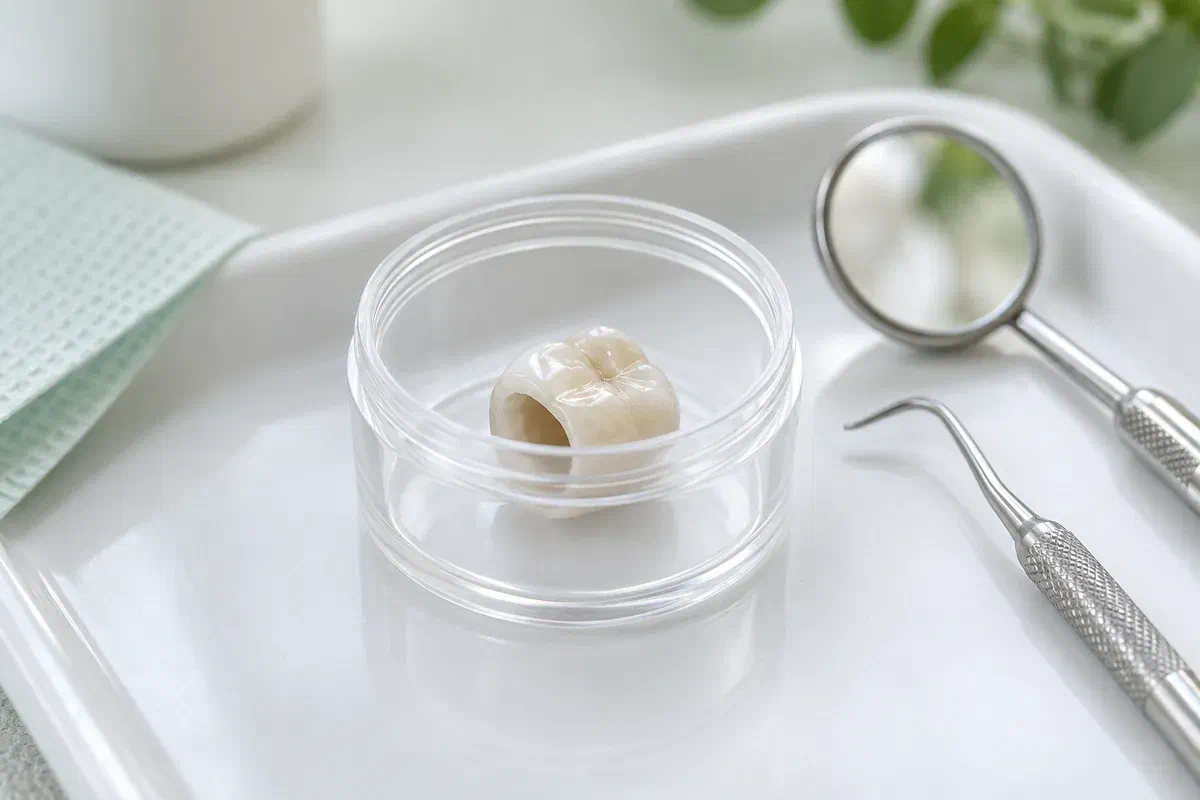
Leave them joined and place them in a closed container. Pulling them apart, cleaning out the inside, or gluing them back can hide what the dentist needs to see about how the foundation failed.


No pain after your crown came off? That can be misleading, especially on a tooth with a past root canal. Lost dental crown treatment for Georgetown checks the bare tooth, any post or crown you kept, and how to protect and restore it properly.
It is easy to shrug off a lost crown when the tooth feels fine. Crowned teeth have often had root canal treatment, and with the nerve treated, there may be no twinge at all. Yet the tooth is now bare, and it may look shorter, darker, or oddly shaped. Neither the comfort nor the appearance confirms that it is in good shape.
Teeth that have had a root canal frequently rely on a post or build-up to hold the crown, and that support can loosen, crack, or come out with it. Cement wear, a change in fit, and decay are other common reasons. Sometimes the crown can simply go back on. Sometimes the foundation needs repair first, or a new crown is wiser.
When calling from Georgetown, let us know if the tooth had a root canal, whether a post came out inside the crown, and roughly when it happened. Mention any blow to the mouth and any tenderness when biting, even if mild. That helps the team plan an assessment of the foundation, not just a quick look at the crown.
You won't need to sort out the cause yourself. Describe what happened, keep everything together, and share even subtle symptoms so the right appointment is arranged.
Leave them joined and place them in a closed container. Pulling them apart, cleaning out the inside, or gluing them back can hide what the dentist needs to see about how the foundation failed.
The tooth can still be examined. Say whether it gave way while chewing or after an injury, and bring any small pieces you found, since they may show whether the tooth or the core broke.
Tenderness when biting, a bad taste, or a small swelling on the gum can matter on a root-treated tooth. Note when they appear and whether they are changing, and don't rely on colour to judge the tooth.
Please call after a lost crown even when nothing hurts. If the crown may have been inhaled, or you had choking or trouble breathing, get urgent medical care immediately.
The dentist examines the remaining tooth and its foundation, the condition of the crown and any post, and signs of decay, cracking, or infection. From there it is clearer whether recementing is sensible, whether a new crown makes more sense, or whether the tooth needs another kind of treatment first.
The appointment also marks out what is interim and what is definitive. If foundation work or a lab-made crown is planned, find out what will cover the tooth in the meantime and what that interim layer should not be asked to do.
Patient information: NHS Wales — advice after losing a filling or crown
Appearance is only a start. The dentist checks how well the crown and any post fit, and whether the tooth around them can provide reliable support again.
Without nerve sensation, cracks or decay can develop quietly. Finding them is important, because cementing a crown over an unaddressed problem may not last.
Ask about likely visits, interim cover, appearance, and the estimate. If more information is needed before a plan is final, ask what will be gathered and how the tooth will be looked after until then.
Please have the crown, post, or fragments with you, plus any history of root canal or other treatment on the tooth. If you feel anxious or anything becomes uncomfortable, tell the team and they will explain what they're doing.
You explain how the crown came loose and what you know about the tooth's history. The dentist examines the tooth, gums, bite, and symptoms, and may suggest an x-ray to see the root and supporting bone.
Any recovered parts are checked for fit and damage against the tooth. Decay, a fracture, or a loose post is weighed before the dentist talks about reuse.
Findings, options, and costs are explained. Recementing might be suitable at the visit, or the tooth may be protected while foundation work, a new crown, or other care is arranged.
Once the agreed step is done, fit and bite are checked. Clarify whether the restoration is provisional, what looking after it involves, and what is still to come.
Ask for advice suited to your symptoms and stage of care. A provisional crown, an implant crown, and a crown on a root-treated natural tooth may each need different instructions.
A root-treated tooth can be more brittle, so avoid hard, sticky, or tough foods on that side. If temperature causes any sensitivity, avoid the trigger rather than testing the tooth repeatedly.
Brush gently around the tooth as comfort allows, and get advice if cleaning is painful. Don't poke at the exposed core, scrape it, or cover it with improvised household products.
Interim cover comes with its own instructions; follow them and keep the completion appointment. A temporary that feels comfortable doesn't mean the tooth is finished.
A tooth that looks wrong yet feels fine is a confusing combination. Only an examination can show whether it is simply a prepared tooth waiting for cover or one that needs more extensive work.
Contact our Bronte Street team when a crown has come off or gone missing. We'll examine the tooth and its foundation, check any crown or post you saved, and explain how to protect and restore it.
Keep the crown and any post together in a closed case, and call about tenderness, swelling, or a missing piece.
