The crown itself
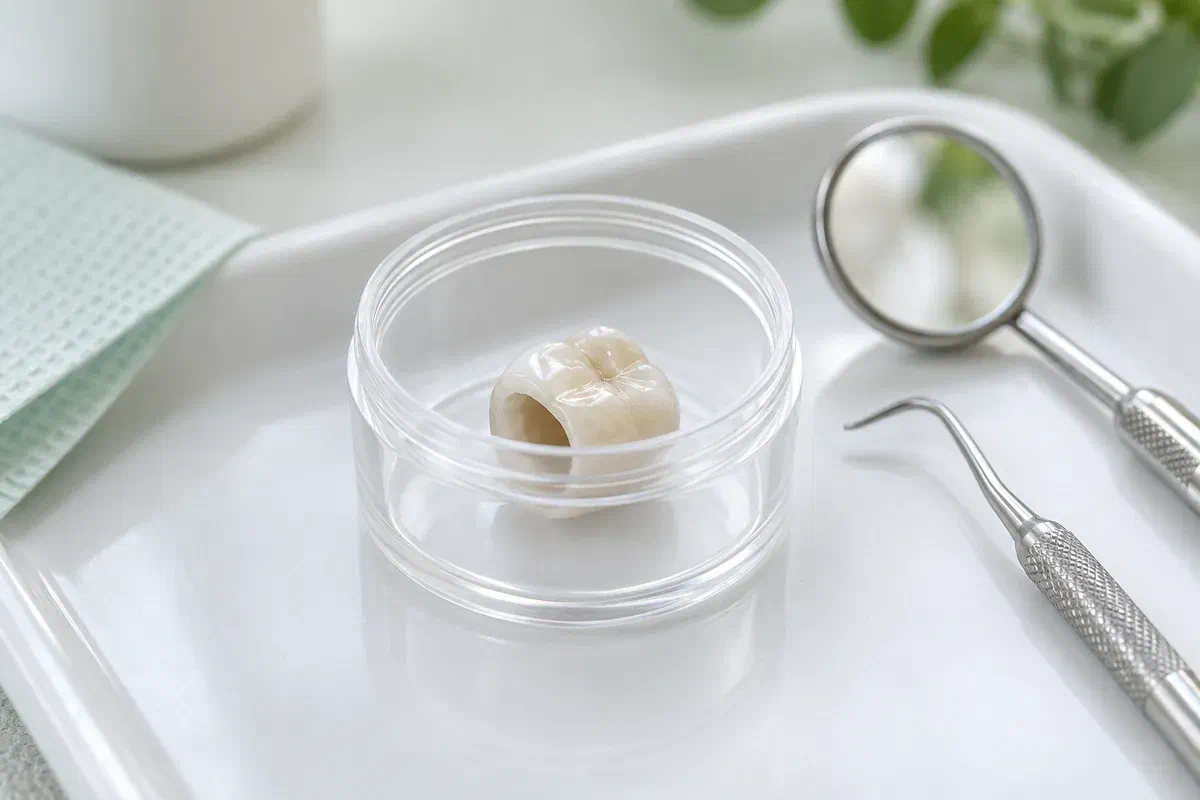
Keep it in a closed container exactly as it came out. The cement pattern and anything stuck inside are valuable clues, so don't scrape it, remove a post, or try household glue.


Second time that crown has come loose? It's worth asking why. For anyone travelling from Rockwood, our lost dental crown treatment looks for the cause, checks the exposed tooth and the crown you kept, and plans cover that has a better chance of staying put.
There's usually a reason. The cement may have worn away over years. The fit may have changed as the tooth, gum, or bite shifted. Decay may have crept in at the edge, or the tooth or its build-up may have cracked. Heavy clenching or a sticky candy can be the final straw, but rarely the whole explanation.
That is why a crown that has come off once, or several times, deserves a look rather than another quick reseat. The tooth left behind may appear short, uneven, or darker than you'd expect, and that alone doesn't reveal what went wrong. Sometimes the crown is fine to reuse; sometimes the tooth or the crown needs a different solution.
When calling from Rockwood, mention how many times this crown has come loose, when it last happened, and whether you have it now. Add how the tooth feels, any injury, and any root canal on that tooth. If you grind or clench, say so. Those details help the dentist focus on the cause, not just the symptom.
You don't have to solve the puzzle. Describe the circumstances, keep everything that came loose, and note any symptoms; together these give the dentist a head start.
Keep it in a closed container exactly as it came out. The cement pattern and anything stuck inside are valuable clues, so don't scrape it, remove a post, or try household glue.
A missing or broken crown doesn't prevent an assessment. Note whether it gave way while eating, overnight, or after an injury, and save any fragments for the dentist to look at.
Track what triggers discomfort, how long it lasts, and whether it's growing. Pain, swelling, or a change in the gum may affect timing. Don't use the tooth's colour as a guide to its health.
Even a painless lost crown deserves a phone call. If you suspect it was inhaled, or you choked or struggled to breathe, go for emergency medical care at once.
The dentist looks at the remaining tooth structure, the inside and edges of the crown, the gum, and the bite. Signs of decay, cracking, or a weak foundation all point toward particular solutions, from recementing the existing crown to replacing it or treating the tooth another way first.
You'll also learn what's provisional and what's final. If the fix involves lab work or extra treatment, ask how the tooth will be kept safe in between and what that temporary layer can and can't withstand.
Patient information: NHS Wales — advice after losing a filling or crown
Wear inside the crown, a chipped margin, or a poor seat can explain repeated loosening. The dentist checks whether reuse is realistic or likely to fail again.
A fragment of tooth or core stuck inside the crown signals a weakened base. Addressing that is key, since cementing over it may lead to the same problem.
Clenching, grinding, or a high spot can put extra force on a crown. Ask whether your bite plays a role and how the plan, visits, and estimate account for it.
Have the crown or fragments with you and any information about when it was placed or recemented. If you're apprehensive about the exam, or something hurts, say so and each step will be explained.
You describe each time the crown came loose and how. The tooth, surrounding gum, and bite are examined alongside your symptoms, and an x-ray may be suggested to see beneath the surface.
The crown's fit, edges, and inner surface are compared with the tooth. A post, decay, cracks, or attached material are weighed before reuse is considered.
You discuss what was found, the options, and the costs. If recementing makes sense, it can sometimes happen straight away; if not, the tooth is shielded until a new crown or other work is ready.
After treatment, fit and bite are checked. Confirm whether you have a temporary or final restoration, how to protect it, and what appointments are still needed.
Your instructions depend on your symptoms and treatment stage. A temporary, an implant crown, and a crown on your natural tooth each have their own advice, so ask which applies.
Caramels, chewy candy, ice, and hard crusts can pull on or stress a crown or bare tooth. Choose softer foods for now, and avoid hot or cold if they trigger sensitivity rather than testing it.
Brush gently around the tooth and the gumline where decay often starts, and ask for help if cleaning is sore. Don't scrape or dig at the tooth or cover it with household items.
If you wake with sore jaws or worn teeth, tell the dentist. Follow instructions for any temporary cover and keep the follow-up; feeling comfortable doesn't mean the work is finished.
A crown that won't stay put is frustrating. The exam shows whether the tooth simply needs a better fit or has an underlying problem that requires more extensive care.
Get in touch after a crown comes off, especially if it isn't the first time. We'll examine the tooth, inspect the crown, look at your bite, and explain options aimed at the underlying cause.
Keep the crown or fragments as they came out, and call about pain, swelling, or a part you can't locate.
