A deep hollow where food settles
Describe where food collects and whether you can clear it with brushing. Please don’t scrape it out with metal objects, and avoid filling the space with gum or wax to see if it helps.


When a large filling breaks, the tooth can suddenly feel half its old size. Coming from Acton, you can have the remaining structure checked to see whether another filling will hold, or whether an onlay, crown or other treatment would protect it better.
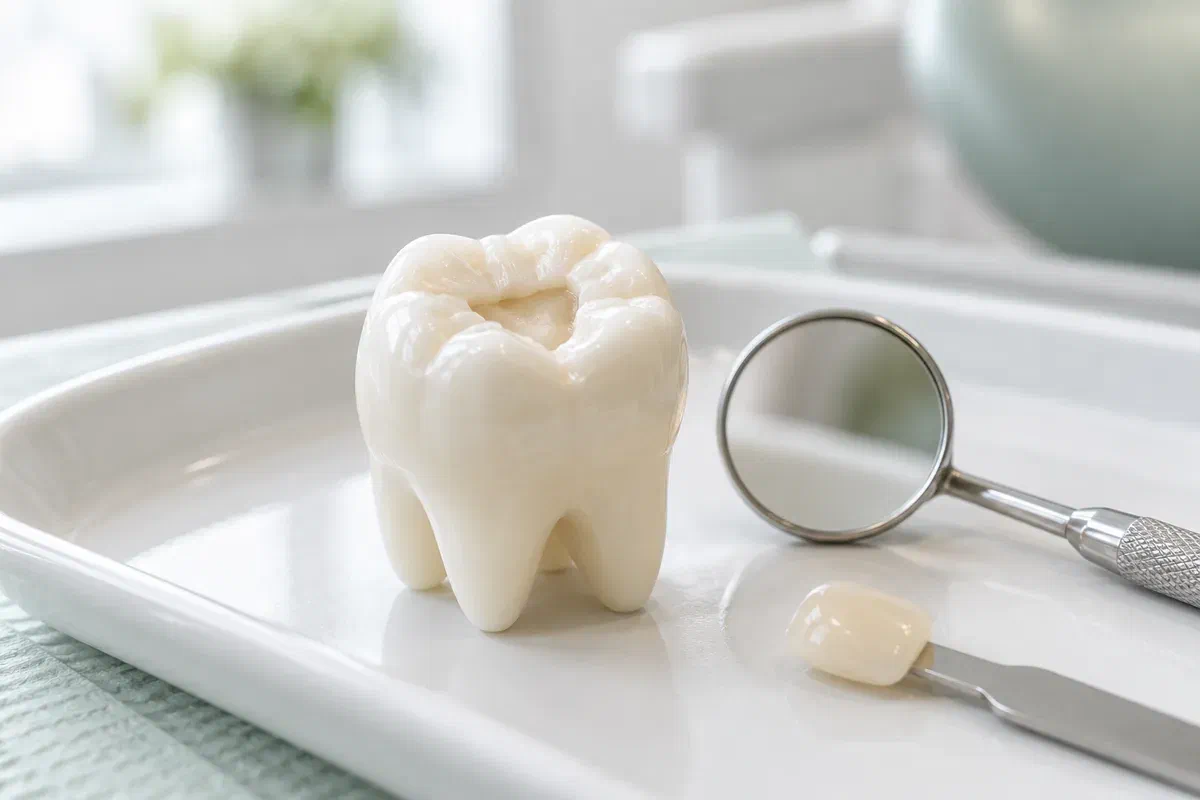
Large fillings carry a lot of the work in a back tooth. When one comes away, it can take a cusp or part of a wall with it, and the space left behind may look and feel dramatic. Some of what came out is restoration, some may be tooth, and it’s often impossible to tell which without an examination.
How the tooth is rebuilt depends on what is left standing. The dentist assesses the size and location of the defect, the thickness and health of the surrounding walls, and any signs that the nerve is involved. A new filling may still work. With bigger losses, an onlay or crown is commonly discussed, and occasionally other treatment comes first.
Let us know when it happened, whether it hurts to bite, and how the tooth reacts to temperature and brushing. It helps to mention whether the filling was old, recently placed, temporary, or linked to unfinished care. That way the visit from Acton can be set up for what the tooth is likely to need.
Whether it was mostly tooth or mostly filling that broke away is hard to judge at home. You don’t need to know. Tell us what changed, and the examination will clarify it.
Describe where food collects and whether you can clear it with brushing. Please don’t scrape it out with metal objects, and avoid filling the space with gum or wax to see if it helps.
Jagged edges can be tooth or the remains of the old restoration. Call if it is cutting your tongue or cheek, and leave any smoothing to the dentist rather than filing it.
Note what brings the pain on, how long it stays and whether it ever throbs unprompted. With a big loss, pain on chewing is worth mentioning when you call.
Contact us if pain grows or doesn’t ease, or if you notice swelling, fever or a recent injury. Swelling that starts to affect breathing or swallowing needs emergency medical care straight away; don’t wait for a dental opening.
A large filling that suited the tooth once may have been holding together walls that have since weakened. Before suggesting a repair, the dentist considers what structure remains, whether new decay or cracks are present, how your bite loads the tooth and what you’re feeling.
The goal is a strong, cleanable restoration, and where it can be identified, an understanding of why the old filling broke. Ask what the findings mean, why one type of restoration is preferred over another, and whether the first step is a temporary cover or the permanent repair.
Patient information: Cleveland Clinic — fillings and other restorative options
A large hole doesn’t automatically mean the tooth is beyond a filling, and a smaller one may hide a fragile wall. That assessment drives the choice between refilling and coverage.
A tooth that hurts on biting may need a different approach than one that is comfortable. The dentist can explain tests used to check for cracks or nerve involvement, and how results change the plan.
Onlays and crowns often take more than one visit. Ask about comfort, the number of appointments and the estimate for each option before deciding, and what any temporary cover is for.
The sequence follows the findings. If you’re worried about treatment or the tooth is painful, tell us at the start so we can explain the steps and the comfort options before anything is done.
The dentist looks at the broken area, the remaining walls, your bite and your symptoms. An X-ray or a bite test might be suggested if it would help detect decay, cracks or a problem nearer the nerve.
You’ll hear what was found, the possible repairs and the estimated fee for each. If a direct filling can work, the tooth is prepared with freezing and moisture control suitable for the procedure.
Depending on the plan, the dentist may place and contour a replacement filling, or, if an onlay or crown is planned, the tooth may receive temporary protection while that restoration is arranged.
The dentist confirms the new surface sits comfortably against the opposing teeth. Ask about eating, cleaning, what is normal afterward, and when you should ring back about tenderness or a high spot.
Ask for advice that matches your symptoms and stage of treatment. A temporary that comes off between visits may need a different response from a large permanent filling that has just broken.
A tooth missing a large filling may be more vulnerable to further breaking. Avoid hard, chewy or sticky foods on it, and if temperature bothers it, choose foods and drinks you can manage.
Use a fluoride toothpaste and clean between teeth gently. If it is too painful to reach, call us, and avoid using sharp household items to remove trapped food.
Let freezing wear off before you chew. Report a high bite, worsening pain, lingering sensitivity or another chip, and keep appointments needed to finish an onlay, crown or temporary care.
Ask about the filling that broke, your symptoms and the repairs on offer. Recommendations should rest on how the tooth is today, with a clear explanation of what each restoration is designed to do.
Call our Bronte Street clinic about a large filling that has broken or a tooth that suddenly feels hollow. We’ll check the remaining walls, ask about your symptoms, and explain which repair would protect it.
Please phone about severe pain or swelling, and let us know if this tooth was already being treated.
