Food finds the new space
Mention which tooth catches food and whether rinsing or brushing clears it. Avoid toothpicks, pins or knife tips in the hole, and don’t repeatedly pack anything into it.


Fillings seem to come out at the least convenient moment, often on a Friday night or a long weekend. From Campbellville, a call to our team gets you advice on looking after the tooth in the meantime and an assessment to decide how it should be restored.
It tends to happen at dinner on a Friday, or the day before a trip. Suddenly there is a cavity your tongue can’t stop visiting. Most of the time this is not an emergency, but it does need sorting. What came out might be filling only, or part of the tooth too, and that is the main thing an assessment will establish.
Once you’re seen, the dentist works from the tooth outward: the size of the opening and where it is, how healthy the surrounding walls are, and whether there are signs of a deeper problem. Plenty of teeth can simply be refilled. Others call for a bigger restoration, or attention to the nerve, first.
Our regular hours run Monday to Thursday, with Friday to Sunday by appointment only, so call as soon as you can. Mention the day it came out, what eating, drinking or brushing feels like now, and whether that filling was recent, a temporary, or tied to other work. From Campbellville, that call helps us advise you and plan the visit.
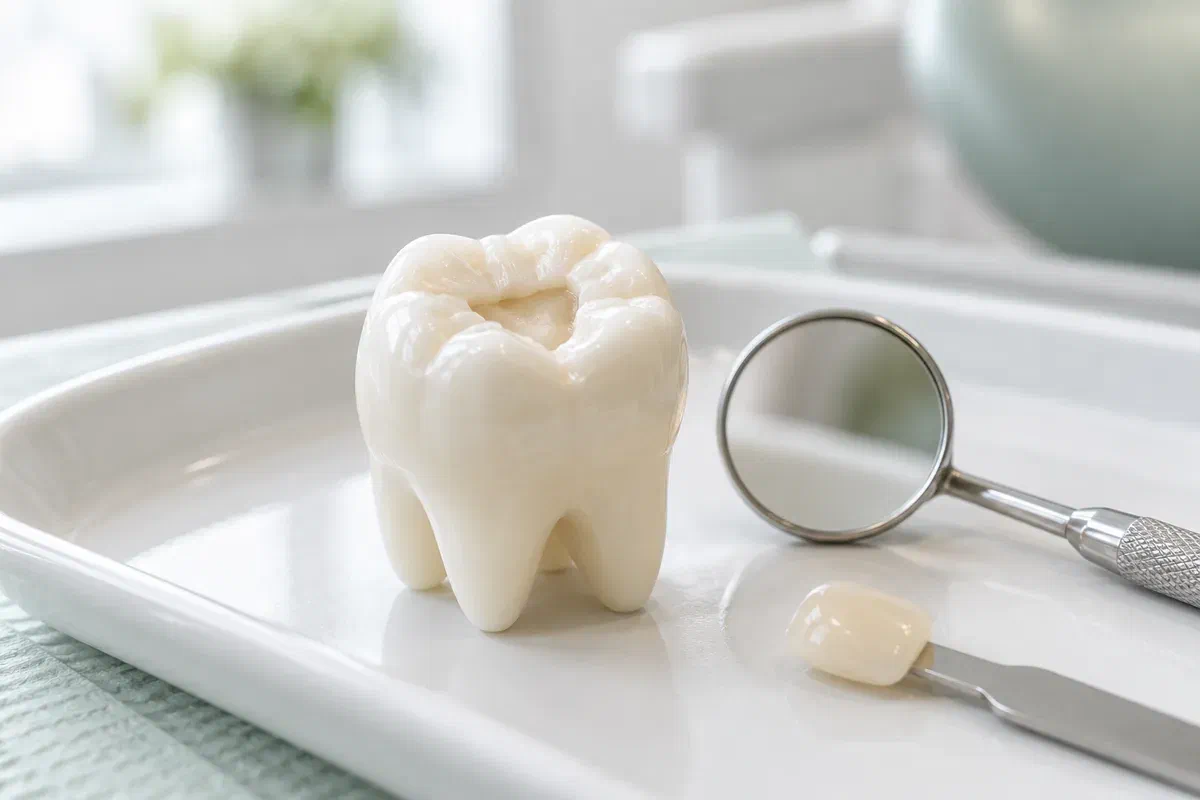
Plenty of people can’t say if they lost tooth, filling or both. That’s fine. Describe what you notice when you call, and let the assessment confirm what actually happened.
Mention which tooth catches food and whether rinsing or brushing clears it. Avoid toothpicks, pins or knife tips in the hole, and don’t repeatedly pack anything into it.
Sharpness may come from leftover restoration or tooth. If it is making your tongue or cheek sore, call for advice on protecting it, and don’t file it down yourself.
Keep a mental note of the trigger, how long the feeling lasts, and whether it ever hurts without a reason. That helps us judge how soon you should be seen.
Call promptly if the pain is escalating or won’t settle, or if you have a fever, facial swelling or a mouth injury. If swelling interferes with breathing or swallowing, go to emergency care immediately; that cannot wait for a dental appointment.
It’s easy for a temporary fix to stretch into weeks. Meanwhile the tooth may have changed since the original filling went in. At the visit, the dentist looks at how much wall remains, any fresh decay or fractures, the way your teeth come together and how the tooth has been feeling.
The aim is a durable, cleanable surface and, where the cause can be found, an explanation of why the old filling let go. Ask what the dentist sees, which restorations or materials fit, and whether what is done first is temporary or the final repair.
Patient information: Cleveland Clinic — fillings and other restorative options
What you feel doesn’t show how much support is left. Finding out whether a wall has gone explains why one tooth is refilled and another is offered broader coverage.
Steady aching from a deep opening usually warrants quicker attention than a shallow spot that feels fine. You can ask why a particular test is being done and how its result might shift the recommendation.
Ask about comfort options, how many visits might be needed and the estimate. Where a short-term measure is used first, check its purpose, the work still outstanding, and the timing of your next visit.
Every step depends on the findings. Mention any nerves about dental work, or soreness in the tooth, and we’ll explain each stage and what comfort options are available before starting.
The dentist asks how and when the filling came out, then checks the space, surrounding tooth, bite and symptoms. Further imaging might be advised to look for decay, a crack or a deeper concern.
Findings, alternatives and the fee estimate are discussed. When a direct filling is right for the tooth, the area is cleaned and prepared, with freezing and moisture control used where needed.
If the tooth suits it, a new filling is built up and shaped. If another sequence is needed, a temporary cover goes on and you’ll learn how the remaining treatment will be scheduled.
Your bite on the new surface is checked. Ask about eating, cleaning and what you might feel, and when to get back in touch if soreness continues or something feels uneven.
What we suggest on the phone will depend on your symptoms and your treatment history. A temporary lost between appointments often calls for a faster reply than an older filling that has broken.
Chew on the other side and skip hard, crunchy or sticky foods until it is seen. If hot or cold sets it off, choose comfortable foods and drinks and stop testing it.
Keep up twice-daily brushing with a fluoride toothpaste and floss carefully. A swish of plain water after meals may help clear food. Ring us if cleaning hurts too much, and keep sharp objects out of the space.
Wait until freezing wears off before eating. Let us know about a bite that feels high, rising pain, sensitivity that lingers or further chipping, and come back for whatever appointment completes temporary care.
Nothing is too small to ask, whether it’s about the old filling, the discomfort or which materials could be used. You should leave understanding the tooth’s present condition and what the planned repair is supposed to achieve.
Reach our Bronte Street practice by phone when a filling has come out or you feel a new hole in a tooth. We’ll advise on the days before your visit, then examine the tooth and explain how to restore it.
Severe pain or any swelling means you should phone rather than book online, and do mention unfinished treatment on that tooth.
