

Illustrative consultation about an existing metal filling
Restorative Dentistry

Metal Filling Replacement in Brampton

A filled tooth that has started reacting to cold or chewing deserves a diagnosis before a new filling. From Brampton, book an exam that looks for the real source of the discomfort first.

Sensitivity near a silver filling

Is it the filling, or something underneath?

You take a sip of iced water and one back tooth answers with a sharp jolt. Or you bite into toast and feel a twinge you cannot quite place. When that tooth holds an older amalgam, the filling is the obvious suspect. It is not always the guilty one.

Metal fillings can leak at the edges, develop decay beneath them or crack. But sensitivity can also come from a fractured cusp, an inflamed nerve, exposed root surface, clenching, or the tooth beside it. Replacing a filling means drilling out the old material and rebuilding, so it should follow a diagnosis rather than precede one.

If you are making the trip from Brampton, it helps to arrive with notes. Which tooth, which trigger, how long the feeling lasts and when it began are the details that guide testing. Earlier X-rays are welcome. No decision about materials is needed before the exam.

Book an exam for a sensitive filled tooth
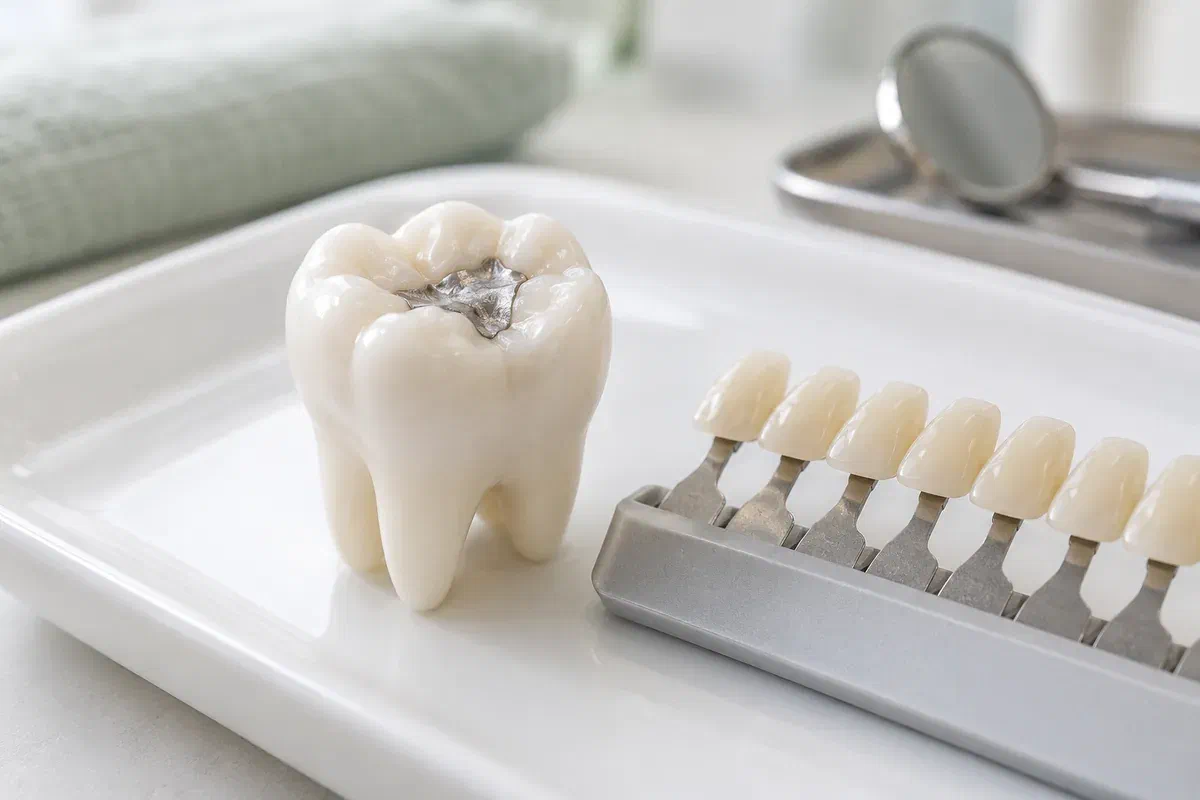
Teaching model of an intact silver filling beside a tooth shade guide
Reading the signals

Different feelings point in different directions.

The way a tooth hurts, and what sets it off, can narrow down the cause. A careful exam turns those clues into a plan that treats the actual problem.

A rough spot alongside the ache

When sensitivity comes with a new sharp edge, the filling or the enamel next to it may have broken, letting cold reach deeper layers. Say when you first felt the edge and whether floss snags. That combination often helps the dentist locate the problem quickly.

Pain on release, or pain that lingers

A twinge when you let go of a bite can suggest a crack, while cold pain that lasts well after the drink is gone may involve the nerve. Neither is solved simply by changing the filling material. Testing helps decide what kind of treatment is needed.

Sensitivity plus a cosmetic wish

If the same tooth also bothers you visually, mention it. Once the cause of discomfort is clear, we can talk about whether a tooth-coloured restoration fits the plan and how much tooth it would require.

A comfortable, intact metal filling with no decay does not need replacing because of age or colour. If you are told a sensitive tooth needs a new filling, ask how the cause was confirmed.

Relief that lasts

Fix the cause, and the comfort follows.

When the filling really is behind the symptoms, replacing it can seal off leaking edges and remove decay that was irritating the tooth. The aim is a comfortable tooth with a stable, cleanable restoration, chosen to suit how much structure remains. If the filling turns out not to be the cause, leaving it alone spares tooth that would otherwise be removed for no gain.

Material choice matters here too. Composite may suit a modest cavity, while a cracked or heavily filled molar may need an onlay or crown to hold the walls together. Ask how the recommendation addresses comfort first, then strength, appearance and preserving tooth.

Patient information: CDA — tooth-coloured filling materials

A diagnosis you understand

Before treatment, you should know whether the plan targets decay, a broken filling, a cracked cusp, a nerve problem or appearance. That way you can weigh replacement against other approaches with confidence.

Honest expectations about sensitivity

Ask whether any sensitivity is likely after a new filling and how long it usually lasts. A brief period of adjustment is common, but symptoms that worsen should be reported.

Protection against what caused it

If clenching, grinding or receding gums contributed, discuss a night guard, toothpaste for sensitivity or gum care. Treating the habit helps the new restoration last.

Finding the source

Test first. Treat second.

You will not be rushed into treatment. Tell us whether pain, uncertainty, cost or appearance is the main thing on your mind.

  1. Map the symptom

    The dentist reviews the filling, the surrounding tooth and gums, your bite and the exact pattern of sensitivity. Cold tests, bite tests or X-rays may be used to narrow down the source. Ask what each test shows.

  2. Explain the likely cause

    Once the source is clearer, you discuss whether replacing the filling, repairing it, protecting a cracked tooth or treating the nerve is most appropriate, along with fees and alternatives. Hidden decay may still change the plan once the old metal is out.

  3. Treat the tooth

    If replacement is chosen, the tooth is frozen and isolated, the amalgam removed and the exposed tooth assessed for decay or cracks. The planned restoration is placed, or a temporary protects the tooth while further care is arranged.

  4. Check bite and comfort

    The new restoration is adjusted so your bite feels even. Ask what level of sensitivity to expect over the next few days and when to call. If more treatment is planned, confirm the next step.

In the days that follow

Some sensitivity can settle. Worsening should not.

How the tooth feels after treatment depends on how deep the decay or crack went and the material used. Keep us updated if things are not improving.

Go easy while numb

Do not chew on that side until the freezing has worn off, and avoid very hot drinks for a while. With a temporary restoration in place, stick to the eating instructions for that stage.

Track the sensitivity

Mild reaction to cold for a few days can happen after a filling. Make a note if it lingers longer, spreads or becomes sharper on biting, and call us. Avoid biting hard objects to test the tooth.

Brush and clean gently

Use fluoride toothpaste, and a toothpaste for sensitive teeth if recommended. Keep cleaning between teeth. Let us know if floss catches or food packs against the new filling.

Choosing the right treatment

The answer depends on what is causing the pain.

Some options treat the filling, others treat the tooth around it. Ask what each would fix and what it would not.

If the restoration is sound

Monitor and manage

If the filling is intact and sensitivity comes from gum recession or grinding, a desensitizing toothpaste, a night guard or gum care may help more than new dental work. Agree on what to report and when to check again.

For gaps or decay at the edge

Replace or repair

A new direct filling or a partial repair may resolve decay or gaps at the margin. Ask how deep the decay is thought to be, and whether the work can be completed in one visit.

When the tooth is cracked or inflamed

Protect or treat deeper

A cracked tooth may need an onlay or crown, and an inflamed or infected nerve may require root canal treatment. Swapping the filling material alone would not address those problems.

Brampton questions about sensitivity

Understanding pain near a metal filling

Sensitivity is a symptom, not a diagnosis. These questions help you prepare for a conversation about what is really going on.

(905) 876-4488
What does it mean if cold pain lasts for a long time?
Sensitivity that lingers well after the cold is gone can suggest the nerve is irritated or inflamed. It may be related to deep decay or a crack. It is worth booking an exam promptly, and calling sooner if pain becomes severe or swelling appears.
Is some sensitivity normal after a new filling?
A mild reaction to cold or biting for a short time can occur, especially with deeper fillings. It usually eases over days to weeks. If it worsens, becomes constant or you feel the bite is uneven, contact the clinic so the tooth can be checked.
Can grinding my teeth make a filled tooth sore?
Yes. Clenching and grinding place heavy forces on teeth and restorations, which can cause tenderness or contribute to cracks. Mention it if you wake with jaw tension or have been told you grind. A night guard may be discussed.
Would a crack in my tooth show on an X-ray?
Not always. Many cracks are too fine or positioned in a way that X-rays do not reveal them clearly. The dentist may use bite tests, magnification or a dye, and may only see the crack fully once an old filling is removed.
What should I note about my symptoms before the appointment?
Write down which tooth seems affected, what triggers the feeling, how long it lasts, whether it wakes you at night and when it started. Also note any medications or medical conditions. These details make the exam more efficient.
Is a new filling guaranteed to stop the sensitivity?
No treatment can promise that, because the cause has to be found first. If the filling is the source, replacing it often helps. If the problem is a crack, the nerve or the gums, a different approach may be needed.

Patient information: FDA — decisions about existing amalgam fillings

Help for Brampton smiles

Describe the twinge. We'll trace it.

Book at our Bronte Street practice in Milton to have a sensitive filled tooth examined. We will explain what is causing the discomfort and which treatments make sense before you commit to anything.

Please call for severe or worsening pain or any swelling. Online booking is best for non-urgent appointments.

Visit Milton Dental Clinic
Unit 1, 342 Bronte St. S, Milton, ON L9T 5B7
Get directions Clinic hours
Monday–Thursday
11am–7pm
Friday–Sunday
By appointment only

Areas we serve

  • Milton
  • Oakville
  • Mississauga
  • Georgetown
  • Halton Hills
  • Acton
  • Campbellville
  • Brampton
  • Burlington
  • Puslinch
  • Rockwood
  • Erin
  • Caledon
  • Etobicoke
  • Old Milton
  • Bronte Meadows
  • Timberlea
  • Dorset Park
  • Dempsey
  • Clarke
  • Beaty
  • Coates
  • Harrison
  • Scott
  • Willmott
  • Ford
  • Bowes
  • Cobden
  • Walker
  • Mountain View
  • Milton Heights
  • Hawthorne Village
  • Valley View
  • Fallingbrook
  • Nassagaweya
  • Trafalgar
  • Esquesing
  • Nelson
  • Brookville
  • Moffat
  • Glen Williams
  • Norval
  • Limehouse
  • Stewarttown
  • Ashgrove
  • Hornby
  • Silver Creek
  • Speyside
  • Scotch Block
  • North Oakville
  • River Oaks
  • Glen Abbey
  • West Oak Trails
  • Palermo
  • Bronte Creek
  • College Park
  • Joshua Creek
  • Uptown Core
  • Preserve
  • Iroquois Ridge
  • Lisgar
  • Meadowvale
  • Meadowvale Village
  • Churchill Meadows
  • Erin Mills
  • Central Erin Mills
  • Streetsville
  • East Credit
  • Creditview
  • Heartland
  • Sheridan
  • Mount Pleasant
  • Credit Valley
  • Huttonville
  • Churchville
  • Springbrook
  • Northwest Brampton
  • Bram West
  • Fletcher's Meadow
  • Fletcher's Creek South
  • Alton Village
  • Orchard
  • Millcroft
  • Headon Forest
  • Tansley
  • Brant Hills
  • Tyandaga
  • Kilbride
  • Lowville
  • Aberfoyle
  • Morriston
  • Arkell
  • Hillsburgh
  • Freelton
  • Carlisle
  • Waterdown
  • Flamborough
  • Mountsberg

How can we help?

Milton Dental Clinic

Have a question about your smile? Choose the option that works best for you.

For urgent dental concerns, please call.
Messages are reviewed during clinic hours.