A new edge or gap
If your tongue or floss finds a sharp spot that was not there before, part of the filling or the enamel next to it may have broken. Note when it began. A small, early defect can sometimes be repaired without replacing everything.


Sometimes the best plan for an old amalgam is to keep watching it. From Puslinch, learn what monitoring involves, which changes to report, and when replacing the filling becomes the better choice.
People often expect an exam to end with a list of things to fix. With old silver fillings, a common and perfectly good outcome is a note in your chart: intact, no decay, review next time. Monitoring is not neglect. It is a deliberate choice to keep a working restoration and the natural tooth around it.
Of course, watching has limits. If a margin opens, decay starts underneath or a cusp begins to crack, replacing the filling becomes the more sensible path. That involves removing the amalgam, assessing the tooth and rebuilding it with a suitable material, ideally before a small problem becomes a large one.
For households in Puslinch, where routine visits are often planned weeks ahead, it helps to know exactly what is being watched and what would prompt an earlier call. Tell us what made you wonder about the filling, and bring any past X-rays if you have them.
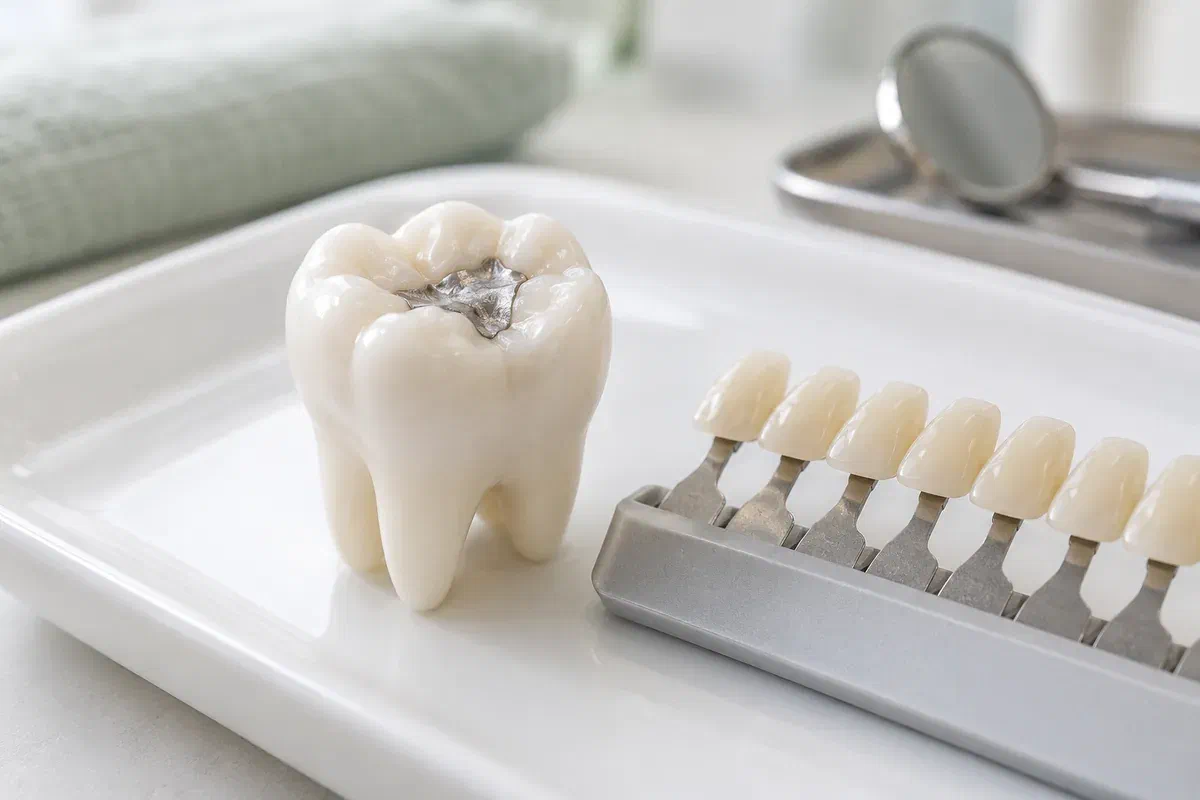
An old filling being dark or dull is expected. The changes below are what move it from monitoring toward treatment.
If your tongue or floss finds a sharp spot that was not there before, part of the filling or the enamel next to it may have broken. Note when it began. A small, early defect can sometimes be repaired without replacing everything.
Pain on biting or cold sensitivity that lingers is worth reporting between checkups. The filling might be the cause, though a fracture, the pulp, the gums or an adjacent tooth could be responsible. Diagnosis comes before any decision to replace.
Sometimes the filling is fine but you would simply prefer a tooth-coloured one. That is a choice you can make at any time. We will explain the expected appearance and how much tooth would be removed.
If a metal filling is intact and has no decay beneath it, its age and colour are not reasons to remove it. When replacement is suggested, ask what has changed since it was last reviewed.
Once monitoring reveals a real problem, replacing the filling sooner can limit how much tooth is lost. The new restoration should seal the cavity, support chewing and be easy to keep clean, using a material that suits the remaining structure.
A modest cavity might be restored with composite, while a larger repair on a heavily used molar may call for an onlay or crown. You can ask how the recommendation balances acting now versus waiting, as well as strength, appearance and future maintenance.
Patient information: CDA — tooth-coloured filling materials
You should know what changed: new decay, a broken filling, a cracked cusp or a cosmetic preference. Knowing the trigger helps you weigh replacement against continued watching.
Previous X-rays or photos make it easier to see whether something is changing. Ask the dentist to show you the comparison, and explain which material suits the cavity now.
Replaced or not, the tooth still needs a plan. Agree on how often it should be checked and what you should watch for at home, including cleaning access, new sensitivity and any clenching or grinding that adds stress to the restoration.
You will have room to ask why the advice has changed. Tell us whether discomfort, appearance, fees or uncertainty is your main concern.
The dentist examines the filling, the enamel and gums around it, and your bite, comparing with earlier records where possible. New X-rays may be suggested. Ask what has changed and to see the area if you can.
You discuss whether to keep monitoring, repair the filling or replace it, along with material, fees and alternatives. If replacement is chosen, the dentist explains that removing old amalgam can uncover more damage than expected.
Freezing is given, the area kept dry, and the amalgam removed. The tooth is checked for decay and cracks, then restored as planned, or temporarily protected while further treatment is arranged. If something unexpected turns up, the dentist pauses to explain it before going further.
The new filling's shape and your bite are checked before you leave. You will know when the tooth should next be reviewed and what to report in the meantime, including any remaining work.
Aftercare depends on how deep the repair was and which material was placed. Call if eating or cleaning becomes harder than expected.
Wait until full sensation returns before chewing, and take care with hot drinks. If a temporary is in place, follow the specific instructions you were given for that stage.
Contact us if the tooth seems to touch first, or chewing stays uncomfortable after a day or two. Avoid testing it on hard foods. Explaining what you feel helps the team decide whether an adjustment visit makes sense.
Use fluoride toothpaste and clean between teeth daily. If floss catches or food collects in a new spot, mention it, since those small changes are exactly what monitoring is designed to catch. A quick note of the date helps when you next speak with us.
Monitoring is an active plan, not a shrug. These answers explain what it involves and when it changes.
Patient information: FDA — decisions about existing amalgam fillings
Arrange an appointment at our Milton practice on Bronte Street to review an old filling, a change you have noticed or a cosmetic wish. We will explain the findings and whether monitoring or treatment makes more sense.
Phone us for severe pain or swelling. Online requests are for non-urgent appointments and questions.
