

Illustrative discussion of denture retention with a patient and dentist
Restorative Dentistry

Mini Dental Implants in Georgetown

Mini implants are a long-term commitment, not just a surgery date. If you are weighing them up in Georgetown, we explain the maintenance, replacement parts and reviews involved in looking after a lower denture.

The long view from Georgetown

Think five years ahead.

Most conversations about implants focus on the procedure. The more revealing questions usually concern what happens afterwards. Mini dental implants, slender posts placed in the jawbone, serve selected restorative tasks, for example helping a complete lower denture stay in place. They are not a lighter version of all implant treatment, and the name does not tell you how much care they will need.

So it helps to begin with the life of the restoration. How will the denture be cleaned, adjusted and eventually replaced? What wears out, and how often might it need attention? Alongside those questions, the dentist assesses the denture, the bone, your bite and whether you can maintain the attachments comfortably.

People from Georgetown can bring their current denture and any written estimates to our Bronte Street practice. We will go through the assessment, the alternatives and the ongoing responsibilities of each, and let you know if specialist planning would be a better route.

Ask about long-term upkeep
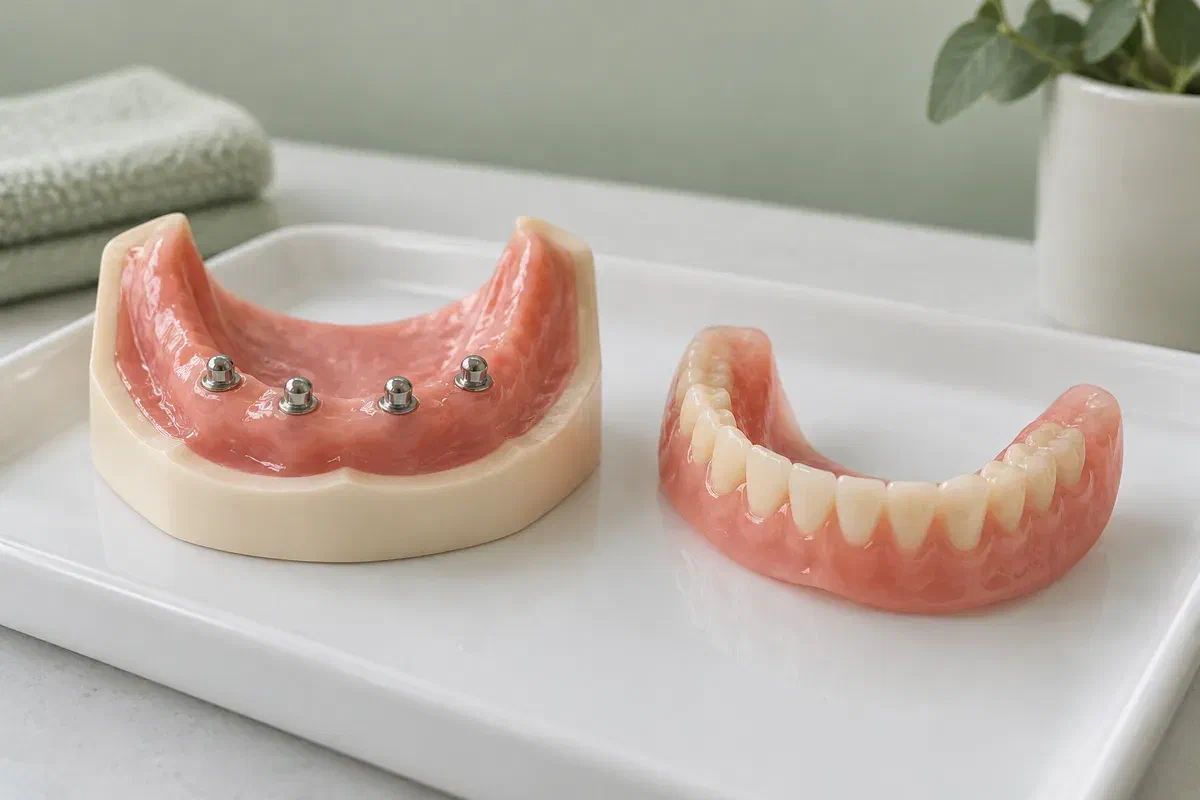
Illustrative lower-jaw model with four small attachment heads and a removable denture
Questions that start the search

What exactly are you trying to fix?

A denture can fail for more than one reason. Attachments can improve hold, but the appliance still needs a correct fit, a balanced bite and a maintenance routine you can sustain.

A lower denture you keep reseating

Note whether it moves more with certain foods or after a long day, and bring it even if you have stopped wearing it. The dentist can use its fit and condition to distinguish a denture problem from one where implant retention may help.

Limited bone in the lower jaw

A narrow ridge can make implants more complicated to plan. In some cases a slimmer implant is considered, provided enough bone and a safe position exist. A smaller diameter does not eliminate a careful review of the anatomy, and the imaging will guide whether the idea is realistic at all.

An estimate that stops at surgery

Some proposals describe placement but say little about what follows. Bring yours and ask about the denture work, the attachments, reviews and later repairs. The full picture is more useful than the opening figure.

Upper dentures, single back-tooth crowns and fixed full-arch bridges are not routine uses for narrow implants. Any of these would need its own assessment, and the reasoning should be backed by evidence you can ask about.

Value over time

Retention is worthwhile when upkeep is realistic.

In a well-selected lower overdenture, mini implant attachments may help resist unwanted lifting. The gums often continue to share the support, so the base still matters. Ask what the attachments would improve, and what would continue to rely on the fit and your ridge.

Narrow implants carry trade-offs. Their strength, the load from chewing and the restorative space all need planning. A proposal worth trusting explains why the design suits your restoration and how it will be maintained, rather than leaning on small size as a selling point.

Patient information: ITI — narrow implant indications and limitations

A change you can measure

For instance, finishing a meal without stopping to press the denture down. A clear target lets the dentist explain whether retention is likely to provide it, and lets you judge the result later.

A cleaning habit for years

With an overdenture, you remove the appliance daily to clean your mouth and the attachments. Ask for a demonstration and consider whether you can keep it up as hands and eyesight change with age.

Lifetime comparison of options

Compare treatment with and without mini implants, including denture remakes, maintenance visits and parts. Looking at the years ahead, not just the first appointment, gives a truer picture.

From consultation to maintenance

Each step sets up the next one.

Ask which stages are proposed, who carries each out and how your denture will be handled during treatment. Timing depends on your findings.

  1. Discuss history and priorities

    We look at your denture experience, medical history, oral health and expectations. Please mention smoking, grinding, medications and earlier implants. Explain what troubles you most at meals, during cleaning or when handling the appliance.

  2. Records and implant planning

    Imaging may be needed to examine bone and design the restoration. You will learn the proposed number and design of implants, the risks, alternatives and whether a referral is recommended. Mini implants still require this.

  3. Placement and recovery

    Placement is a surgical procedure with comfort and aftercare planned individually. The denture may connect soon or after a healing interval. Confirm what you may wear and eat while you heal.

  4. Fitting, then a maintenance rhythm

    The denture and attachments are checked together, and you practise inserting, removing and cleaning with guidance. Agree on a review schedule, ask how worn parts are replaced and note whom to contact if anything changes.

Keeping it working

Maintenance is part of the treatment.

Your instructions should cover early healing and the years of wear that follow. Keep them accessible, especially if a relative helps with your care.

Wear it as instructed at first

Follow the wearing plan after surgery and through adaptation. Feeling the denture lock on does not mean it is ready for regular chewing. Ask us whenever eating or removal guidance is unclear.

Clean the attachments properly

Have the team show you how to clean around each implant head and inside the denture without harming the housings. Let us know about hand strength or vision changes so we can suggest tools you can handle.

Expect parts to wear

Retention components loosen with use and need periodic attention, as may the fit. Avoid bending or fixing parts yourself. Bring the denture and any detached piece so the dentist can see what needs replacing.

Patient information: Cambridge University Hospitals — implant treatment and maintenance

Options for denture support

Compare the commitment, not just the procedure.

The best path depends on the shape of your jaw, your general health, the kind of restoration you hope for and how much ongoing care each choice brings. Ask the dentist to lay out the trade-offs that matter in your mouth.

Without implants

Keep a conventional denture

Adjustment, relining or a new denture can address some problems with no surgery. The examination shows what is realistic. Ask which concerns would improve and which limits would remain.

For a well-chosen lower case

Mini implant overdenture

This may be discussed for a suitable lower denture. Confirm the planned support and retention, the condition of the denture base and the maintenance involved. Diameter by itself should not drive the decision.

If more support is needed

Other implant restorations

Standard implants or another design may suit the load and teeth better, perhaps with extra procedures or specialist planning. Ask why one approach is recommended for your situation.

Long-term questions

What to ask before you commit

Plans with similar names can involve different dentures, surgery and years of upkeep. A consultation makes the differences clear.

(905) 876-4488
How often will the attachment parts need replacing?
It varies with wear, cleaning, bite and the system used. Ask the dentist what is typical for the proposed design and how you will know when parts are wearing, such as the denture feeling looser or clicking less firmly. It is worth knowing in advance what a replacement visit involves.
Will I need a new denture eventually?
Dentures wear and the mouth changes, so a remake may be needed in time. Ask whether the attachments can be transferred to a new denture and what that process involves for your implant system. Knowing this early helps you plan for a future remake without surprises.
What does a routine mini implant review include?
Typically the gums around each implant, the attachments, the denture fit and your cleaning are checked. Parts may be replaced and the denture adjusted where needed. Mention any changes in comfort, hold or how easily the denture comes out, even if they seem minor.
Is a mini implant denture fixed in place for good?
A mini implant overdenture is generally removable for cleaning, while the implants stay in the jaw. Confirm the specific design, since implant restorations vary in whether the teeth come out.
How do grinding habits affect long-term wear?
Heavy forces can affect narrow components and denture parts. Tell the dentist about grinding, broken dentures or worn teeth. The plan may change, or protective measures may be suggested.
Can I schedule reviews to suit a week in Georgetown?
Yes. Ask for your recommended review interval, then book times that fit around work or family. Our weekday hours run Monday to Thursday into the evening. Phone before setting out if a problem is sudden.
Your next step from Georgetown

Plan for the years, not just the day.

Bring your current denture and any estimates with you to Bronte Street. Suitability, the full restoration and the maintenance ahead all get discussed before you make a choice.

If an existing implant is sore or moving, please call. Online requests are for non-urgent appointments.

Visit Milton Dental Clinic
Unit 1, 342 Bronte St. S, Milton, ON L9T 5B7
Get directions Clinic hours
Monday–Thursday
11am–7pm
Friday–Sunday
By appointment only

Areas we serve

  • Milton
  • Oakville
  • Mississauga
  • Georgetown
  • Halton Hills
  • Acton
  • Campbellville
  • Brampton
  • Burlington
  • Puslinch
  • Rockwood
  • Erin
  • Caledon
  • Etobicoke
  • Old Milton
  • Bronte Meadows
  • Timberlea
  • Dorset Park
  • Dempsey
  • Clarke
  • Beaty
  • Coates
  • Harrison
  • Scott
  • Willmott
  • Ford
  • Bowes
  • Cobden
  • Walker
  • Mountain View
  • Milton Heights
  • Hawthorne Village
  • Valley View
  • Fallingbrook
  • Nassagaweya
  • Trafalgar
  • Esquesing
  • Nelson
  • Brookville
  • Moffat
  • Glen Williams
  • Norval
  • Limehouse
  • Stewarttown
  • Ashgrove
  • Hornby
  • Silver Creek
  • Speyside
  • Scotch Block
  • North Oakville
  • River Oaks
  • Glen Abbey
  • West Oak Trails
  • Palermo
  • Bronte Creek
  • College Park
  • Joshua Creek
  • Uptown Core
  • Preserve
  • Iroquois Ridge
  • Lisgar
  • Meadowvale
  • Meadowvale Village
  • Churchill Meadows
  • Erin Mills
  • Central Erin Mills
  • Streetsville
  • East Credit
  • Creditview
  • Heartland
  • Sheridan
  • Mount Pleasant
  • Credit Valley
  • Huttonville
  • Churchville
  • Springbrook
  • Northwest Brampton
  • Bram West
  • Fletcher's Meadow
  • Fletcher's Creek South
  • Alton Village
  • Orchard
  • Millcroft
  • Headon Forest
  • Tansley
  • Brant Hills
  • Tyandaga
  • Kilbride
  • Lowville
  • Aberfoyle
  • Morriston
  • Arkell
  • Hillsburgh
  • Freelton
  • Carlisle
  • Waterdown
  • Flamborough
  • Mountsberg

How can we help?

Milton Dental Clinic

Have a question about your smile? Choose the option that works best for you.

For urgent dental concerns, please call.
Messages are reviewed during clinic hours.