

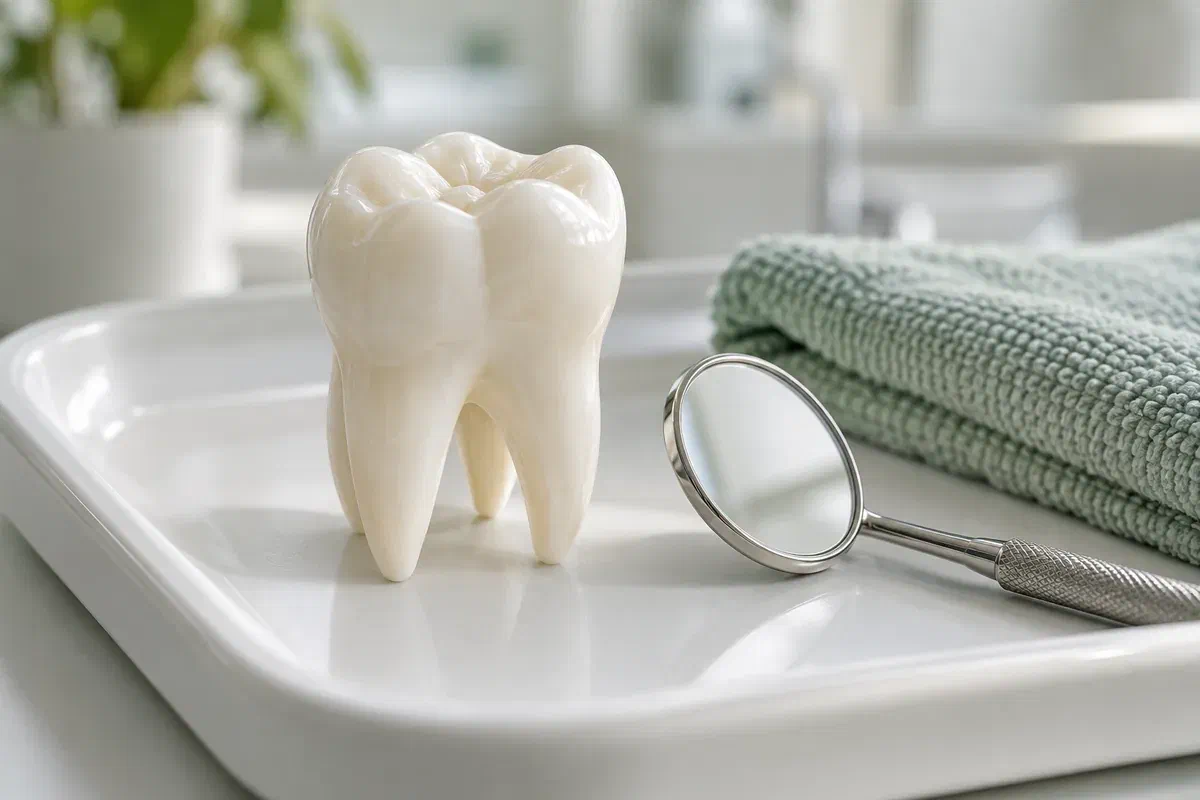
Illustrative consultation about a back tooth using a molar teaching model
Restorative Dentistry

Molar Root Canals

Your back teeth do important everyday work. Discuss molar root canal care in Milton, from understanding the source of discomfort to planning the restoration that protects the tooth afterward.

A closer look at molar root canals

Care inside the tooth. A plan for the chewing surface.

A molar is one of the broad teeth toward the back of your mouth. When the pulp inside becomes irreversibly inflamed or infected, root canal treatment may be considered as part of retaining the tooth. The decision also depends on whether the remaining tooth can be restored and maintained.

Back-tooth discomfort can be difficult to describe. You may know which side hurts without knowing which tooth is responsible, or you may notice pressure only during meals. An examination helps identify the source and distinguish a pulp problem from other causes. Root canal treatment should follow a diagnosis, not simply the presence of pain.

At Milton Dental Clinic, the conversation includes both the internal treatment and the repair needed afterward. Ask which appointments are proposed, whether specialist care would help, and how the tooth will be protected between stages. Understanding the whole plan makes it easier to prepare for the care ahead.

Discuss a painful or damaged molar
An intact molar teaching model and dental mirror on a clean tray
Changes that deserve assessment

Tell us what triggers the feeling, and what happens afterward.

Your description helps guide the examination. Mention when symptoms began, whether they are changing, and any previous filling, crown, or injury involving that side of your mouth.

Discomfort that interrupts meals

Pain when chewing may arise from several conditions. Tell us whether it happens on pressure, on release, or with a particular food temperature. Avoid repeatedly testing the tooth; the dentist can assess the bite and investigate the cause.

A feeling that lingers

Discomfort that continues after a hot or cold drink is worth describing carefully. Let the team know if it also occurs without a trigger or wakes you from sleep. Those details help distinguish your experience from brief everyday sensitivity.

A visible change near a back tooth

Swelling, a recurring gum bump, or damage around a large restoration warrants assessment even if discomfort is mild. Tell us about any discharge or unusual taste. A quieter period does not necessarily explain what is happening inside the tooth.

Contact the clinic promptly about significant pain or swelling. If swelling makes breathing or swallowing difficult, seek emergency medical care.

Why retaining a molar may matter

Look at the tooth’s role as well as its roots.

A useful natural molar contributes to your existing bite. When its internal problem can be treated and its structure restored, retaining it may be a reasonable goal. That possibility needs to be weighed against cracks, remaining tooth tissue, gum support, and other findings.

The discussion should make the expected benefit understandable without promising a particular lifespan. Ask what makes the tooth a reasonable candidate, what could limit its outlook, and how the final restoration will support the plan. Saving a tooth involves more than completing the root canal stage.

Patient information: AAE — understanding root canal treatment

A decision based on the whole tooth

The dentist considers whether the molar can be restored usefully after internal treatment. Ask to hear both the encouraging findings and the concerns, especially if the tooth already has extensive damage or a large existing restoration.

A coordinated treatment sequence

Knowing how the root canal and final restoration fit together helps you organize appointments. If more than one clinician is involved, clarify who provides each stage and how records and recommendations will be shared.

A practical conversation about comfort

Tell us about anxiety, difficulty opening widely, or a previous challenging appointment. Agree on a way to signal that you need a pause. These details help the treating team plan an approach you can understand and participate in.

Your molar treatment pathway

Know what each stage is intended to accomplish.

The number and length of appointments vary. Before starting, ask about the diagnosis, treatment scope, fees, alternatives, and the plan for protecting the tooth afterward.

  1. Confirm the source and restorability

    The dentist reviews symptoms, examines the tooth and surrounding area, and uses appropriate tests and imaging. Discuss whether the molar can be rebuilt and whether the canal anatomy or other findings warrant assessment by an endodontist.

  2. Prepare for internal treatment

    Local anaesthetic and a protective dental dam are used as part of treatment. The clinician accesses the inside of the tooth and identifies the canal system. Tell the team if you feel discomfort rather than assuming you must continue without a pause.

  3. Clean and fill the canal spaces

    The canals are cleaned, shaped, disinfected, and filled as appropriate to the treatment stage. A temporary restoration may protect the access between visits. Ask whether internal treatment is complete and what remains to be done before the final repair.

  4. Restore and arrange follow-up

    The molar needs an appropriate final restoration, often involving protection of its chewing cusps. Confirm the recommended timing and interim precautions. Follow-up assesses the tooth and surrounding tissues rather than relying only on whether it feels comfortable.

Between visits and beyond

Protect the molar while its treatment is being completed.

Keep the instructions for your particular stage of care. The advice after a first treatment visit may differ from the advice after the final restoration.

Follow the eating guidance

Avoid chewing while numb and follow instructions about keeping pressure off the treated tooth until it is restored. Ask what you can eat comfortably during the interim period. Do not use a temporary repair as a reason to test hard or sticky foods.

Keep the next appointment

Feeling better is welcome, but it does not confirm that every stage has been completed. If your schedule changes, contact the clinic to discuss the unfinished treatment. Make sure you understand whether the next visit is for the canals, the restoration, or a review.

Describe symptoms that change

Report increasing pain, a bite that feels too high, swelling, or a lost temporary filling. Mention when the change started and which part of treatment you have completed. Follow the medication advice given for you and check any uncertainty with the treating team.

Choosing care for the molar

Compare the likely outcome, the steps, and the limitations.

Ask why the proposed treatment fits the diagnosis. You should understand the alternatives before deciding how to proceed.

For an appropriate restorable tooth

Root canal treatment and restoration

This approach addresses the internal problem and then rebuilds the molar for use. Discuss both parts together, including the final restoration and any specialist involvement. An estimate for the root canal alone may not represent the complete treatment.

When the pulp is not the problem

A different treatment for a different diagnosis

A filling, bite adjustment, gum treatment, or another approach may be considered if the examination points elsewhere. Ask what finding distinguishes your diagnosis. Avoid choosing a root canal simply because another painful molar was treated that way in the past.

When retaining the tooth is unsuitable

Removal and a replacement discussion

Extraction may be discussed if the tooth cannot be predictably restored or you choose not to pursue retention. Ask what the space would mean for your mouth and which replacement options may be appropriate, including their separate stages and costs.

Questions about back-tooth treatment

Make room for the details that affect your visit.

A molar treatment plan can involve several decisions. Bring written questions if that helps you remember what you want to discuss.

(905) 876-4488
Why can a molar root canal be more involved than a front-tooth root canal?
Molars can have a more complex canal system and are farther back in the mouth. The number, shape, and accessibility of canals vary between teeth. Ask what the assessment shows in your case and how that affects appointment planning, fees, or the recommendation to see a specialist.
Does every molar have exactly the same number of root canals?
No. Root and canal anatomy varies, including between similar-looking molars. The treating clinician evaluates your particular tooth rather than relying on one number for every patient. If you have been told an additional canal or unusual anatomy is suspected, ask how that will be investigated.
Can a molar still need treatment after the toothache stops?
Yes, symptoms alone do not establish that the underlying problem has resolved. Keep an arranged assessment and explain how the discomfort has changed. The dentist will consider the examination and relevant tests alongside your experience before recommending treatment or monitoring.
Will I need an endodontist for my back molar?
That depends on the complexity of the tooth and the care required. An endodontist specializes in treatment inside teeth. Ask whether a referral is recommended, which stage would take place there, and who would provide the restoration afterward. A referral can be part of a coordinated treatment plan.
Is the crown appointment included in my molar root canal visit?
It may be a separate stage with a separate fee. Ask whether the proposed plan includes a build-up, crown, or another restoration and when it should be completed. Clarifying this before treatment helps you understand the full appointment sequence and any benefits you need to confirm.
What should I tell the clinic if opening wide for a molar procedure is difficult?
Mention jaw discomfort, limited opening, or previous difficulty before the appointment. Explain whether the problem develops after a certain time or is present from the start. The treating clinician can discuss practical arrangements, possible pauses, and whether the planned appointment needs to be adapted.
Molar root canals in Milton

Let’s make sense of what your back tooth needs.

Start at our Bronte Street practice with an assessment and a discussion of the complete treatment plan. Bring your symptoms, previous advice, and questions about retaining the molar and restoring its chewing surface.

Please call for significant pain or swelling. Email and online requests are for non-urgent enquiries.

Visit Milton Dental Clinic
Unit 1, 342 Bronte St. S, Milton, ON L9T 5B7
Get directions Clinic hours
Monday–Thursday
11am–7pm
Friday–Sunday
By appointment only

How can we help?

Milton Dental Clinic

Have a question about your smile? Choose the option that works best for you.

For urgent dental concerns, please call.
Messages are reviewed during clinic hours.