
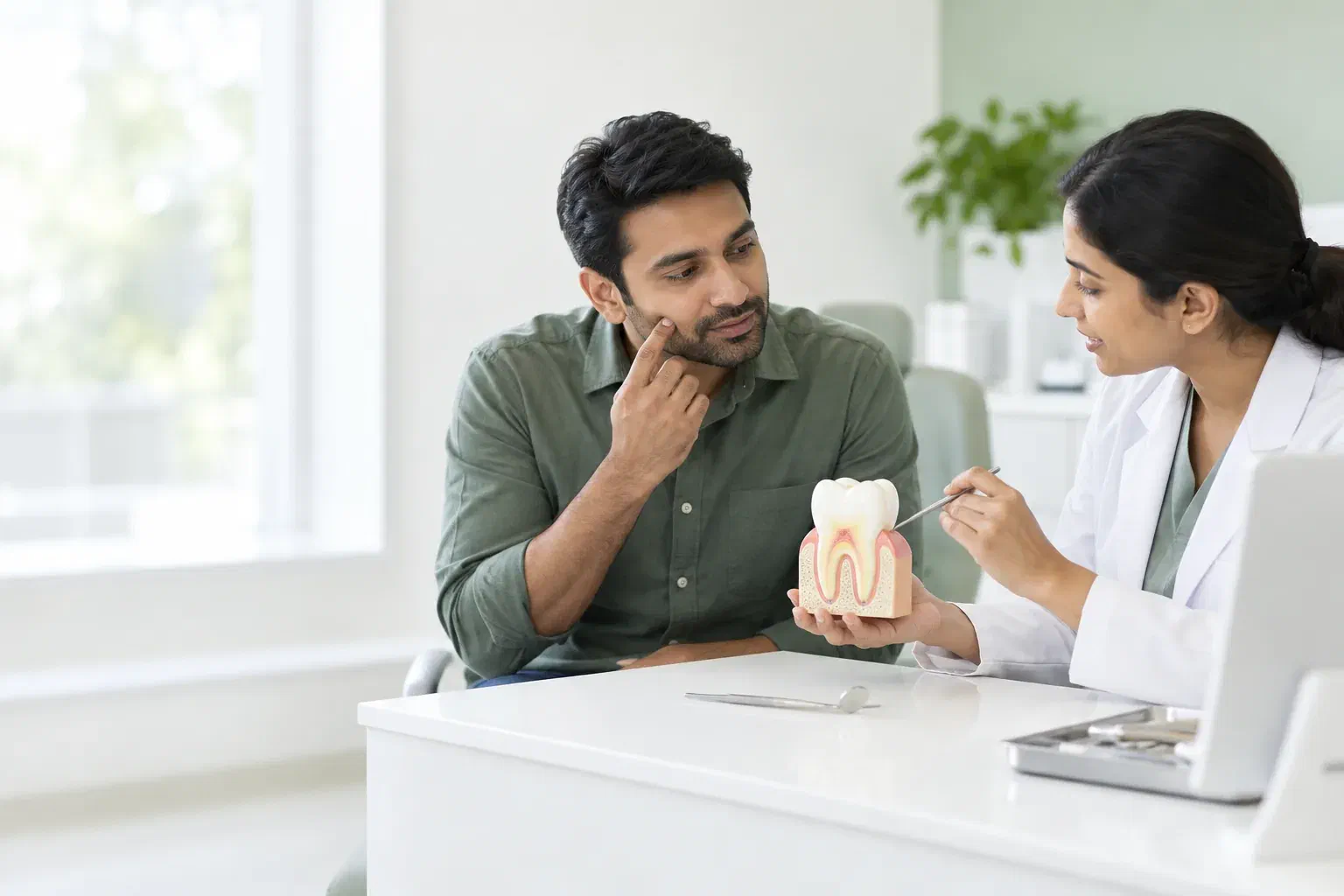
Illustrative consultation about a back tooth using a molar teaching model
Restorative Dentistry

Molar Root Canals in Georgetown

A back tooth that throbs at night, or wakes you from sleep, deserves a proper look. If you’re coming from Georgetown, we can find the cause and explain whether a molar root canal and restoration make sense.

The ache that keeps you up

Awake at 3 a.m. with a throbbing molar?

Toothache often feels worse in bed. Lying down, the throb in a back tooth can seem louder, and some people find it wakes them even when the day was manageable. Pain that arrives on its own, without a hot drink or a bite to set it off, can be a sign that the pulp inside the molar is badly inflamed.

When that tissue cannot recover, or is infected, a root canal may be one way of keeping the tooth. The examination still decides. The dentist needs to confirm where the pain is coming from and whether the molar has enough sound structure to be rebuilt. Night pain on its own does not prove which treatment is right.

For anyone driving down from Georgetown after a few rough nights, the first visit is about getting answers: which tooth it is, what is happening inside, what treatment would involve and how the tooth would be restored. If a specialist would be better placed for part of the work, that should come up too.

Book help for a tooth that wakes you
An intact molar teaching model and dental mirror on a clean tray
Patterns that matter

When it hurts tells us as much as where

Keep a simple note for a few days: when the pain comes, how long it stays, what eases it, and what dental work that side has had in the past.

Sore to bite on

Biting pain can come from a crack, an inflamed root or something else. Notice whether pressure or release sets it off and whether hot or cold makes a difference. Please do not keep testing the tooth; the dentist can examine the bite safely.

Pain that arrives by itself

An ache that starts with no trigger, keeps throbbing or wakes you up is important to mention. So is pain that lingers after hot food or drink. This differs from the quick, passing sensitivity many people notice.

Swelling or a change at the gum

Puffiness, a small bump that keeps returning, or a cracked filling near the sore tooth should be checked even if pain eases. Mention a bad taste or drainage. A good night’s sleep does not mean the problem has resolved.

Call the clinic promptly about severe pain or swelling. If swelling makes breathing or swallowing difficult, seek emergency medical care immediately, day or night.

Is the tooth worth keeping?

Relief matters, and so does what comes after

A molar that can still function helps you chew evenly. If the inflamed or infected pulp can be treated and the tooth then rebuilt on sound structure, keeping it can be a reasonable goal. Cracks, the remaining tooth and gum health are weighed before treatment is suggested.

Expect a plain explanation of the likely benefit, without promises about lifespan. Ask what makes this molar suitable, what might limit it, and how the final restoration will protect it. Easing the pain and saving the tooth are related but separate goals.

Patient information: AAE — understanding root canal treatment

A view of the whole tooth

The dentist considers whether the molar can be made useful after internal treatment. Ask to hear both the encouraging and the cautionary findings, particularly where a big filling or past damage is present.

Stages that link together

Knowing how the canal work and restoration connect helps you plan around work, school and family. When an endodontist is part of the picture, it is worth asking which visit belongs to which office and how your X-rays will be sent.

Comfort when you are already tired

A sleepless stretch can make dental visits harder. Tell us about anxiety, a stiff jaw or a past difficult appointment, and agree on how to signal for a break.

What happens in treatment

From a sleepless night to a finished repair

Visits vary in number and length. Before starting, ask about the diagnosis, the scope of treatment, fees, alternatives and the plan for the tooth afterward.

  1. Find the source

    Your pain pattern is reviewed, then the tooth and surrounding area are examined with suitable tests and X-rays. Ask whether the tooth is restorable and whether its canals or other findings suggest seeing an endodontist.

  2. Numb and isolate

    Local anaesthetic is given, and a dental dam keeps the tooth separate and dry. The clinician opens into the tooth to reach the canals. Let the team know if you feel pain; they can pause and adjust.

  3. Treat the canals

    The inflamed pulp is removed, and the canals are shaped, disinfected and filled once they are ready. If you need to come back, a temporary seals the access in the meantime. Ask what has been completed and what still remains.

  4. Restore and follow up

    A permanent restoration, often one that covers the cusps, rebuilds the molar. Confirm the timing and what to avoid meanwhile. Follow-up looks at healing, not simply whether the nights are quiet again.

After each visit

Look after the molar while it heals

Hold on to the instructions for your stage. Guidance after canal treatment can be different from the advice once the restoration is placed.

Ease into eating

Wait for numbness to fade before eating and keep heavy chewing off the treated side until it is restored. Ask what foods suit the interim. Avoid hard or sticky snacks that could break a temporary.

Keep going until it is finished

Once the nights are calm, it is easy to put off the rest. But the tooth may still need its restoration or a check. If your plans change, phone to rearrange instead of cancelling, and ask what the coming visit is meant to complete.

Tell us about changes

Ring us if the throbbing returns or builds, if your face swells, if your teeth meet unevenly or if the temporary goes missing. Mention roughly when the change started and how much treatment is already done. Follow the medication advice you were given and ask the team about anything uncertain.

Possible paths

Night pain can lead to different treatments

Ask why the suggested option fits your diagnosis, and make sure you understand the alternatives before you decide.

For a restorable molar

Root canal and restoration

The pulp problem is treated and then the tooth is rebuilt. Discuss both parts together, including any specialist care and the type of final restoration. A fee for the canals alone may not represent the full plan.

When the pulp is not the source

A different treatment for a different cause

Sometimes the trouble at night comes from grinding, gum problems or a neighbouring tooth rather than the pulp of this molar. A new filling, a night guard, a bite adjustment or gum care may then be considered. Ask what finding points that way, and what would happen if the first approach did not help.

When keeping the tooth is unsuitable

Extraction and replacement planning

Removal may be discussed if the tooth cannot be restored predictably or you choose not to keep it. Ask what the gap would mean for your bite and which replacements could suit, each with its own steps and fees.

Questions from Georgetown

About night pain and back teeth

Molar care can involve several decisions. It may help to note questions down when they come to you at night.

(905) 876-4488
Why does my molar throb more when I lie down?
Lying flat can change blood flow and pressure in the head, which may make an inflamed tooth feel worse. It is a common experience but does not on its own tell the dentist what is wrong. An exam and tests are needed.
What can I do tonight until I can be seen?
Avoid chewing on that side and use pain relief only as directed by your pharmacist or physician. Call the clinic to arrange an assessment. If swelling spreads or affects breathing or swallowing, seek emergency medical care.
Does pain that wakes me mean I definitely need a root canal?
Not necessarily. It can point to pulp inflammation, but other problems can also cause it. The dentist combines your description with an examination, testing and X-rays before recommending treatment.
Could grinding my teeth at night be causing the ache?
It can contribute to tooth soreness and jaw discomfort, and it can crack teeth. Mention any grinding or clenching you or a partner have noticed. The exam will look at wear, your bite and the molar itself.
How soon should a tooth that wakes me be seen?
Call as soon as you can to arrange an assessment. Pain that disturbs sleep is worth investigating promptly. Swelling, fever or difficulty swallowing need urgent attention.
Will my sleep return to normal after treatment?
Treating the source is intended to address that kind of pain, though some tenderness after treatment is common for a short time. Tell us if pain continues, worsens or changes after your visit.
Molar care for Georgetown

Let’s find out why the nights are so long

Our Bronte Street team can see you for an assessment and a clear plan, from the canal treatment to the restoration. Bring your pain diary, any earlier advice from other clinics and your questions about keeping the tooth and rebuilding its chewing surface.

For severe pain or swelling, please call rather than emailing. Online requests are for non-urgent matters.

Visit Milton Dental Clinic
Unit 1, 342 Bronte St. S, Milton, ON L9T 5B7
Get directions Clinic hours
Monday–Thursday
11am–7pm
Friday–Sunday
By appointment only

Areas we serve

  • Milton
  • Oakville
  • Mississauga
  • Georgetown
  • Halton Hills
  • Acton
  • Campbellville
  • Brampton
  • Burlington
  • Puslinch
  • Rockwood
  • Erin
  • Caledon
  • Etobicoke
  • Old Milton
  • Bronte Meadows
  • Timberlea
  • Dorset Park
  • Dempsey
  • Clarke
  • Beaty
  • Coates
  • Harrison
  • Scott
  • Willmott
  • Ford
  • Bowes
  • Cobden
  • Walker
  • Mountain View
  • Milton Heights
  • Hawthorne Village
  • Valley View
  • Fallingbrook
  • Nassagaweya
  • Trafalgar
  • Esquesing
  • Nelson
  • Brookville
  • Moffat
  • Glen Williams
  • Norval
  • Limehouse
  • Stewarttown
  • Ashgrove
  • Hornby
  • Silver Creek
  • Speyside
  • Scotch Block
  • North Oakville
  • River Oaks
  • Glen Abbey
  • West Oak Trails
  • Palermo
  • Bronte Creek
  • College Park
  • Joshua Creek
  • Uptown Core
  • Preserve
  • Iroquois Ridge
  • Lisgar
  • Meadowvale
  • Meadowvale Village
  • Churchill Meadows
  • Erin Mills
  • Central Erin Mills
  • Streetsville
  • East Credit
  • Creditview
  • Heartland
  • Sheridan
  • Mount Pleasant
  • Credit Valley
  • Huttonville
  • Churchville
  • Springbrook
  • Northwest Brampton
  • Bram West
  • Fletcher's Meadow
  • Fletcher's Creek South
  • Alton Village
  • Orchard
  • Millcroft
  • Headon Forest
  • Tansley
  • Brant Hills
  • Tyandaga
  • Kilbride
  • Lowville
  • Aberfoyle
  • Morriston
  • Arkell
  • Hillsburgh
  • Freelton
  • Carlisle
  • Waterdown
  • Flamborough
  • Mountsberg

How can we help?

Milton Dental Clinic

Have a question about your smile? Choose the option that works best for you.

For urgent dental concerns, please call.
Messages are reviewed during clinic hours.