Missing teeth in several spots
One removable appliance can sometimes replace a few separate gaps in the same jaw. Tell us which spaces bother you and where food gets stuck. The teeth around them influence how the pieces might connect.


A partial denture is only half the story; the natural teeth holding it matter just as much. From Acton, plan a removable appliance with their health, your cleaning routine, comfort and appearance in view.
Here is a question worth asking early: what happens to my own teeth once a partial is in? It is a good one, because the appliance and the remaining teeth work as a team. A design that looks fine on the first day still needs to be cleanable and kind to its neighbours for years.
In practical terms, a partial denture is a removable base or metal framework carrying artificial teeth. It fits around the natural teeth left in the upper or lower jaw, and depends on them, on the gums and on your bite for stability. Its shape is planned for your mouth alone.
Your habits shape the plan, so tell us honestly how you brush and floss now and where food tends to collect. Bring any appliance you already own. With that picture, we can talk about adjusting it, making a new one or replacing the missing teeth another way.
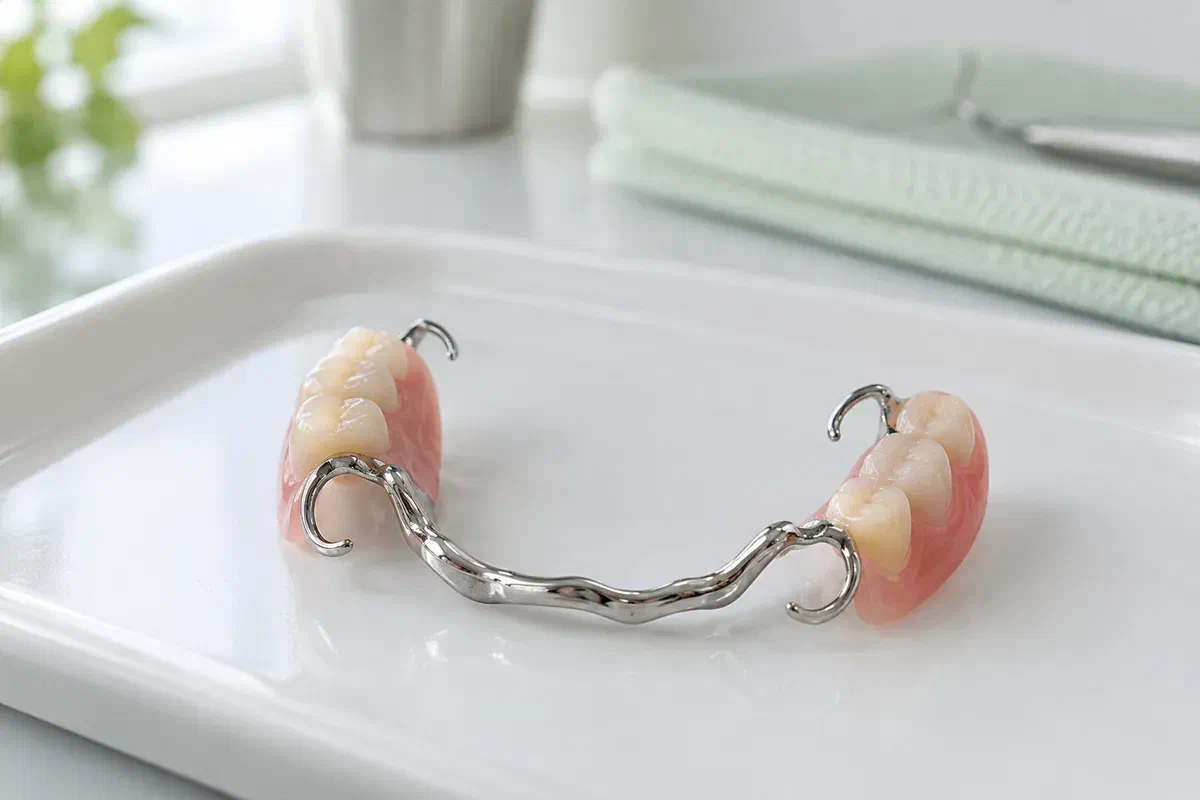
Different patterns of tooth loss ask for different designs. An exam shows which teeth are strong enough to help hold an appliance and what care should come first.
One removable appliance can sometimes replace a few separate gaps in the same jaw. Tell us which spaces bother you and where food gets stuck. The teeth around them influence how the pieces might connect.
If your appliance traps more food than it used to, rocks or presses on the gum, have it looked at. Please leave the clasps alone. Changes in the fit, a component, your bite or a supporting tooth could be the cause.
When a tooth has just come out or is likely to, ask how the healing period fits in. You might need a temporary appliance or tweaks later on. Knowing the order of steps makes the waiting time easier to manage.
Before the design is set, we check the health and position of each remaining tooth and whether it can safely share the load of a partial. Any treatment they need is planned in.
Filling the missing positions without sacrificing healthy natural teeth is the main appeal of a removable partial. For many people, that alone makes it worth a closer look. The proposal you’re given should explain which teeth carry it, what stops it from lifting and exactly what comes out at cleaning time. If it’s hard to picture, ask to see a sample.
You will need time to adapt, and it won’t feel identical to natural teeth. Talk about the likely feel, any components that may be seen and what the appliance can’t do. Realistic expectations make the first weeks much smoother.
Patient information: ADA — removable partial denture designs
Replacement teeth are chosen for shade, shape and position to suit your own. Explain what you care about when you talk or smile, and ask when you can see the arrangement before it’s completed.
Because the appliance comes out, you can brush it and reach the teeth underneath with ease. Ask for a demonstration if small clasps are hard to manage. It must be practical for the person who wears it.
A partial can be weighed against any suitable bridge or implant choice. Look at the steps, the effect on remaining teeth, fees and maintenance. Then decide based on your priorities and what the exam showed.
Your steps depend on the design and any treatment the supporting teeth need beforehand. Ask which visits are planned and when you’ll be able to give feedback on the appliance.
The dentist checks the spaces, remaining teeth, gum health and bite, and may use X-rays to judge support. Bring any previous partial and mention trouble with chewing, speech, cleaning or tender areas.
Any fillings, cleanings or other care for supporting teeth may be planned first. Then the base or framework, visible parts and any tooth preparation are agreed. Ask about the estimate and alternatives before records are taken.
With some designs, the framework or tooth setup is tried before completion. Tell us about anything that feels odd, including areas that seem hard to clean. Changes are easier before the final step.
At the fitting, we confirm the seating and bite and show you how to insert, remove and clean the appliance. Arrange your review. It’s a chance to address pressure spots and any area where cleaning is difficult.
Your instructions should name a wearing schedule and cleaners suited to this appliance. Ask before using a product made for another type of denture.
Take the partial out along its practised path so you can reach every surface of your natural teeth. Never bite it back into place or bend a clasp. If it stops seating smoothly, call and bring it in.
A soft denture brush and the cleanser we suggest will clear food and plaque without scratching the surface. Hot water and harsh chemicals can damage it. Ask how to store it while it’s out, especially if it has metal components.
Fluoride toothpaste and daily cleaning between teeth are essential, especially where clasps and rests touch. Keep your checkups. Let us know if food packs into the same spot or a tooth is hard to reach.
Patient information: Cambridge University Hospitals — looking after dentures
Eating, speaking, cleaning and removal all shape the choice. Bring the questions that come up in your routine.
Arrange an appointment at our Bronte Street practice and bring along the partial you wear now, or simply your questions about getting one. We’ll ask about your daily routine, examine your remaining teeth and gums closely, and explain the findings that shape a suitable plan for the spaces.
If a broken appliance hurts or has injured your mouth, call us. Online requests are for non-urgent visits.
