Spaces in more than one area
A single appliance can sometimes fill several gaps in one arch. Let us know which spaces bother you most at mealtimes or in conversation. The location of the teeth between them shapes how the sections might be connected.


Putting a partial in and taking it out should feel routine, not like a puzzle. From Rockwood, plan a removable design you can handle with confidence, alongside its fit, support, appearance and cleaning.
Picture the first morning with a new partial. You stand at the bathroom mirror, line it up, and gently guide it over your teeth until it clicks into place. For some people that becomes second nature within days. For others, especially with stiff fingers or a tricky clasp, it remains a daily frustration worth solving.
That daily handling is part of the design. A partial denture is a removable piece carrying replacement teeth on a base or framework. It sits between the natural teeth still present in one jaw and is held by those teeth, supported by the gums and balanced by your bite. Each element affects how easily it goes in and comes out.
If you have an appliance now, bring it and show us how you manage it. Tell us what feels awkward. Then we can talk about practice, an adjustment, a new design that’s easier to handle or a different way of replacing the missing teeth.
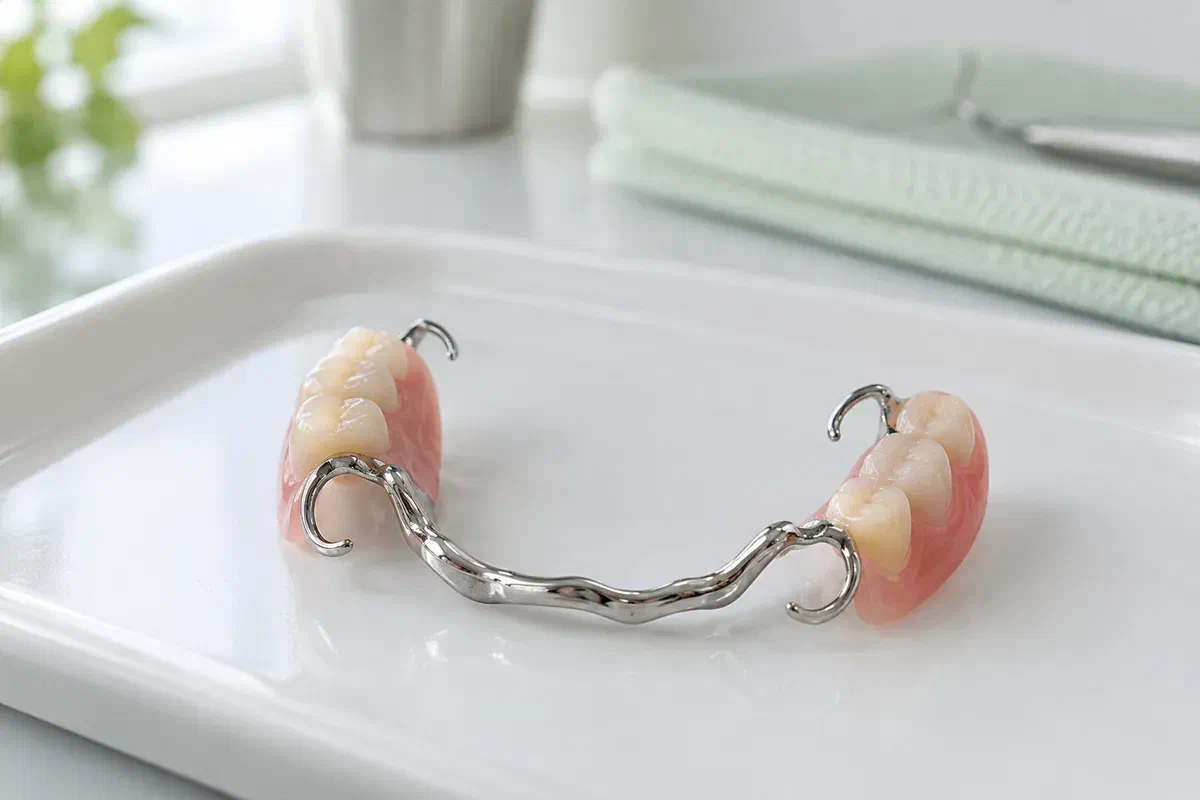
Each pattern of missing teeth brings its own design questions. An examination shows which teeth can provide support and whether any treatment should happen before an appliance is made.
A single appliance can sometimes fill several gaps in one arch. Let us know which spaces bother you most at mealtimes or in conversation. The location of the teeth between them shapes how the sections might be connected.
If your appliance no longer slides in the way it did, catches, or presses somewhere new, have it checked rather than forcing it or bending its clasps. Changes in its fit, a part, your bite or a supporting tooth could be responsible.
Ask how healing after a tooth comes out will affect the plan, and whether an interim appliance or later adjustments are expected. Understanding the sequence helps you prepare for the period before a settled fit.
The natural teeth that remain shape everything, including how easy the partial will be to handle. Their health, position and ability to help hold an appliance are assessed before the final design is chosen.
A partial denture can replace missing tooth positions and let you keep healthy natural teeth. Before it’s made, you should know which teeth support it, how it stays seated and what you will take out each day. Handling a sample during planning can show you how it moves into place.
There is a period of getting used to it, and it won’t feel exactly like natural teeth. Discuss how it may feel, what could be visible and what it can’t do. A practical, honest conversation makes the first weeks far less stressful.
Patient information: ADA — removable partial denture designs
Replacement teeth are chosen to blend with your own in shade, shape and position. Tell us what matters when you smile or speak, and ask when you’ll see the arrangement before completion.
Removing the appliance lets you clean it and the teeth beneath it. Ask to practise in the chair until you feel confident. If grip is a challenge, say so early so it can be considered in the design.
A partial can be compared with appropriate bridge or implant options, which don’t need daily removal. Look at the visits each requires, effects on remaining teeth, fees and upkeep before deciding.
The stages depend on the design and on any treatment required first. Ask which visits are planned and when you can try the appliance as it develops.
We look at the gaps, remaining teeth, gums and bite, sometimes with X-rays to assess support. Bring any earlier appliance, show us how you put it in, and describe difficulties with chewing, speech or cleaning.
Review the proposed base or framework, which parts might show and whether supporting teeth need preparation. Ask about the estimate and alternatives. Impressions and bite records then guide construction.
Some designs include a try-in of the framework or tooth arrangement. Practise how it feels to place it and tell us about anything awkward. Find out what can still be changed before it’s finished.
When it’s ready, we confirm how it sits and how your teeth meet. You practise inserting, removing and cleaning it until you’re comfortable. A review is booked to deal with pressure spots and any handling problems.
Your instructions should name a wearing schedule and cleaners for this specific appliance. Check before using a product meant for a different denture material.
Guide the partial along the path you practised. Don’t bite it into place, and never bend a clasp to make it easier. If it suddenly becomes hard to insert or remove, call for advice and bring it in.
Hold the appliance over a folded towel or a basin of water while brushing off food and deposits with the recommended brush and cleanser. Avoid hot water and harsh chemicals. Ask how to store it, particularly with metal parts.
Brush natural teeth with fluoride toothpaste and clean between them, especially around the teeth the partial grips. Keep your regular exams. Mention food trapping or a tooth you find hard to reach.
Patient information: Cambridge University Hospitals — looking after dentures
Taking it out, putting it in, eating and cleaning all affect whether a partial works for you. Bring whatever questions come to mind.
Book time at our Bronte Street practice, whether you’re new to partials or wrestling with one each morning. We’ll watch how you handle it, examine your mouth, and walk you through what we find and which design would be simpler to live with.
If a damaged partial is causing pain or has cut your mouth, please phone. Save the online form for visits that can wait.
