

Illustrative discussion of restoring a root-treated tooth before crown placement
Restorative Dentistry

Post-and-Core Restorations in Campbellville

Sometimes the news comes from an x-ray, not a toothache. When a routine check shows a root-treated tooth needs a new foundation, households in Campbellville can talk it through with us calmly, without being rushed.

Spotted at a checkup

It doesn’t hurt. So why does it need work?

A tooth that has had root canal treatment often has no nerve sensation left, so trouble underneath it can be silent. A dentist may notice decay creeping under an old crown, a gap at its edge, or a large filling that is breaking down, all before you feel a thing. That is often when the idea of a new core, and possibly a post, first comes up.

Some background helps. A core is the build-up that gives a crown something solid to fit over. When too little natural tooth is left to keep that core in place, a post may be fitted part of the way into the treated canal to anchor it. The post is there for retention; it does not make the root sturdier and cannot rescue a tooth that has cracked.

Because there is often no pain, you have time to understand the findings. Ask to see the x-ray. Dr. Anjum will explain what has changed, how urgent it is, and the different ways forward, so you can decide when and how to proceed.

Review an x-ray finding with us
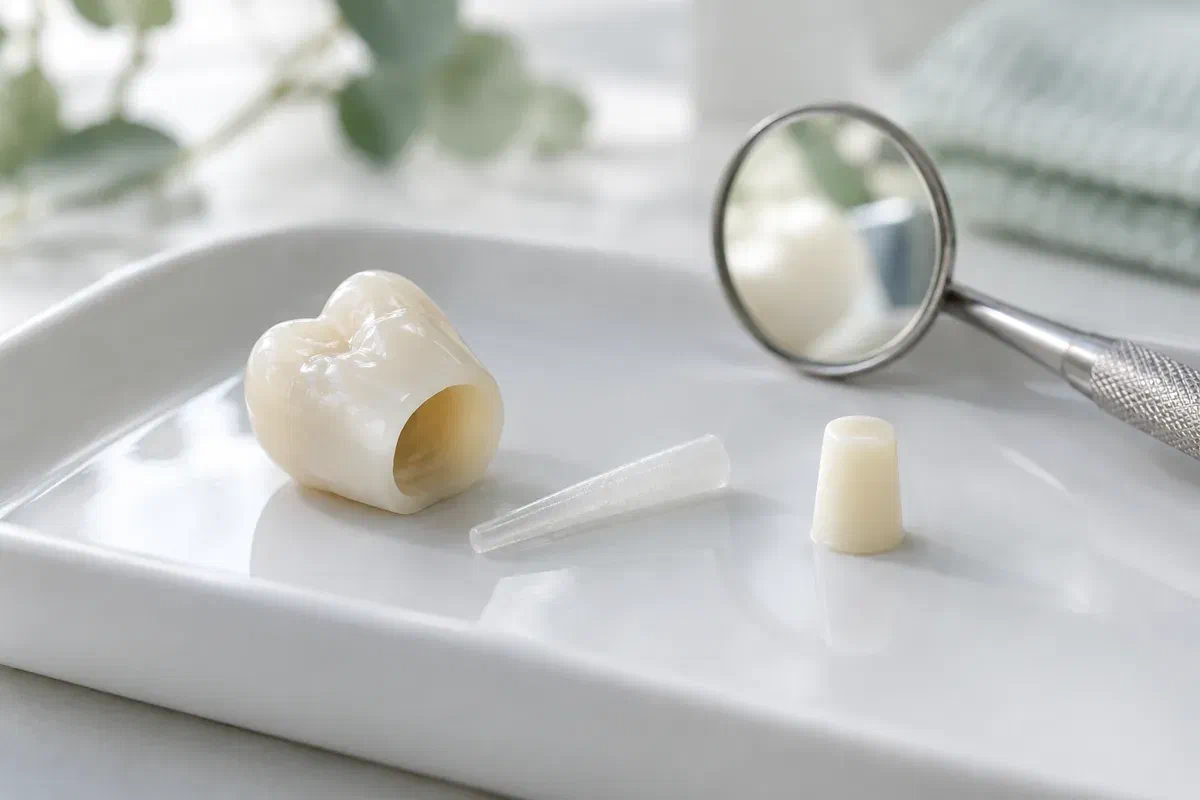
Illustrative crown, fibre post, and restorative material samples on a tray
Quiet problems

What an x-ray or exam may reveal

If the plan includes a post, the findings behind it should be clear. Ask what is holding the current restoration and what has changed.

Decay under an old crown

Decay at the edge of a crown can spread underneath and eat away the tooth supporting it. Once that is cleaned out, there may be less to build on. The dentist checks the root and surrounding bone before discussing whether a post would help.

A foundation that has shifted

An x-ray may show a gap between an old core and the tooth, or a crown that has begun to lift. If it then comes off, keep the pieces. The exam shows whether the foundation can be redone and what the tooth can support.

Root canal work never finished with a crown

Some teeth were root-treated and then left with only a filling. Ask whether that tooth now needs a crown, whether a core alone will do, and how quickly the next step should happen to lower the risk of a break.

Not every root-treated tooth that needs a new crown needs a post. One is added only if the core requires it, and preparing for it affects the root.

Acting before it breaks

Planned repair, rather than emergency repair

Addressing a problem while the tooth is still intact can mean more natural structure to work with. When the tooth is suitable, a well-retained core gives the new crown a sound base. The aim is a working tooth that keeps as much of itself as possible.

Planning ahead does not change the limits, though. A post cannot fix a crack in the root, and very little sound tooth restricts what a crown can do. Ask how the root’s condition, the support around it, and your bite were considered.

Patient information: AAE — assessing whether a tooth can be restored

Understand what the x-ray shows

Ask the dentist to point out the existing post or core, the crown and the area of concern. Seeing it yourself makes the plan and the estimate easier to follow.

Ask how much tooth is still sound

The more healthy structure left, the more options there may be. Ask how the plan protects it, and whether a simpler foundation would serve.

Picture the final crown

A new foundation is built for the crown that will sit on it, including its fit, shape and bite. Discuss that crown before agreeing on the steps underneath.

From finding to finished

A calm plan in four parts

With no pain pushing the timeline, you can arrange visits to suit your week. Coming from Campbellville, ask which steps can share an appointment and when the tooth will be fully covered.

  1. Look at the evidence together

    The dentist reviews the x-ray with you, examines the remaining tooth and crown, the old root treatment, the gums and how you bite. Any history of breaks or crowns that loosened is useful to share.

  2. Weigh timing and options

    You should hear why a new foundation or post is suggested, which material is proposed, and what it cannot do. Ask how soon treatment is advisable and for a complete estimate covering the core, temporary and final crown.

  3. Remove, rebuild, protect

    Old crown and decay are removed, and the remaining tooth is assessed again. If a post is needed, a channel is shaped in the treated canal with its seal kept intact, and the core is built. A temporary covers the tooth.

  4. Fit the crown and follow up

    The finished crown is seated and adjusted for contacts and bite. Confirm the care routine and the next check. If the temporary will be on for a while, know how to protect it and when you are due back.

Afterwards

Keep the new foundation working

Your routine with a temporary will differ from the routine once the final crown is on. Tell us if any advice is hard to follow, and we will help.

Protect the interim crown

Avoid hard, sticky and very chewy foods on that side. Temporaries are not designed to last, and a sound-feeling core still needs its crown. Keep the completion visit, or call early to rearrange it.

Prevent the same problem returning

Decay under the old crown is a reminder to clean carefully at the gum line and between teeth every day. Ask for a demonstration if the spot is awkward to reach.

Call if something changes

Phone if the crown loosens, your bite feels off, or part of it chips. Do not try to work it free. Save any piece and describe what happened.

Choices ahead

What you rebuild depends on what you uncover.

Some decisions are best made once the old crown is off. Ask what each option involves and why it might suit your tooth.

When enough healthy tooth remains

A new core with no post

If the remaining walls are sound once decay is removed, a core may hold without entering the canal. Ask whether that looks likely for you. It keeps more of the root intact.

When retention needs help

A new core retained by a post

If little structure remains, a post may help secure the core. The material and design are chosen for your tooth and crown. Ask about the specific benefits and risks.

When decay or damage runs deep

Rethinking the tooth’s future

Sometimes the tooth turns out to be too compromised to rebuild reliably. Further assessment, root re-treatment, or removal may be discussed. Ask what each would involve and whether it is worth it for you.

Questions about silent problems

When there is no pain to go on

A finding without symptoms can be surprising. These answers address some of the questions people ask most.

(905) 876-4488
Why can’t I feel decay under my crown?
A root-treated tooth no longer has a living nerve, so it often does not react to decay the way other teeth do. The crown also hides what is happening beneath it. That is why regular x-rays and checks matter for crowned and root-treated teeth, even when they feel perfectly normal.
How urgent is a finding like this?
It depends on how far the problem has gone. Some issues can be planned over a few weeks; others are best treated sooner to avoid a break. Ask your dentist to explain the timing for your tooth.
Could the old post stay while the crown is replaced?
Sometimes, if it is sound and well-fitted. Removing a post carries a risk to the root, so it is often left when possible. The decision is made once the old crown is off and the tooth is seen.
What if the tooth is worse than the x-ray suggested?
Occasionally, removing the old crown reveals more damage than an image could show, such as deeper decay or a crack. If that happens, the dentist will pause, explain what was found and set out the options before going further. You can ask for time to decide, with the tooth protected by a temporary in the meantime.
Is it the same as an implant if they put in a post?
No. A post sits inside your own treated root; an implant replaces a missing root in the jaw. Ask which is meant if a plan uses the word without clarifying.
Can I combine the visits with others in my household?
Often, yes. Rural households in Campbellville sometimes like to group appointments on the same day. Mention it when booking, and we will try to arrange times that work.
Campbellville post-and-core planning

Let’s look at the x-ray together.

Book time at our Bronte Street practice to review a finding on a root-treated or crowned tooth. Bring any earlier records and questions, and we will help you plan the next steps at a pace that suits you.

If the tooth starts to hurt, swells, or a crown comes off, please call us. Online requests are for non-urgent planning.

Visit Milton Dental Clinic
Unit 1, 342 Bronte St. S, Milton, ON L9T 5B7
Get directions Clinic hours
Monday–Thursday
11am–7pm
Friday–Sunday
By appointment only

Areas we serve

  • Milton
  • Oakville
  • Mississauga
  • Georgetown
  • Halton Hills
  • Acton
  • Campbellville
  • Brampton
  • Burlington
  • Puslinch
  • Rockwood
  • Erin
  • Caledon
  • Etobicoke
  • Old Milton
  • Bronte Meadows
  • Timberlea
  • Dorset Park
  • Dempsey
  • Clarke
  • Beaty
  • Coates
  • Harrison
  • Scott
  • Willmott
  • Ford
  • Bowes
  • Cobden
  • Walker
  • Mountain View
  • Milton Heights
  • Hawthorne Village
  • Valley View
  • Fallingbrook
  • Nassagaweya
  • Trafalgar
  • Esquesing
  • Nelson
  • Brookville
  • Moffat
  • Glen Williams
  • Norval
  • Limehouse
  • Stewarttown
  • Ashgrove
  • Hornby
  • Silver Creek
  • Speyside
  • Scotch Block
  • North Oakville
  • River Oaks
  • Glen Abbey
  • West Oak Trails
  • Palermo
  • Bronte Creek
  • College Park
  • Joshua Creek
  • Uptown Core
  • Preserve
  • Iroquois Ridge
  • Lisgar
  • Meadowvale
  • Meadowvale Village
  • Churchill Meadows
  • Erin Mills
  • Central Erin Mills
  • Streetsville
  • East Credit
  • Creditview
  • Heartland
  • Sheridan
  • Mount Pleasant
  • Credit Valley
  • Huttonville
  • Churchville
  • Springbrook
  • Northwest Brampton
  • Bram West
  • Fletcher's Meadow
  • Fletcher's Creek South
  • Alton Village
  • Orchard
  • Millcroft
  • Headon Forest
  • Tansley
  • Brant Hills
  • Tyandaga
  • Kilbride
  • Lowville
  • Aberfoyle
  • Morriston
  • Arkell
  • Hillsburgh
  • Freelton
  • Carlisle
  • Waterdown
  • Flamborough
  • Mountsberg

How can we help?

Milton Dental Clinic

Have a question about your smile? Choose the option that works best for you.

For urgent dental concerns, please call.
Messages are reviewed during clinic hours.