Not much tooth showing
A heavily broken tooth may leave little to rebuild on. The dentist assesses the root and the gum and bone around it, not only the visible part. A post is considered only if restoring the tooth remains a reasonable choice.


Rebuilding a root-treated tooth usually takes more than one appointment. Coming from Etobicoke, it pays to plan the sequence carefully: what each visit covers, how to protect a temporary, and when to seek help nearer home.
When a tooth needs a foundation before its crown, the work tends to unfold in stages. That is manageable if you know the order from the start. The first thing to understand is what a foundation actually is, since it shapes how many visits you can expect.
A core is a build-up that replaces lost tooth so a crown has something to grip. In some root-treated teeth, a post is placed partway into the canal to hold that core when the remaining walls cannot. A post is an anchor for filling material, not a new root, and it cannot overcome a split or badly weakened tooth. The amount of tooth above the gum, the health of the root, and the crown planned on top all decide whether one is used.
At your first appointment, Dr. Anjum will assess the tooth and lay out a realistic plan, including which stages might be combined. Bring previous root canal records, x-rays, or a crown that has come away. You can then book the remaining visits with a clear sense of what each one involves.
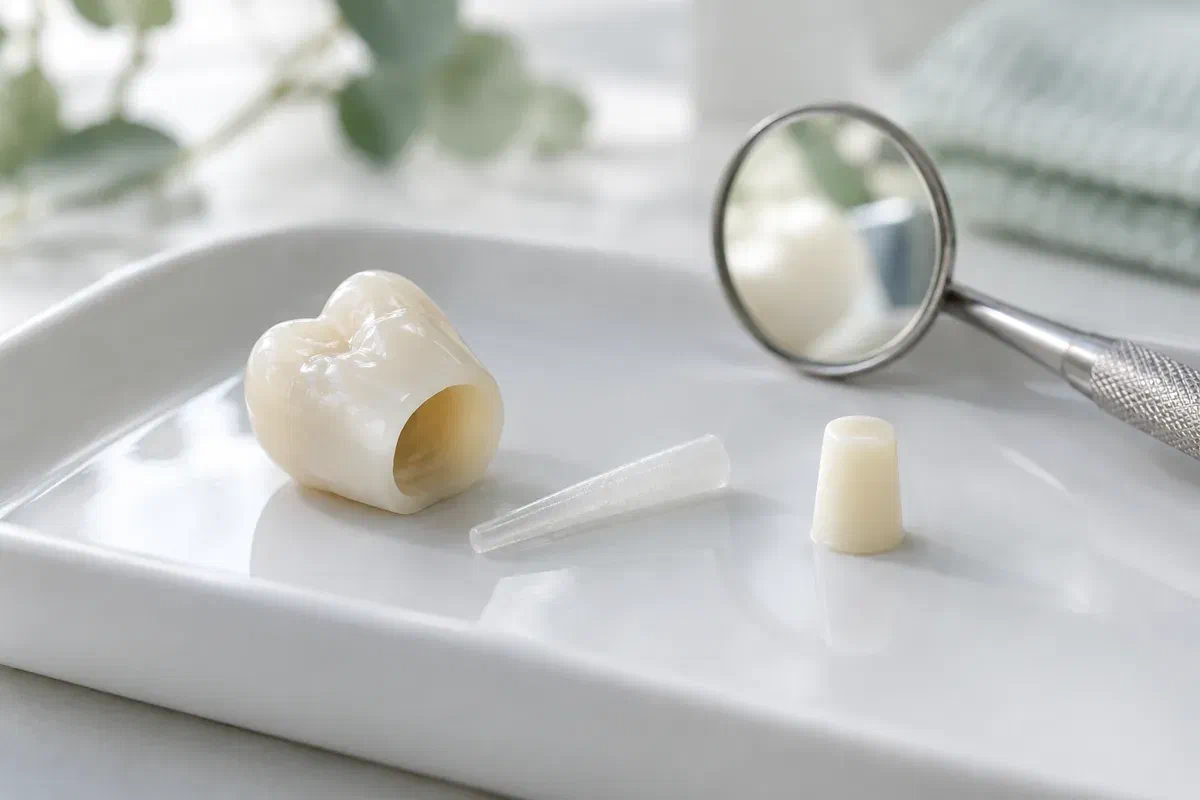
A post should be suggested for a specific reason. Ask what will retain the core and which findings support that plan.
A heavily broken tooth may leave little to rebuild on. The dentist assesses the root and the gum and bone around it, not only the visible part. A post is considered only if restoring the tooth remains a reasonable choice.
If a crown dislodges with material attached, keep all of it and bring it with you. It may be an old core or post. The exam clarifies what failed and whether a new foundation is possible, rather than assuming everything can be recemented.
A gap between root canal treatment and the crown is common. Ask whether a core alone is enough or more retention is needed, the order of the next steps, and how to protect the tooth in between visits.
Not every root-treated tooth needs a post. It is there to keep a core in place when that is needed, and preparing for it involves the root, so the decision deserves care.
For a suitable tooth, a secure core gives the crown the shape and height it needs to fit and to handle chewing. The aim is to restore the tooth while keeping as much natural structure as possible, so each element of the plan should have a purpose you can follow.
Ask about the outlook as a whole. A post cannot offset a significant crack or a root with very little wall. Root condition, the support around it, and the demands of your bite all matter, and they can affect how many visits are worth investing.
Patient information: AAE — assessing whether a tooth can be restored
When you can tell the post, core and crown apart, the appointment plan makes more sense. Ask for a diagram so you know which stage is happening on which day.
Ask how much healthy tooth remains and how the preparation will protect it. The best plan uses only the components the findings justify, which can also mean fewer appointments.
The core is shaped for the crown that will sit on it, including its fit, form and bite. Agreeing on the crown first helps avoid extra trips later.
The exact sequence depends on the tooth and the crown chosen. Ask which steps can share an appointment and when the final crown will be in place.
This visit establishes how much sound tooth is left, whether the earlier root canal looks healthy, and how the gum and bite are doing. Images and records from elsewhere help. Mention pain, earlier fractures or crowns that keep loosening so the plan accounts for them.
Here you learn whether the tooth calls for a post, the material proposed and its limits. Ask for a full estimate including the core, temporary and final crown. Sometimes this conversation happens at the first visit; sometimes further assessment comes first.
When a post is needed, part of the treated canal is shaped to receive it while enough root filling stays behind to keep the seal. The post and core are placed or fitted, and a temporary crown is often added at the same time.
The crown is fitted and checked for contacts and bite. Confirm home care and whether a review is needed or can be paired with a routine visit. If the temporary will stay for a while, know your return date.
Advice differs for a temporary and a final crown. If an instruction is awkward to follow, let us know so the team can suggest another way.
Avoid hard, sticky and chewy foods on that side while a temporary is on. A firm core still needs its crown, so keep the final appointment. Call well ahead if your plans change.
Brush and floss around the restored tooth and its neighbours each day. Ask for a demonstration if the area is hard to reach. The natural tooth underneath can still decay or develop gum problems.
If the crown loosens or the bite changes, call us first for advice. If you have significant pain, swelling or a fever and cannot get here quickly, seek urgent dental or medical care closer to home. Save any piece that comes away.
Multi-stage dental work raises practical questions as well as clinical ones. Here are some that come up often.
Book a first visit at our Bronte Street practice to assess a root-treated tooth or a crown that needs a new foundation. Bring records, x-rays and any loose pieces, and we will outline the visits you will need.
Please call if a crown or post has come out and it hurts. For severe pain or swelling when you cannot reach us, seek urgent care nearby. Online requests are for non-urgent matters.
